
Image and Video Recognition with Machine Learning
Machine Learning

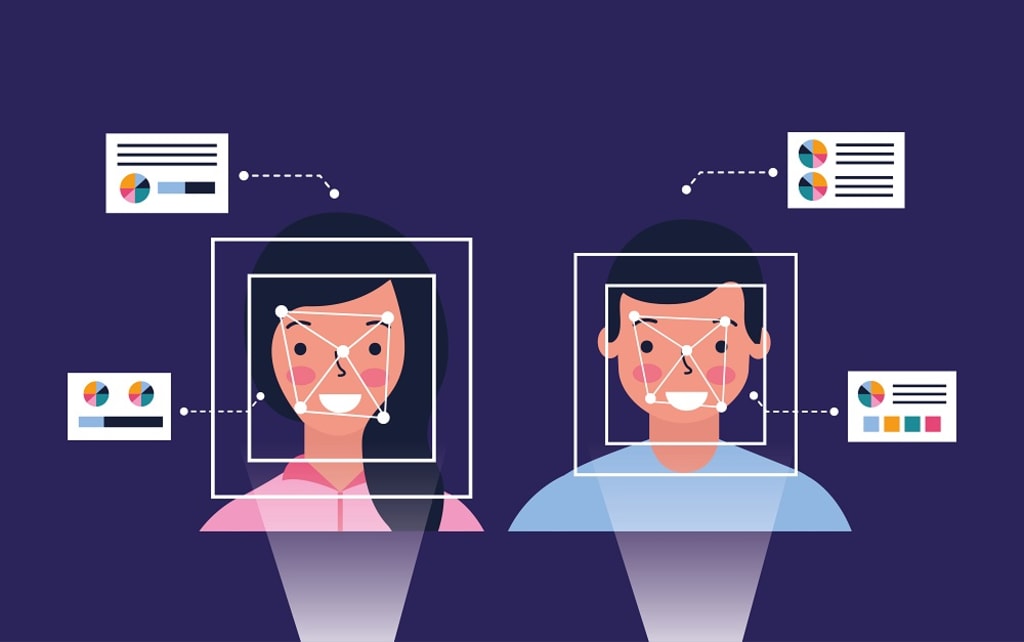
Machine learning has revolutionized the way computers process and analyze visual information, allowing for image and video recognition to become more accurate and efficient. In this article, we will explore the various techniques and applications of image and video recognition with machine learning.
Types of Machine Learning Used in Image and Video Recognition
There are several types of machine learning used in image and video recognition, including supervised learning, unsupervised learning, semi-supervised learning, and reinforcement learning. Supervised learning involves training a model on labeled data, while unsupervised learning involves finding patterns in unlabeled data. Semi-supervised learning combines both labeled and unlabeled data, while reinforcement learning involves training a model through a reward-based system.
Techniques for Image and Video Recognition with Machine Learning
Several techniques are used in image and video recognition with machine learning, including convolutional neural networks (CNNs), recurrent neural networks (RNNs), generative adversarial networks (GANs), support vector machines (SVMs), and K-nearest neighbor (KNN). CNNs are commonly used for image recognition, while RNNs are used for video recognition. GANs are used to generate new images or videos, while SVMs and KNN are used for classification tasks.
Applications of Image and Video Recognition with Machine Learning
Image and video recognition with machine learning has numerous applications, including surveillance and security, medical image analysis, object detection and recognition, self-driving cars, image and video captioning, facial recognition, and sports analysis. In the security industry, image and video recognition is used to identify potential threats and prevent criminal activities. In medicine, it is used to analyze medical images and aid in the diagnosis of diseases. In self-driving cars, it is used to recognize and interpret road signs, traffic signals, and other vehicles on the road.
Challenges and Limitations of Image and Video Recognition with Machine Learning
Despite the advancements in image and video recognition with machine learning, there are still several challenges and limitations. One major challenge is the limited availability of labeled data, which is necessary for training machine learning models. Another challenge is the lack of interpretability of these models, making it difficult to understand why certain decisions are made. Additionally, bias and adversarial attacks can also pose a challenge.
Future of Image and Video Recognition with Machine Learning
The future of image and video recognition with machine learning looks promising. With advancements in artificial intelligence and machine learning, we can expect improved algorithms and techniques for image and video recognition. Integration with other technologies, such as virtual reality and augmented reality, can also lead to new possibilities for the field.
Conclusion
In conclusion, image and video recognition with machine learning has become a crucial technology in many industries. With the ability to accurately process and analyze visual information, machine learning models have numerous applications, from security and medicine to self-driving cars and sports analysis. However, challenges such as limited data and lack of interpretability still exist. Nevertheless, the future looks bright for the field, with continued advancements and integration with other technologies.
FAQs
How does image and video recognition with machine learning work?
Machine learning models are trained on large amounts of data to recognize patterns and make predictions. For image and video recognition, this involves analyzing visual information and identifying objects or actions.
What are some common applications of image and video recognition with machine learning?
Some common applications include surveillance and security, medical image analysis, object detection and recognition, self-driving cars, image and video captioning, facial recognition, and sports analysis.
What are some challenges of image and video recognition with machine learning?
Challenges include limited availability of labeled data, lack of interpretability, bias, and adversarial attacks.
What is the future of image and video recognition with machine learning?
The future looks promising, with continued advancements in artificial intelligence and machine learning, improved algorithms and techniques, and integration with other technologies.
How can businesses and industries benefit from image and video recognition with machine learning?
Businesses and industries can benefit from improved security measures, more efficient medical diagnoses, enhanced automation in transportation, and improved customer experiences through image and video recognition with machine learning.
About the Creator
Rehana Atar
SEO Expert and content writer
Keep reading
More stories from Rehana Atar and writers in Education and other communities.
Natural Language Processing with Machine Learning
Natural Language Processing (NLP) is an ever-evolving field of computer science that deals with the interaction between computers and humans using natural language. The aim of NLP is to make computers understand, interpret, and manipulate human language. Machine learning, on the other hand, is a branch of artificial intelligence that enables machines to learn from data and improve their performance without being explicitly programmed.
By Rehana Atar3 years ago in Education
Smart Savings in Real Time
Every business wants to lower costs. However, many leaders fear that cutting expenses will hurt quality. The good news is that this does not have to happen. Many companies prove that smart planning can protect quality while lowering spending. These real-world examples show efficiency in action and how teams reduced costs without compromising quality.
By Duke Valentour4 days ago in Education
Sunday School: The purpose is evolving in some churches
What is the purpose of Sunday School? There is an old saying that if you don't know the purpose of something, you will abuse it. Around 1780, Robert Rakes of England established Sunday School to teach children to read, write, and learn biblical knowledge.
By Cheryl E Preston3 days ago in Education


Comments
There are no comments for this story
Be the first to respond and start the conversation.