
Is “Nothing” Possible in Physics? Exploring the Science and Philosophy of Nothingness
Is “nothing” possible in physics? At first glance, the question seems simple. Nothing means the absence of everything — no matter, no energy, no space, no time. But when modern physics examines this idea closely, the concept of absolute nothingness becomes deeply puzzling. In fact, many physicists argue that true nothing may be impossible. The deeper we explore reality, from quantum mechanics to cosmology, the more we discover that even empty space is not truly empty. Vacuum fluctuations, quantum fields, and spacetime curvature suggest that what we call “nothing” is actually something far more complex.

What Do We Mean by “Nothing”?
Before asking whether nothing is possible in physics, we must define what nothing actually means.
In everyday language, nothing usually refers to emptiness — like an empty room or an empty box. But even an empty room contains air molecules, radiation, and electromagnetic fields.
In physics and philosophy, “nothing” can mean several different things:
• No matter
• No energy
• No space
• No time
• No physical laws
• No quantum fields
• No structure of any kind
True, absolute nothingness would be the complete absence of existence — not just empty space, but no space at all.
This definition immediately raises a problem: Can physics even describe such a state?
________________________________________
Classical Physics and Empty Space
In classical Newtonian physics, space and time were treated as fixed backgrounds. You could imagine removing all matter from a region of space, leaving it completely empty.
In that framework, nothing simply meant no particles or objects.
However, even classical “empty space” still had:
• Three spatial dimensions
• A timeline
• Physical laws governing motion
So even in classical physics, nothing was not truly nothing. It was space without matter — but still structured.
This subtle distinction becomes critical in modern physics.
________________________________________
Quantum Mechanics: The Vacuum Is Not Empty
Quantum mechanics revolutionized our understanding of emptiness.
According to quantum field theory, the most accurate framework for describing particles and forces, the universe is composed of fields that exist everywhere in space. Even if all particles are removed from a region, the underlying fields remain.
Quantum Fluctuations
The Heisenberg uncertainty principle states that energy cannot be perfectly stable, even in a vacuum. Tiny fluctuations constantly occur.
In empty space:
• Particle–antiparticle pairs can spontaneously appear and disappear.
• Energy briefly fluctuates.
• Fields vibrate at their lowest possible energy levels.
This activity is known as vacuum fluctuation.
Experiments such as the Casimir effect demonstrate that vacuum energy has measurable consequences. Two metal plates placed extremely close together in a vacuum experience a tiny attractive force due to quantum fluctuations.
This proves that empty space is not truly empty.
In quantum physics, there is no such thing as perfect nothingness — at least not within spacetime.
________________________________________
The Difference Between Physical Nothing and Philosophical Nothing
When physicists discuss “nothing,” they usually mean a quantum vacuum — a state with no particles but still governed by quantum laws.
Philosophers, however, mean something much stronger by nothing: the absence of everything, including laws.
This distinction is crucial.
If quantum fields exist, that is something.
If physical laws exist, that is something.
If spacetime exists, that is something.
Absolute nothing would require:
• No quantum fields
• No spacetime
• No mathematical structure
• No laws of physics
• No potential for fluctuation
But can such a state even be coherent?
________________________________________
Can the Universe Come From Nothing?
The question of nothingness becomes especially important in cosmology.
The Big Bang theory describes the universe expanding from an extremely hot and dense state approximately 13.8 billion years ago. But what existed before that?
Some physicists argue that the universe could arise spontaneously from a quantum vacuum.
For example:
• Quantum tunneling models suggest universes can emerge from fluctuations.
• Inflationary cosmology allows for spontaneous bubble universes.
• Some proposals in quantum gravity describe “creation from nothing.”
However, in these models, “nothing” typically refers to a quantum vacuum governed by physical laws.
Critics argue this is not true nothingness. If laws exist, then something exists.
Thus, when people ask, “Can something come from nothing?” the answer depends on what we mean by nothing.
From a quantum vacuum? Possibly.
From absolute non-existence? Physics does not currently know.
________________________________________
Is Absolute Nothing Stable?
Another fascinating possibility is that absolute nothing may be unstable.
In quantum theory, empty states can fluctuate into particles. If a vacuum is unstable, perhaps nothing would also be unstable.
But here we encounter a paradox.
If absolute nothing had no laws, then there would be no rules preventing something from appearing.
Yet if there are no laws, there is also no mechanism causing emergence.
This reveals a deeper issue: nothingness may not be a stable or coherent concept.
Some philosophers argue that nothing is logically impossible because even describing it requires structure.
________________________________________
Space-Time and the Beginning of the Universe
Einstein’s theory of general relativity describes spacetime as dynamic. Space and time can stretch, curve, and evolve.
According to current cosmology, spacetime itself began at the Big Bang. If time began then, asking what happened “before” may be meaningless.
If time does not exist, then nothing cannot be described as “before” something.
This suggests that nothing may not be a prior state but rather a conceptual boundary.
Modern theories of quantum gravity — such as loop quantum gravity or string theory — attempt to describe the origin of spacetime. However, none have definitively resolved whether absolute nothing ever existed.
________________________________________
Information and the Impossibility of Nothing
Modern physics increasingly emphasizes information as fundamental.
Black hole thermodynamics shows that entropy and information are deeply connected to spacetime geometry. Some researchers even suggest that reality itself may be built from information.
If information cannot be destroyed, then a state of zero information — absolute nothing — might be impossible.
The holographic principle, for example, implies that information is conserved at fundamental levels.
If information is intrinsic to reality, then nothingness may not be physically achievable.
________________________________________
Does Physics Even Allow the Concept of Nothing?
Physics is a framework for describing measurable phenomena. If nothing has no properties, it cannot be measured.
This raises a profound issue: absolute nothing may lie outside the domain of science.
Science can describe:
• Fields
• Particles
• Energy
• Spacetime
• Information
But if none of these exist, there may be nothing to describe.
In this sense, nothing might not be a physical state but a philosophical abstraction.
________________________________________
Philosophical Reflections on Nothingness
Philosophers have long struggled with the concept of nothing.
Parmenides argued that “what is not” cannot exist. Thinking about nothing already makes it something.
Later thinkers, including Heidegger and Sartre, explored existential interpretations of nothingness.
In metaphysics, absolute nothingness is often considered incoherent because:
• It cannot have properties.
• It cannot be described.
• It cannot even be imagined without structure.
This philosophical insight aligns surprisingly well with modern physics.
________________________________________
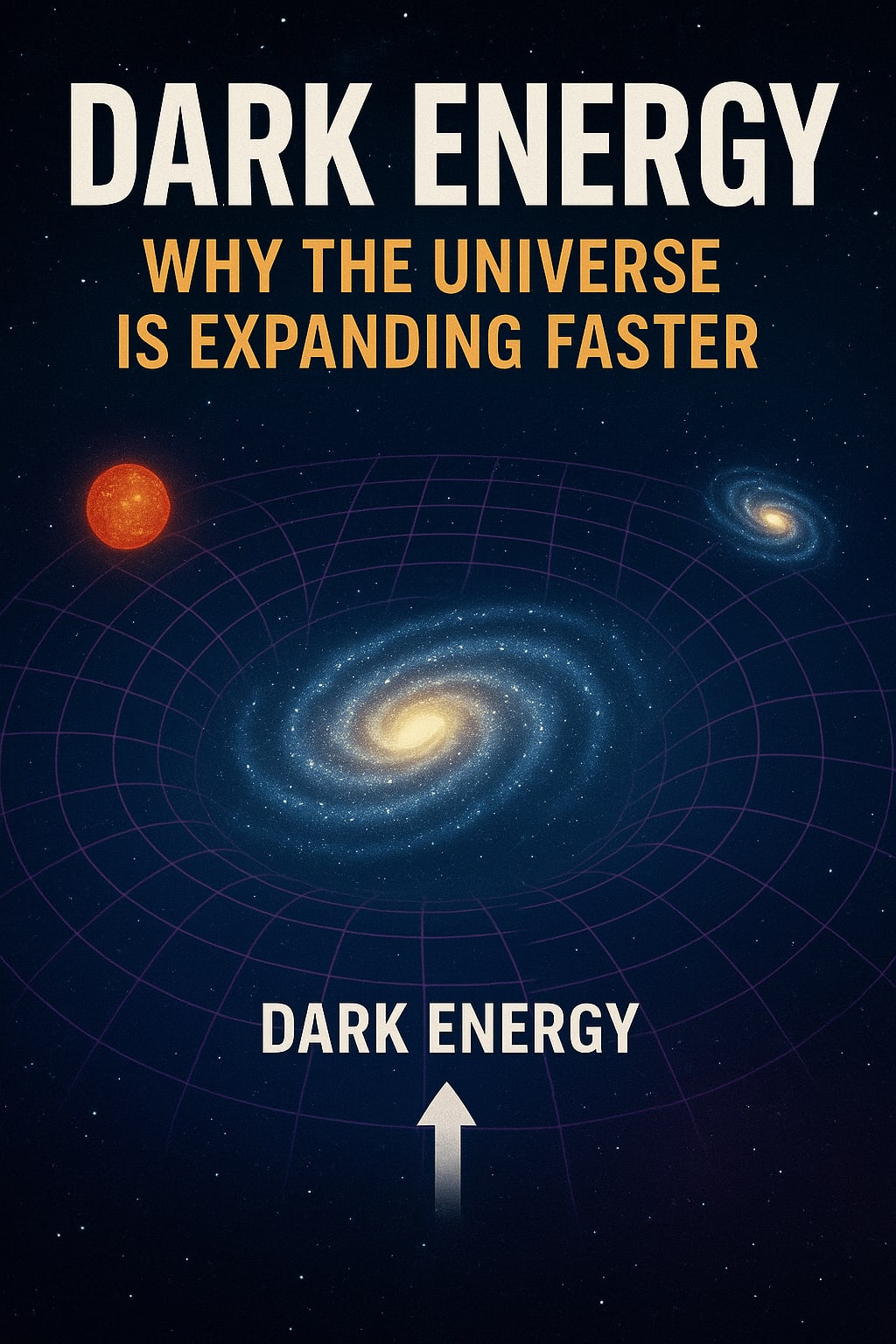
Dark Energy and the Energy of Empty Space
Observations show that the universe’s expansion is accelerating due to dark energy.
Dark energy may be related to vacuum energy — the energy inherent in empty space.
If empty space has energy, then emptiness is not empty.
The more precisely we measure the cosmos, the more we discover that apparent voids are structured and dynamic.
________________________________________
A Balanced Scientific Perspective
So, is nothing possible in physics?
Based on current scientific understanding:
• Empty space is not truly empty.
• Quantum fields exist everywhere.
• Vacuum energy has measurable effects.
• Spacetime itself is dynamic.
Absolute nothing — no space, no time, no laws — may not be describable within physics.
It may be logically impossible.
Or it may represent a state beyond current theory.
At present, physics suggests that something is more natural than nothing.
________________________________________
Conclusion: The Mystery of Nothing
The question “Is nothing possible in physics?” reveals how strange and profound reality truly is.
What we once imagined as empty void is now known to be filled with quantum fields, fluctuations, and energy. The vacuum is dynamic. Space itself has structure.
Attempts to describe the universe emerging from nothing often rely on a framework of laws — meaning it is not truly nothing at all.
Perhaps absolute nothing is not a physical possibility but a conceptual limit. Or perhaps future discoveries in quantum gravity will offer deeper insight into whether reality could ever have been completely absent.
For now, modern physics suggests a surprising conclusion:
The universe may never have contained true nothingness.
Even the deepest void is alive with structure.
And in exploring nothing, we uncover one of the greatest mysteries of existence — why there is something rather than nothing at all.
About the Creator
Keep reading
More stories from shahkar jalal and writers in Education and other communities.
Could the Universe Be a Simulation? Exploring the Science and Philosophy Behind the Simulation Hypothesis
What Is the Simulation Hypothesis? The simulation hypothesis proposes that reality as we experience it is an artificial simulation, similar in principle to a highly advanced virtual reality. According to this idea, an advanced civilization — possibly in another universe — could possess computational power vast enough to simulate entire worlds populated with conscious beings.
By shahkar jalala day ago in Education
Why the Textile Recycling Market Is Reshaping the Future of Sustainable Fashion?
With the rise of concerns around sustainability in general, and the fashion and textile industry in particular, the environmental impact of textiles, textile waste, and the resources used to make textiles have become subjects of rethinking in the industry and among consumers. The textile recycling market has emerged as one of the leading solutions to address the need for reducing waste and promoting a circular economy.
By Akshay Kumar3 days ago in Education
The Power of Perspective: Rich Thinking vsTraditional Thinking
The Power of Perspective: Rich Thinking vs. Traditional Thinking Success in life is often less about external circumstances and more about the mindset we adopt. Two dominant approaches to thinking—rich thinking and traditional thinking—illustrate how perspective shapes opportunities, decisions, and ultimately, outcomes. While traditional thinking emphasizes stability, caution, and conformity, rich thinking thrives on vision, risk-taking, and innovation. Understanding the differences between these two mental frameworks provides valuable insight into why some individuals achieve extraordinary success while others remain confined to predictable paths.
By Alhouci boumizziabout 22 hours ago in Education
The Pride Flag and the Diversion
For nearly a decade, the LGBTQIA Pride Flag rippled in the wind at Christopher Park, a kaleidoscope of color staked into the soil of America’s first national monument to LGBTQIA+ liberation. That flag came down this week. Federal officials, citing new guidance from the Trump Administration, silently lowered the rainbow flag from its pole across the street from the Stonewall Inn. The birthplace of the modern gay rights movement now flies only the United States flag.
By Tim Carmichael3 days ago in Pride



Comments
There are no comments for this story
Be the first to respond and start the conversation.