

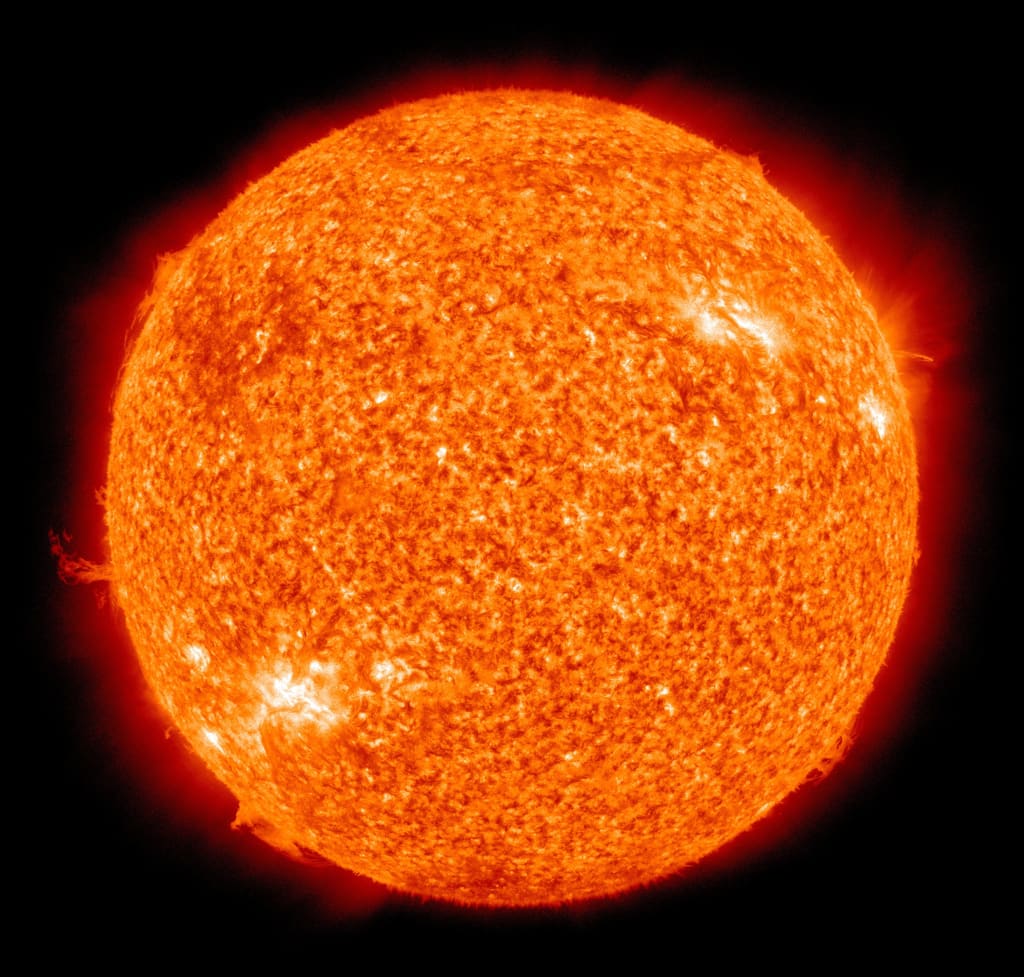
Logical disclosures connected with the sun have been instrumental in growing comprehension we might interpret the universe and its activities. Throughout the long term, different perceptions and exploration have uncovered entrancing bits of knowledge into the sun's design, processes, and its effect on The planet and the planetary group. In this clarification, we will investigate a portion of the huge logical revelations made about the sun.
One of the earliest and most central disclosures about the sun was its job as the focal point of our nearby planet group. In the sixteenth 100 years, Nicolaus Copernicus proposed the heliocentric model, which expressed that the sun, not the Earth, is at the focal point of the planetary group. This earth-shattering thought altered how we might interpret the universe and established the groundwork for additional logical investigation.
As innovation progressed, researchers had the option to concentrate on the sun in more detail. One huge disclosure was the sunspots, dim regions on the sun's surface. In the mid-seventeenth hundred years, Galileo Galilei noticed and reported sunspots, testing the common conviction that the sun was an ideal, constant divine body. This disclosure gave proof that the sun goes through changes and has a functioning surface.
The investigation of sunspots prompted one more critical disclosure known as the sun based cycle. In 1843, Samuel Heinrich Schwabe saw that the quantity of sunspots changed over the long haul in a standard example. This perception prompted the distinguishing proof of the sun-based cycle, a roughly 11-year time span during which the sun's action, including sunspot development, pinnacles, and afterward dies down. Understanding the sun-based cycle has been vital in foreseeing sun-powered action, for example, sun-oriented flares and coronal mass launches, which can essentially affect Earth's innovation and correspondence frameworks.
In the mid-twentieth hundred years, researchers started to unwind the sun's inside structure. Through the investigation of sun-powered motions, which are small vibrations on the sun's surface, analysts had the option to gather the sun's interior synthesis and elements. Helioseismology, the investigation of these motions, uncovered that the sun has unmistakable layers, including the center, radiative zone, and convective zone. This comprehension of the sun's inward construction has given significant bits of knowledge into heavenly development and the cycles that drive the sun's energy creation.
One more critical revelation connected with the sun is the peculiarity of sun-powered flares. During the next 100 years, researchers created instruments equipped for identifying and concentrating on the extreme explosions of energy delivered during sun-powered flares. These perceptions uncovered that sun-oriented flares are brought about by the abrupt arrival of attractive energy in the sun's environment. Sun-based flares can emphatically affect Earth, including disturbing satellite correspondences, causing blackouts, and in any event, presenting dangers to space explorers in space.
The investigation of the sun's environment, known as the sun-oriented crown, has likewise yielded captivating revelations. In the late nineteenth hundred years, during an all-out sun-powered obscure, researchers noticed a weak radiance of light encompassing the sun, which they later recognized as the sun-based crown. The crown is a lot more sultry than the sun's surface, and its starting point and warming components have been the subject of extreme exploration. Researchers have found that the crown's high temperatures are probable because of attractive fields and wave communications, yet many inquiries stay unanswered.
Moreover, the sun's part in space climate and its effect on Earth's magnetosphere has been a huge area of study. The sun emanates a consistent stream of charged particles called the sun-oriented breeze, which interfaces with Earth's attractive field. This cooperation can prompt peculiarities like the auroras, or northern and southern lights, which are apparent in polar districts. Understanding space climate and its impacts on Earth is urgent for safeguarding satellites, power frameworks, and other mechanical foundations.
Lately, the investigation of exoplanets, or planets circling stars other than the sun, has extended how we might interpret the potential for life past Earth. Researchers have found exoplanets in the tenable zone, where conditions might be appropriate for fluid water and possibly life as far as we might be concerned. The sun's qualities and conduct have given a premise to examination while concentrating on different stars and their capability to help livable planets.
All in all, logical disclosures connected with the sun have been fundamental in propelling our insight into the universe. From grasping the sun's inward design and elements to concentrating on sun-based flares, the sun-powered crown, and its effect on The planet, these revelations have expanded how we might interpret our spot in the universe. Proceeded with the examination and investigation of the sun will without a doubt prompt further interesting experiences into the operations of our planetary group and then some.
About the Creator
C.S LEWIS
I presently think positively. Railing and censuring just destroy. Confirmed speculation develops. I currently take a gander at the daily routine that I experience and confirm, "It is Great." I love and favor the Ideal Power inside me
Why and How Learning French Through Business and Entrepreneurship Changes Everything
Many people still learn French the way they learned subjects at school: grammar rules, exercises, vocabulary lists, and a lot of pressure to “do things right.” The problem is that this approach rarely works in the long run. You can do well in a textbook and still freeze the moment you have to speak in real life. Because when it’s time to talk, your brain is not looking for a rule. It’s looking for a reflex. It’s looking for flow. It’s looking for confidence.
By Bubble Chill Media 5 days ago in Education
Discovering Price Gaps: How to Find Market Inefficiencies That Lead to Better Returns
Smart investing isn’t just about picking strong stocks or diversifying your portfolio. One of the most powerful strategies is learning how to identify market inefficiencies, which are opportunities where a security’s price doesn’t reflect its true value. These moments often arise from human behavior, misinformation, or slow market reactions. If you can detect them early, you gain an edge over the average investor — and that edge can translate into higher returns.
By Brian Ferdinandabout 12 hours ago in Education



Comments (2)
A very informative great article. Definitely deserves a top story.
Top