

Once upon a time, there was a wealthy merchant named Rohan who lived in a small village. Rohan had always been known for his wealth and had always been very proud of it. He never missed an opportunity to flaunt his wealth and always looked down upon the poor people of the village.
One day, Rohan went on a long business trip and was away for several months. When he returned, he found that his entire village had been ravaged by a severe flood. All of the houses had been destroyed and the people were left homeless and without any means of livelihood.
Feeling sorry for the people, Rohan decided to use his wealth to help rebuild the village. He donated large sums of money to help the villagers rebuild their homes, provided food and shelter for the needy, and even helped to create new job opportunities for the people.
Through his generosity and kindness, Rohan realized that his wealth was not just for his own benefit, but also to be used to help others. He began to understand the true value of money and how it could be used to bring happiness and prosperity to those in need.
From that day on, Rohan was no longer proud of his wealth and instead used it to make a difference in the lives of others. He became a respected and loved member of the community and his generosity will be always remembered in the village.
The moral of this story is that money is a powerful tool, but it is important to use it in the right way. It is not just for one's own benefit, but also to be used to help others and bring happiness and prosperity to those in need. With this in mind, one can truly appreciate the true value of money and use it wisely.
STORY 2
Once upon a time, there was a poor farmer named Rama who lived in a small village. He worked hard day and night to earn enough money to feed his family and make ends meet. However, despite his hard work, he never seemed to have enough money.
One day, Rama came across a wise old sage who lived in the jungle nearby. The sage saw that Rama was struggling financially and decided to offer him some advice.
"Rama," said the sage, "money is not the key to happiness. It is the love and contentment in your heart that truly brings happiness. Do not let the pursuit of money consume you, for it will only bring you misery."
Rama did not fully understand what the sage meant, but he thanked him for his advice and went back to his village.
The next day, Rama went out to his fields as usual. As he was working, he heard a strange noise coming from the ground. He dug deeper and found a pot filled with gold coins. Rama was overjoyed and thought that this was the answer to all his problems. He hurried back to his village and began to spend his newfound wealth on all the luxuries he had always wanted.
But soon, Rama realized that the love and contentment that he had felt before were now gone, replaced by greed and the constant desire for more money. He was not happy anymore.
Feeling guilty, Rama went back to the sage and told him what had happened. The sage smiled and said, "Rama, you have learned your lesson. Money can bring temporary happiness, but true happiness comes from within. It is important to find balance and not let money consume you."
Rama was grateful to the sage for his wisdom and returned to his village, where he lived a contented life, finding balance between his financial needs and the love and contentment in his heart.
The moral of this story is that money is important, but it is not the most important thing in life. Love, contentment, and balance are what truly bring happiness. It's important to be mindful of the role money plays in our lives, to not let it consume us and to find a balance between what we need and what we want.
About the Creator
Keep reading
More stories from Sivasankaran and writers in Education and other communities.
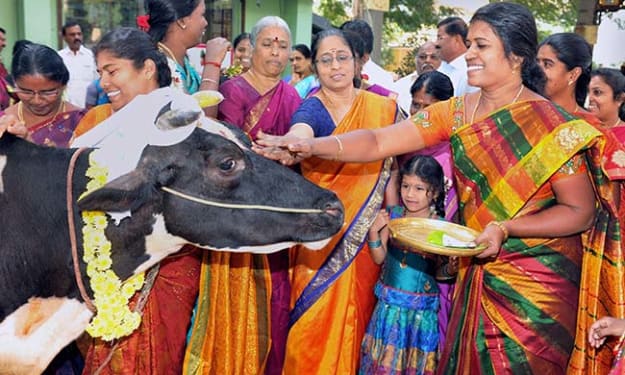
Festival : PONGAL
Pongal is a four-day harvest festival celebrated in the southern Indian state of Tamil Nadu and in parts of Sri Lanka, Singapore, and Malaysia by the Tamil community. It is typically celebrated in January, usually on the 14th or the 15th of the month, and marks the beginning of the Tamil month of Thai.
By Sivasankaran3 years ago in Education
How Nursing Students Can Study Smarter and Build Clinical Confidence?
The nursing program is challenging, fast-paced, and often overwhelming. Between classes, clinicals, and exams, nursing students often feel as though they are being asked to memorize a tremendous amount of information while still trying to feel confident in actual patient scenarios. The reality is that success in nursing programs is not about working harder and putting in more hours. It is about working smarter and building the confidence in the clinical setting that is necessary to make effective decisions.
By Sulcus Learning4 days ago in Education
The Devil's Triangle
The sails ruffled in the breeze as we cruised along. The Sea Breeze was a mid-size catamaran that sailed out of Royal Naval Dockyard in Bermuda. We had booked this trip weeks in advance and were now looking at our Captain, Spike and two boat hands. Paddy and Wilson seemed like nice guys, joking around with the passengers and telling us some stories about Bermuda that only locals would know. Their island accents sounded almost British but they were pleasant to listen to.
By Barbara Gode Wiles7 days ago in Fiction



Comments
There are no comments for this story
Be the first to respond and start the conversation.