
NSE Unlisted Share Price Jumps Amid IPO Buzz: Expected Timeline, Valuations & More
The NSE unlisted share price has been on a steady upward march, and honestly, it’s hard to ignore the noise around it. Every time IPO discussions resurface, demand in the unlisted market spikes like clockwork. We’re seeing the same pattern again—investors positioning early, hoping to ride the valuation re-rating when the public listing finally happens.
Understanding NSE Unlisted Shares
What Are Unlisted Shares?
Unlisted shares are equity shares of companies that are not yet listed on stock exchanges like NSE or BSE. They trade privately, often through intermediaries, at mutually agreed prices. Think of it like buying property before the area gets commercialized—higher risk, but potentially higher upside.
How NSE Unlisted Shares Work
NSE, despite being India’s largest stock exchange, is itself not publicly listed yet. Its shares trade in the unlisted market, mainly among HNIs, institutions, and informed retail investors. Prices are driven purely by demand, expectations, and future listing potential.
Why NSE Unlisted Share Prices Are Rising
IPO Expectations and Market Sentiment
The biggest catalyst? IPO buzz. Every hint of regulatory clearance or internal restructuring revives optimism. Investors don’t want to be late to the party, so they buy early, pushing prices up.
Institutional and HNI Interest
When smart money starts accumulating quietly, prices respond fast. NSE is seen as a high-quality, monopoly-like business, making it attractive for long-term capital.
Scarcity Premium in the Unlisted Market
Limited sellers plus rising buyers equals one thing—price inflation. NSE shares are not freely available, which adds a scarcity premium.
Recent Price Trends in NSE Unlisted Shares
Historical Price Movement
Over the years, NSE’s unlisted share price has moved in clear cycles—flat phases followed by sharp rallies whenever IPO chatter heats up. The current phase is firmly in the accumulation-to-rally zone.
Demand-Supply Dynamics
Supply is restricted due to lock-ins and long-term holders. Demand, however, is broadening. That imbalance alone explains the recent jump.
IPO Buzz: What’s Fueling the Excitement
Regulatory Signals and SEBI Developments
SEBI’s evolving stance on governance, ownership limits, and compliance has brought NSE closer to IPO readiness. Each regulatory green signal acts like fuel on fire.
NSE’s Financial Performance Narrative
Strong profitability, consistent cash flows, and dominant market share make NSE a textbook IPO candidate. Investors love predictability, and NSE offers plenty of it.
Expected IPO Timeline for NSE
Possible Filing Window
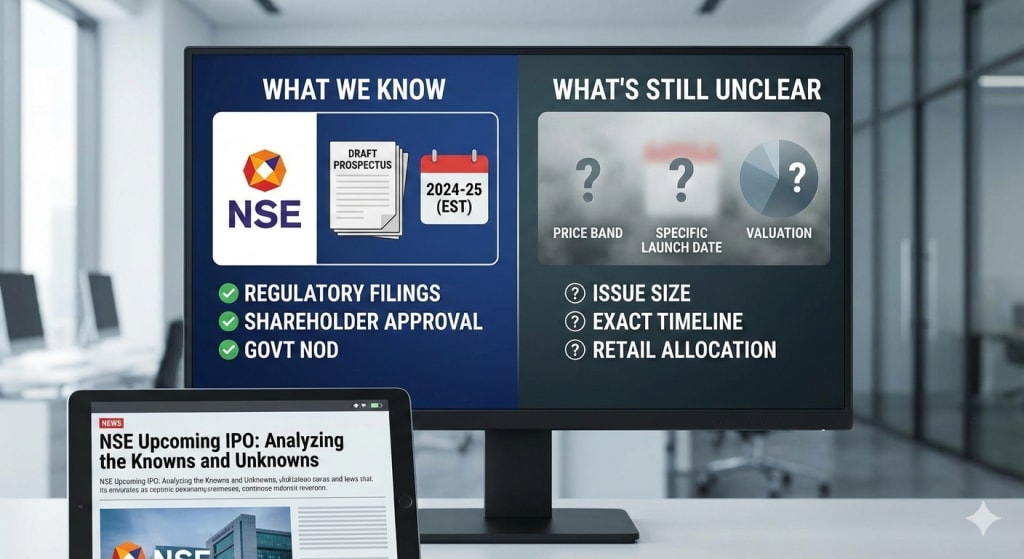
While there’s no official date yet, market consensus leans toward a medium-term timeline, once regulatory clarity is fully achieved.
Listing Scenarios and Market Conditions
Bullish markets improve listing chances. If broader indices stay stable, NSE IPO could be fast-tracked.
NSE Valuation in the Unlisted Market
Current Valuation Range
NSE’s unlisted valuation already runs into several lakh crores, reflecting its premium status. Prices factor in future growth, not just present earnings.
Comparison With Global Exchanges
Globally, exchanges trade at high multiples due to asset-light models. NSE fits that profile perfectly.
NSE vs BSE Valuation Metrics
While BSE is listed, NSE dominates volumes. Naturally, investors expect NSE to command a valuation premium post-listing.
Key Financial Metrics Investors Track
Revenue and Profitability Trends
Transaction fees, data sales, and clearing revenues create a diversified income stream. Margins remain enviably high.
Market Share and Moat
NSE controls the lion’s share of equity derivatives and cash markets. That moat isn’t easy to breach.
Who Is Buying NSE Unlisted Shares
Retail Sophisticated Investors
Seasoned investors with IPO experience are accumulating patiently.
Family Offices and Institutions
These players think in decades, not quarters. NSE fits their long-term thesis.
Risks of Investing in NSE Unlisted Shares
Liquidity Risk
You can’t exit instantly. That’s the trade-off for early entry.
Regulatory and Timing Risk
Delays can test patience. IPOs don’t follow emotional timelines.
Potential Upside After IPO
Listing Gains Possibility
If valuations align with global peers, listing gains could be meaningful.
Long-Term Wealth Creation Angle
Beyond listing pop, NSE is a compounder-style business.
How to Buy NSE Unlisted Shares in India
Platforms and Intermediaries
Transactions happen through trusted intermediaries and private deal platforms.
Documentation and Transfer Process
Expect KYC, DIS slips, and demat transfers—nothing fancy, just procedural.
Taxation on Unlisted Share Investments
Capital Gains Treatment
Long-term capital gains kick in after 24 months.
Holding Period Impact
Timing your exit post-IPO can optimize tax efficiency.
Should You Invest Now or Wait for IPO
Risk-Reward Analysis
Early entry offers valuation comfort but demands patience.
Investor Profile Fit
If volatility scares you, waiting might be wiser.
Expert View on NSE Unlisted Share Price Movement
The current price action reflects anticipation, not speculation. That’s an important distinction. Markets aren’t guessing blindly—they’re pricing probability.
Conclusion
The NSE unlisted share price jump isn’t random. It’s a calculated response to IPO expectations, strong fundamentals, and scarcity-driven demand. For investors who understand the unlisted ecosystem, NSE remains one of the most tracked and debated opportunities in India’s pre-IPO space.
FAQs
1. Why is NSE unlisted share price increasing?
Because of IPO expectations, strong financials, and limited supply.
2. Is NSE IPO confirmed?
No official date yet, but regulatory progress keeps hopes alive.
3. Are NSE unlisted shares risky?
Yes, mainly due to liquidity and timing uncertainty.
4. Can retail investors buy NSE unlisted shares?
Yes, through intermediaries and private platforms.
5. Is NSE a long-term investment?
For patient investors, it fits a long-term compounding thesis.
About the Creator
Keep reading
More stories from Arjun Bhatt and writers in Education and other communities.
Peyush Bansal invests ₹5 crore in lifestyle brand on Shark Tank India
In a historical monumental event on Shark Tank India Season 4, Peyush Bansal, co-founder and CEO of Lenskart Solutions Ltd, made headlines by marking a record breaking deal and making an investment of ₹5 crore in NOOE, a premium lifestyle and accessories brand. This investment marks the biggest deal in the records of Shark Tank India across the seasons till date, highlighting the growing importance of the show in boosting revolutionary Indian startups. This article delves into the information of this record-breaking investment, the brand NOOE, and the wider implications for the Indian entrepreneurial ecosystem.
By Arjun Bhattabout a year ago in Education
Martin Luther King Jr
Martin Luther King Jr. was one of the most influential leaders of the American civil rights movement. He is best known for his commitment to nonviolent protest and for delivering the historic “I Have a Dream” speech. Through his leadership, courage, and dedication to equality, King helped bring about major social and legal changes in the United States.
By Organic Products 7 days ago in Education
The Impact of Technology on Modern Entrepreneurship in a Digital-First World
The impact of technology on modern entrepreneurship has changed how businesses start, grow, and compete. Today, entrepreneurs rely on digital tools to turn ideas into real businesses faster than ever. Technology reduces barriers and opens access to markets, knowledge, and customers. With the right tools, even small startups can compete with large companies. The impact of technology on modern entrepreneurship is now a key factor shaping success across every industry. Technology supports entrepreneurs at every stage. From planning to marketing, digital solutions save time and reduce costs. Entrepreneurs no longer need large offices or big teams to begin. A laptop and internet connection can be enough to launch a business. This shift has made entrepreneurship more accessible and flexible.
By Per Jacob Solli7 days ago in Education



Comments
There are no comments for this story
Be the first to respond and start the conversation.