
Profiles in Courage
Inspiring Stories of Political Bravery in the United States Senate

Introduction
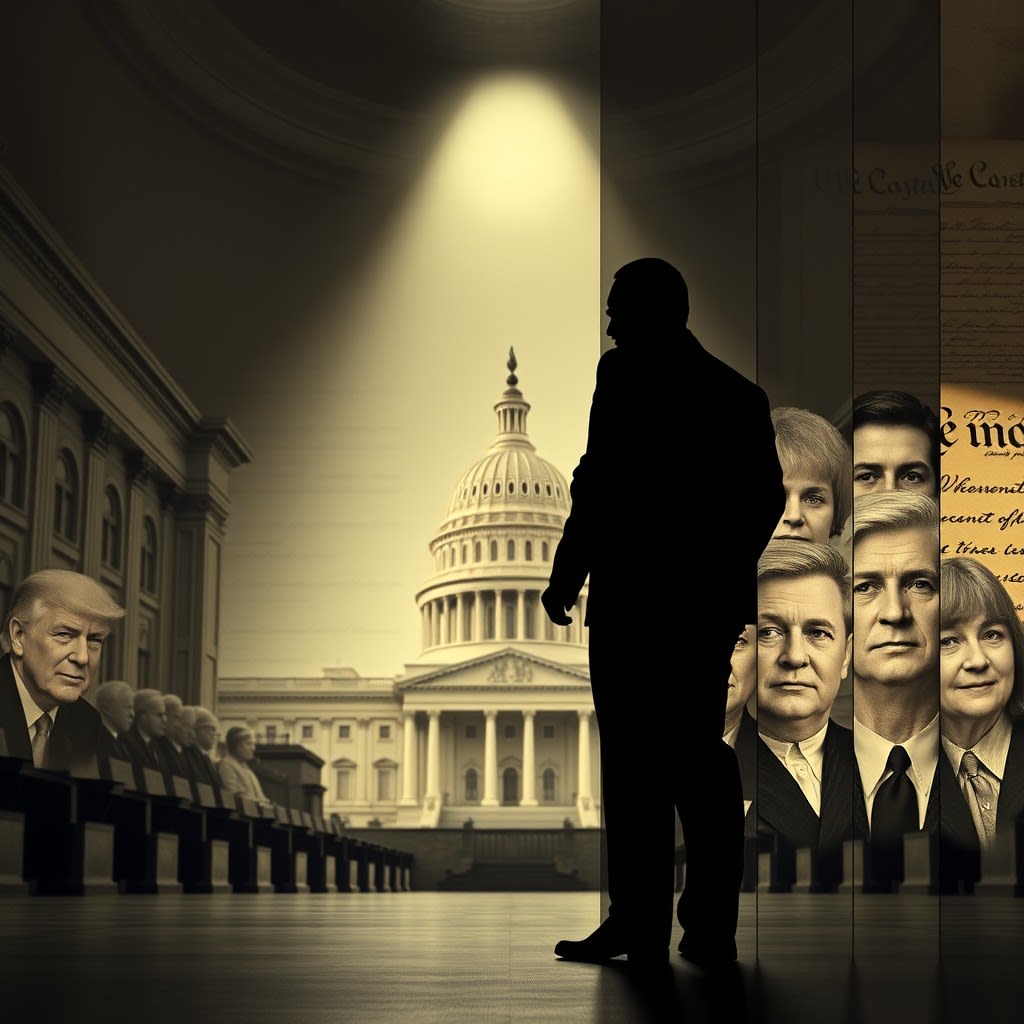
John F. Kennedy’s Profiles in Courage, first published in 1956, stands as a timeless tribute to political integrity and personal sacrifice. Written while Kennedy was still a U.S. Senator, the book presents the compelling stories of eight U.S. Senators who risked their political careers to stand up for their principles, often in direct opposition to their party, their constituents, or the popular sentiment of their time.
Awarded the Pulitzer Prize for Biography in 1957, Profiles in Courage transcends its historical narrative to deliver a powerful message about the nature of leadership, the burden of moral responsibility, and the cost of genuine courage in public life. In a time when political expediency often outweighs ethical consideration, Kennedy’s book remains urgently relevant.
Historical and Political Context
Kennedy wrote Profiles in Courage during a period of intense political tension in the United States. The Cold War was escalating, McCarthyism had chilled political discourse, and trust in government was strained. In this atmosphere, Kennedy sought to highlight examples of moral bravery—leaders who acted not for personal or political gain but out of loyalty to truth, justice, and the Constitution.
His work reflects a young senator’s idealism and deep admiration for the difficult choices faced by public servants. Kennedy’s intent was not just historical but philosophical: he aimed to redefine what it means to be courageous in the realm of politics.
Structure and Summary of the Book
The book is structured around eight case studies, each focusing on a U.S. Senator who displayed moral courage at significant personal cost. The following are summaries of these figures and their defining moments:
John Quincy Adams (Massachusetts)
Adams, son of the second U.S. President, broke from his Federalist Party to support Thomas Jefferson’s foreign policy. Though this isolated him politically, Adams acted out of a belief in national unity above party loyalty.
Daniel Webster (Massachusetts)
Webster, a gifted orator, supported the Compromise of 1850 to preserve the Union even though it harmed his reputation in the North, where anti-slavery sentiment was growing. He chose the country’s survival over regional loyalty.
Thomas Hart Benton (Missouri)
Benton opposed the expansion of slavery into new U.S. territories, a deeply unpopular stance in pro-slavery Missouri. Though he ultimately lost his Senate seat, Benton stood firm on his convictions about the unity of the Union.
Sam Houston (Texas)
Known for his rugged independence, Houston opposed the Kansas-Nebraska Act and refused to support secession, leading to his political downfall in the South. His loyalty to the United States outweighed the pressures of his state and party.
Edmund G. Ross (Kansas)
Ross cast the deciding vote against the impeachment of President Andrew Johnson in 1868. Despite immense pressure and knowing it would destroy his political career, Ross voted based on his interpretation of the Constitution and legal fairness.
Lucius Lamar (Mississippi)
A former Confederate officer, Lamar worked toward national reconciliation after the Civil War. His efforts for unity often angered Southern extremists, yet he promoted peace and cooperation between North and South.
George Norris (Nebraska)
Norris was a progressive Republican who opposed American involvement in World War I and criticized the misuse of executive power. He also defied President Coolidge’s policies, standing up for transparency and democratic principles.
Robert A. Taft (Ohio)
Known as "Mr. Republican," Taft criticized the Nuremberg Trials, arguing they violated principles of justice. Though unpopular, his stance was based on legal consistency and constitutional law.
Major Themes in the Book
1. Moral Courage Over Popularity
At the heart of each profile lies the central theme of moral courage—the ability to do what is right despite public opposition, party pressure, or personal risk. Kennedy argues that this form of bravery is rarer than physical courage, yet essential for the survival of a free democracy.
2. The Conflict Between Conscience and Constituency
The book explores the tension between representing the will of the people and making decisions based on one's ethical beliefs. These senators often chose conscience over political safety, sacrificing re-election for righteousness.
3. The Loneliness of Leadership
Kennedy emphasizes the isolation that comes with making unpopular decisions. Political courage often requires leaders to stand alone, facing criticism from colleagues, voters, and even family.
4. Integrity in Politics
While the book does not claim the featured senators were perfect or without political ambition, it celebrates their capacity to act honorably at decisive moments. Kennedy encourages a view of politics as a noble profession, when practiced with integrity.
Kennedy’s Philosophy on Political Courage
In the introduction and conclusion, Kennedy reflects deeply on the nature of courage. He writes that “the true democracy…is a very fragile thing,” and requires individuals willing to endure hardship in defense of its ideals.
Kennedy understood that political courage often comes at a great cost. His own experience as a senator—and later as a president—was filled with difficult choices. This personal connection gives the book authenticity and emotional power. Rather than simply admiring past heroes, Kennedy was setting a standard for future leaders, including himself.
Legacy and Cultural Impact
Profiles in Courage received widespread acclaim and won the Pulitzer Prize for Biography in 1957. More than just a book, it sparked national discussions about the role of morality in politics. Kennedy’s framing of political courage as a rare but essential trait remains influential in educational curricula and political ethics.
In 1990, the John F. Kennedy Library Foundation established the “Profiles in Courage Award,” honoring public officials who demonstrate similar integrity. Recipients include figures such as Gerald Ford, John Lewis, and Mitt Romney—each recognized for taking principled stands despite political risks.
The book has also inspired adaptations, including a 1960s TV series and numerous classroom projects. It continues to serve as a resource for educators teaching about character, civic responsibility, and leadership.
Criticism and Controversy
Though the book is widely praised, it has not been without controversy. Some critics questioned whether Kennedy fully wrote the book himself, citing the role of his speechwriter, Ted Sorensen. However, Sorensen and others confirmed Kennedy’s deep involvement in shaping the book’s ideas and structure.
Critics have also debated some of the figures chosen, suggesting others may have demonstrated greater courage. Nonetheless, the core message of the book remains powerful and enduring.
Conclusion
Profiles in Courage is more than a series of historical biographies. It is a call to action for politicians, leaders, and citizens alike to uphold the values of honesty, integrity, and conviction in public life. John F. Kennedy's work stands as both a tribute to courageous leaders of the past and a challenge to those shaping the future.
At a time when compromise is often mistaken for weakness and popularity outweighs principle, Profiles in Courage reminds us that democracy survives only when individuals are willing to risk everything for what is right. It is a lesson as urgent today as it was in Kennedy’s time—and perhaps even more so.
About the Creator
Keep reading
More stories from Zain Ul Abedin Khan and writers in Education and other communities.
A Journey to Serenity: Study Tour to Kalam, Swat
Nestled in the upper reaches of the Swat Valley, the town of Kalam stands as a jewel of natural beauty and cultural richness. Famous for its lush green meadows, snow-capped peaks, and crystal-clear rivers, Kalam has long been a favored destination for travelers seeking peace and inspiration. But beyond its postcard-perfect landscapes, Kalam offers something even more valuable for students and learners—a living classroom where nature, history, and culture intertwine. Our recent study tour to Kalam was an unforgettable journey of discovery, learning, and connection, made all the more special by the perfect weather that seemed to welcome us at every turn.
By Zain Ul Abedin Khan8 months ago in Education
Implications for Custody Arrangements in Early Childhood
Timotheus Homas Abstract Custody arrangements during early childhood can profoundly influence attachment formation and long-term developmental outcomes. This article examines how disruptions in attachment relationships—whether due to custody changes, visitation conflicts, or parental separation—affect emotional, social, and cognitive development. Drawing on empirical research and legal scholarship, the paper argues that family courts often underestimate the developmental risks associated with unstable caregiving environments. By integrating attachment theory with custody jurisprudence, the article advocates for a developmentally informed application of the “best interests of the child” standard that prioritizes relational stability alongside parental rights.
By Emma Wegenast3 days ago in Education
The Golden Crust China’s $132 Billion Bakery Revolution in 2026
For centuries, the Chinese breakfast was defined by steamed buns and rice congee, but in 2026, the aroma of sourdough and artisanal pastries is taking over the streets of Beijing and Shanghai. China’s bakery industry has transitioned from a niche curiosity into a massive economic powerhouse. According to the latest research, the China bakery products market size reached USD 91.7 Billion in 2025 and is now on a high-velocity path to reach USD 132.7 Billion by 2034. With a steady CAGR of 4.20% during 2026-2034, China is not just consuming bread; it is redefining the global standards of "East-meets-West" patisserie.
By Neeraj kumar7 days ago in Education




Comments
There are no comments for this story
Be the first to respond and start the conversation.