
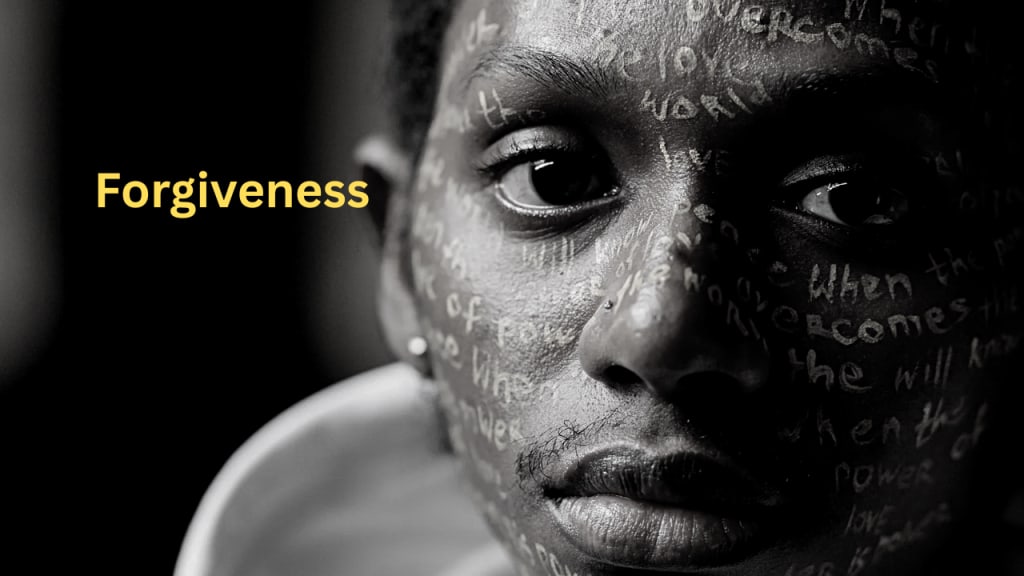
All-of-us, When Forgiveness is the Path to Healing
Forgiveness is one of the most healing transformations. Forgiveness does not just mean letting go of resentment or grievance against others, but forgiving the hurt and anger we have towards ourselves. A bitterness — held onto with wounds from childhood trauma, previous failed relationships or mistakes we’ve made — can cause emotional and physical stress in the body and mind that makes healing impossible. In this chapter, we will explore the processes involved by discussing forgiveness, the science of its healing effects, and how it helps liberate your spirit. Additionally, we will look at traditional religious and spiritual teachings on forgiveness, highlighting how different faiths and cultures have engaged with this extraordinary act of letting go.
The more we resist painful emotions — anger, resentment, guilt — the more we will pay the penalty of it. All this negativity has many health effects:
Chronic stress: Unpleasant feelings lead to the secretion of more stress hormones like cortisol which weaken the immune system, and trigger inflammation.
Tension/Pain: Traumatic energy or emotional wounds typically manifest physically, trapped in muscle tension or headaches, stomach or digestive issues, and chronic pain.
Do you have mental health problems: Resentment and resentment enhances depression, anxiety and emotional paralysis or incapacity to dwell.
It’s not about forgiving the wound you’ve been caused, it’s about freeing yourself from the prison of that wound.” A gift to yourself to so you may move forward with peace and clarity.
Fifteen Seconds of Forgiveness, by Daniel R. Zoughbi
Studies in psychology and neuroscience have found that forgiveness can reverberate through a person’s mental and physical health. Here are some of the healing properties of forgiveness:
Forgiveness Reduces Stress
Forgiveness weakens the grip of negative emotions, reducing the body’s stress-response system. Lower levels of stress hormones lead to lower inflammation and better heart health, which support overall health. Studies have shown that individuals who forgive also have lower blood pressure and better immune function.
Better Mental Health by Forgiveness
Forgiveness also reduces symptoms of depression, anxiety and PTSD. Resentment or a grudge is like an anchor for the mind, always in negative autoware, ruminating feelings, hurt and painful memories instead of living rent free in the positivity, grace and energy that comes with healing. Forgiving others allows people to feel lighter, more tranquil, less burdened by negative feelings.
Forgiveness Helps the Physical Healing Process
Stress reactions can suppress the body’s healing responses. Chronic emotional suffering has also been linked to a number of physical ailments, including chronic pain, gastrointestinal problems and autoimmune diseases. Releasing pent up anger and resentment cleans out our bodies so that we can heal more freely.
The Spiritual Sides of Forgiveness
Many spiritual and religious traditions also hold forgiveness as a key principle. Healed, forgiveness is considered throughout cultures and religions a way to set karma free, cleanse the soul, restore the spirit to balance. Here are a few ways different religious traditions describe forgiveness:
Christianity and Forgiveness
Forgiveness is at the core of Jesus' teachings in Christianity. Christians are called to forgive others just as God has forgiven them. You can think that forgiveness is an aspect of compassion and humility and grace. Jesus also said that by forgiving others we get off the hook for being angry with people and we have peace of heart.
Matthew 6:14-15: “For if you forgive other people when they sin against you, your heavenly Father will also forgive you. But if you do not forgive others their sins, your Father will not forgive your sins.”
In religious lexicon, in Christianity, forgiveness is bailout, healing, reconciling with the other, with God, with oneself.
Islam and Forgiveness
Islam and forgiveness: Both incorporate elements of spiritual and moral cleaning as well as a technique to nurture compassion. Allah (God) calls himself “the Most Merciful” and tells believers that it is good and charitable to forgive others. Forgiveness in Islam is seen as a way to purify the soul, release oneself from negativity, and become closer to Allah.
64:14: “And if you pardon, overlook and forgive — then indeed, Allah is Forgiving and Merciful.”
It is an opportunity to transcend the ego and to direct an individual toward peace for himself or herself and the community.”
Buddhism and Forgiveness
Forgiveness is one of the quintessential teachings of Buddhism, the passport to peace of mind and the path to happiness. As the Buddha said, we must release ourselves from hatred and resentment. In Buddhist practice, the act of forgiving is less about freeing others from the burden of their sins than freeing oneself from the emotional and spiritual weight of resentment itself.
Buddha: “If you hold onto anger, it is like drinking poison and expecting the other person to die.
Except in Buddhism forgiveness is a tool for making peace in personal relations, and stepping stones on the path to layering love with compassion.
Hinduism and Forgiveness
Forgiveness is viewed as an act of devotion in Hinduism that cleanses one's mind and spirit. It is one of the tools that helps in reducing karma and creates calmness in life. Forgiveness is about releasing and forgiving the other because we liberate ourselves from the toxic emotions of anger and resentment and make space for divine love and compassion.
Bhagavad Gita 16:3: “The qualities of a divine person are fearlessness, purity of heart, charity, self-restraint, and forgiveness.”
Forgiveness in Hindu tradition is also a vehicle to spiritual emancipation and an exit to liberation from the cycle of rebirth as spiritual transcendence when moksha (liberation) is achieved for escape from the forbearance cycle of pain.
The Wisest Ways—Dealing with Life, Truth and Everything in Between
Researchers and thinkers have written about the law of attraction and power of intention. For instance, Sheldon (2006) concluded that human beings who intentionally focus on their positive goals tend to have ideal lives.
The Process of Forgiveness
Forgiving is not always a clear process; it often requires time. With that in mind, here are some guidelines to help guide you on your journey toward forgiveness:
Acknowledge the Hurt
A necessary step toward forgiving others is acknowledging the injury and toll their actions have taken in our lives. It means recognizing the way the situation makes you feel, giving yourself permission to feel the pain, and letting yourself grieve.
Let Go of Resentment
This is to hold on to resentment, which only delays healing and makes you more emotionally invested in the person/situation. To forgive others is to take back with you the power to no longer be bound by resentment, which holds hostage a piece of your person in the storm of the past.
Practice Empathy
Try to empathize with the perspective of the person that hurt you. It doesn’t mean absolving what they did, but it can be in service of understanding that people are human and that a lot of people respond out of pain, or fear or ignorance. Seeing the world through a different lens helps with forgiveness.
Make Peace with Yourself
We might have as much to forgive ourselves for as anyone else. If you are holding on to guilt, shame or blame, start forgiving yourself. This means letting yourself believe you did the best you could, based on what you knew and the context around you in that moment.
Let Go of Expectations
Let go of any expectation that the one who harmed will apologize or make amends. Forgiveness is giving up your need to have the other person cure your wounds. You’d give yourself the same present, not an exchange.
Move Forward with Compassion
Forgiveness gives you the freedom to rise again with a heart full of love and compassion. Exif_JPEG_PICTURE helps you to relinquish your emotional baggage and makes room for peace, joy and healing.
Forgive Someone in Your Life: Five Practical Steps
Journaling: Write a letter to the person who hurt you (send it or not) to get your feelings on the page and clear some of that combustive rage out of your mind.
Meditation: Loving-kindness meditation (Metta), which is the practice of cultivating compassion for yourself and others.
Affirmations: Repeat statements to yourself such as “I forgive myself and others and release the past,” so you become more convinced of your healing intention.
Forgiveness is freedom. Forgiveness is not a onetime act; it requires patience, self-compassion and time. Forgiveness liberates us from the past enabling us to again become open to emotional freedom, healing and peace. Forgiving others or forgiving ourselves: Forgiveness is one of the most powerful healing tools for body, mind and spirit and for releasing resentment
Reference:
Sheldon, Kennon M., and Sonja Lyubomirsky. "How to increase and sustain positive emotion: The effects of expressing gratitude and visualizing best possible selves." The journal of positive psychology 1.2 (2006): 73-82.
About the Creator
Keep reading
More stories from Laila Sadia and writers in Education and other communities.
The Environment We Need to Heal
The Power of Your Environment An environment can deeply impact well-being. Whether we know it or not, we are touched by the places we walk through — how they affect our emotions, our energy, our health. A forced/chaotic environment cause stress and overwhelm, a peace/harmonious space supports emotional balancing. Relaxation, healing...
By Laila Sadia9 months ago in Education
The Safety Net Navigating the Complexities of Portugal Health Insurance in 2026
Portugal has long been a destination of choice for its golden beaches and relaxed pace of life, but in 2026, it is also becoming a case study in healthcare resilience. The nation’s healthcare landscape is defined by a unique "Dual-Track" system where the publicly funded National Health Service (Serviço Nacional de Saúde - SNS) exists alongside a rapidly expanding and increasingly sophisticated private insurance market. As the population ages and digital health technologies become the norm, the role of private health insurance in Portugal has shifted from being a "luxury" to a "strategic necessity" for over 40% of the population. Understanding this ecosystem in 2026 requires looking past simple premiums and diving into the intersection of demographic shifts, regulatory reforms, and the high-tech future of medical care.
By Neeraj kumar6 days ago in Education
A Love Forboding
The chipped stone slope caused unbearable footing. I slid, skirting on my heels. I cast my shield, relinquishing my guard to stay upright. Left with my double-edge and a prayer to the maker, I skated toward my objective. The earthly stubble gave way to solid ground. I found myself restored, a trail of dust in my wake.
By James U. Rizzi4 days ago in Fiction



Comments
There are no comments for this story
Be the first to respond and start the conversation.