
Role of Engine Oil in Lubrication and Friction Reduction
Understanding Engine Oil's Impact on Friction Reduction

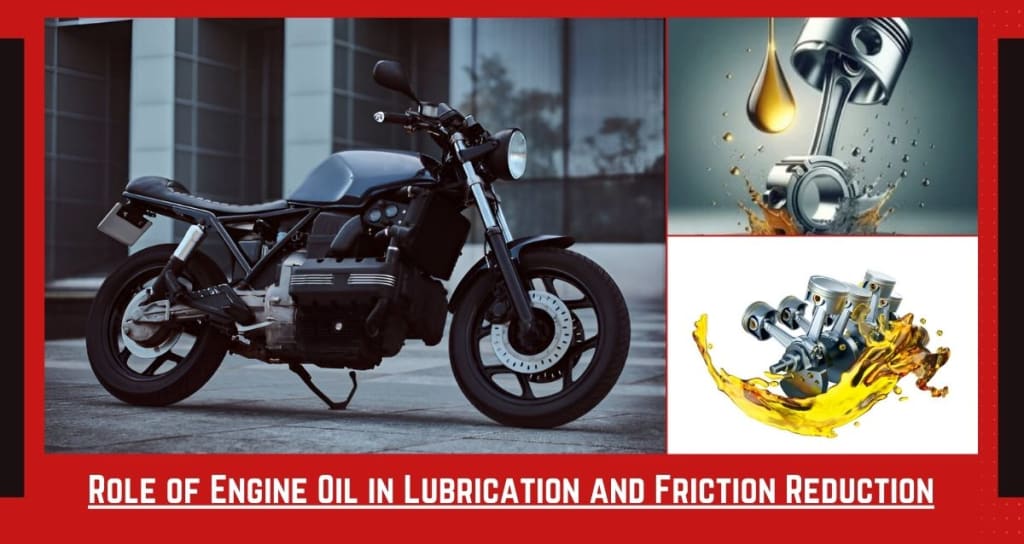
Just like a human body that needs nourishment to keep on functioning, the engine of your vehicle also needs engine oil to run smoothly in the long run. After all, engine oil is referred to as the lifeblood of engines. Furthermore, if you do not apply the best quality engine oil, it can leave your engine in a bad state. Remember, the quality of engine oil is what determines the health of your engine. Which in turn will affect your automobile’s performance.
Many people do not realize how oil for engines plays a major role in better performance. It provides many benefits, like better lubrication, friction reduction, as well as heat dissipation, and removal of contaminants. Furthermore, the oil also protects the engine from corrosion and increases fuel efficiency as well. So in this blog, we will discuss all the advantages that engine oil provides to ensure better health of your engine.
Role of Engine Oil in Lubrication and Friction Reduction
Engine oils are primarily known for providing excellent lubrication to various parts of the engine. In general, to perform smoothly, the moving part of the engine must be fully stiffness-free. The oil provides a protective layer or film between metal surfaces, reducing friction and preventing wear and tear. The oil protects the parts, like bearings and crankshafts, to prevent surface contact.
Moreover, in places with high pressure or low speed, which is mainly in the valve filter area. The oil applies a thin layer to maintain separation under such extreme conditions. But remember, applying low-quality engine oil can have bad effects. Such oils fail to provide adequate lubrication which increases friction and subsequently high wear and tear. Which of course, only increases repair costs and further reduces the lifespan of the engine.
Role In Dissipating Heat from the Engine
An engine with inadequate oil can have a huge problem with overheating. When in a running state, engines generate a significant amount of heat. Engine oils play a very important role in dissipating that heat for better performance. They do this by carrying away the heat from critical engine parts. Which in turn prevents any overheating and ensures an optimal temperature in the engine.
Furthermore, this oil also absorbs heat from high-pressure and temperature areas of the engine such as the crankshaft, pistons, and camshaft. But low-quality engine oil will simply break down under such high-temperature conditions. Thus, it will lose its ability to dissipate heat ultimately causing the engine to overheat. Which will lead to crucial damage to the engine and high repair costs.
Engine Oil Removes Contamination
It is to everyone’s common knowledge that after running on the road for many kilometers, dirt, debris, and combustion by-products will end up inside an engine. However, applying high-quality oil prevents such things from causing problems. Engine oils are good at trapping and suspending such contaminations. The oil has special additives that enhance its ability to capture and neutralize these contaminants. Thus, preventing them from causing damage to engine components.
Therefore, such removal of unwanted objects helps in better performance of the engine. But remember, if you opt for cheaper options, the oil might fail to protect the engine as it will lack the essential additives to function properly. This will cause a build-up of harmful deposits and sludge. Which will cause impaired performance and increase the risk of engine failure.
Protection Against Corrosion
One of the most important features of engine oil is its ability to prevent corrosion in the engine. It is normal for the engine to be exposed to various corrosive elements like moisture and acidic by-products of combustion. But good quality oil applies a protective coating on engine parts to prevent corrosion from such elements. But how do oils prevent corrosion from happening in the first place?
Engine oils have corrosive inhibitors that protect metal surfaces from rust and corrosion. In particular, applying oil to engines that do not run regularly or run in harsh environments is very important. As such conditions expose engines to more corrosion and only engine oil can prevent that. But remember, do not apply poor-quality oil as it may not provide adequate corrosion protection. Leading to the gradual deterioration of engine components.
Enhanced Fuel Efficiency
Good quality oils also can improve the fuel efficiency of the engine. This happens when the various moving parts of the engine are well-lubricated. This reduces any type of metal-to-metal friction, enabling the engine to operate more efficiently. Which makes the parts require less energy to run.
Thus, leading to less fuel consumed for the entire process. But of course, all of this will not be possible for a low-quality oil. As it will fail to provide the required lubrication for smoother performance. Which of course, will lead to higher fuel consumption and decreased efficiency.
Longevity of Engine Components
As we have mentioned before, engine oil plays a significant role in increasing the longevity of engine parts. Parts like pistons, bearings, and camshafts highly depend on the quality of the engine oil. Because the oil provides a protective layer or film over the parts. This layer protects such parts from high friction and wear and tear. Furthermore, the oil is also responsible for protecting against corrosion and high temperatures.
However, regular use of low-quality oil can result in premature wear and the need for costly replacements or repairs. They simply fail to provide the protective layer as the oil layer breaks down under harsh conditions. Furthermore, high-quality engine oils are also good for the environment. Because the oils are formulated to burn cleaner and produce fewer emissions, reducing the environmental footprint of the vehicle.
Enhances Engine Performance
High-quality oil also ensures the engine runs smoothly with minimal noise and vibration. It also helps in maintaining consistent power output and responsiveness. A well-oiled engine runs for longer distances without any disruption. Moreover, a smooth-performing engine also is more efficient in fuel consumption, which is always a good thing from a cost perspective.
Contrary to that, cheaper oils can lead to rough idling, reduced power, and sluggish acceleration. This of course, negatively impacts the driving experience. The vehicle will have a hard time running properly as the engine becomes more sluggish over time. This process also consumes more fuel leaving the driver with a costly headache to deal with.
You may also like: Here’s How Fully Synthetic Oil Boosts Engine Performance
Conclusion
As you can see, high-quality engine oil plays a very significant role in the health of your engine. It is responsible for lubricating various moving parts of the engine, so not only can it run smoothly but also protects each part from friction. Furthermore, the oil is also capable of getting rid of excessive heat from the engine. Which is necessary for the long-term health of the engine.
On the other hand, engine oils are also responsible for providing protection against harmful elements such as dirt debris and preventing the formation of sludge. Engine oil also provides excellent protection against corrosive agents by creating a protective layer that prevents moisture from coming in direct contact with the engine parts.
All of these increase the life span of the engine as well as reduce the need for frequent repairs. Lastly, engine oil is monumental in enhancing engine performance and increasing fuel efficiency. But remember, all of these benefits can only come from high-quality engine oil and not from cheaper alternatives.
About the Creator
Rahul Bhatt
Hi, I am Rahul, a professional content writer with over 3 years of experience as a ghostwriter, blog writer, and copywriter. I work closely with B2B and B2C industries, providing content that gains search engine visibility.
Keep reading
More stories from Rahul Bhatt and writers in Education and other communities.
Everything you need to know about refrigeration compressor oils
Refrigeration systems are used in broad sectors, including food preservation, pharmaceutical and even in the air conditioning sector. Mainly, these systems include the refrigeration compressor which is a constituent responsible for pumping the refrigerant at a pressure for the purpose of creating heat transfer. The refrigeration compressor oil is a very indispensable yet commonly overlooked constituent regarding the smooth and effective performance of such compressors. The particular lubricant has a significant role in maintaining the performance, longevity, and efficiency of refrigeration systems.
By Rahul Bhattabout a year ago in Journal
THE STAR
On the first day of the new year, astronomers across the world announced that the motion of the planet Neptune had become irregular. The discovery came almost simultaneously from several observatories. At first, ordinary people paid little attention. Many had never even heard of Neptune.
By Faisal Khan4 days ago in Education
Billionaire Legacy Through Design: Permanence and the Pursuit of Taste
Extreme wealth often shifts ambition away from accumulation and toward endurance. Once financial security reaches unimaginable levels, attention turns to what will remain decades or even centuries later. As a result, design becomes more than decoration. It becomes a declaration of identity, values, and permanence.
By Inspirata Group4 days ago in Education



Comments
There are no comments for this story
Be the first to respond and start the conversation.