
The Brilliant Journey of Otis Boykin
The Mind That Quietly Powered the Modern World
Otis Frank Boykin was born in 1920 in Dallas, Texas, into a world that expected little from people who looked like him. But from the moment he entered the world, he seemed determined to challenge every limitation placed in front of him. His mother, a homemaker, tragically passed away when he was just a year old, and his father—a carpenter—raised him with a strong work ethic and a belief that intelligence could be a tool of transformation. Boykin carried that belief throughout his life, turning it into an engine of groundbreaking inventions that would eventually power some of the most advanced technologies on earth.
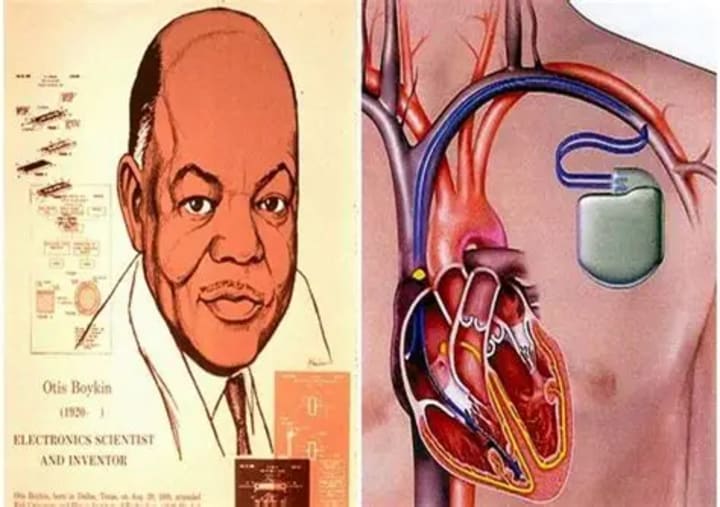
Boykin’s mind was a natural conductor of ideas. As a young student, he excelled in mathematics and science, driven by an endless curiosity about how machines worked. He spent countless hours taking apart household items—not to break them, but to understand them. Radios, clocks, small appliances—anything with wiring became a playground for his imagination. His teachers began to see what his father already knew: Otis possessed a rare gift, a mind capable of reshaping the world.
After high school, Boykin attended the Illinois Institute of Technology, studying engineering. Although financial challenges forced him to leave before completing his degree, he refused to let that setback halt his progress. Education, after all, does not end when a classroom door closes. He secured a position as a laboratory assistant, where he worked under a brilliant chemist and inventor. This role became his unofficial university. Every resistor he studied, every circuit he repaired, every electric pattern he analyzed became part of the foundation for his future breakthroughs.
Then came the invention that would change everything: his precision wire‑wound electronic resistor.
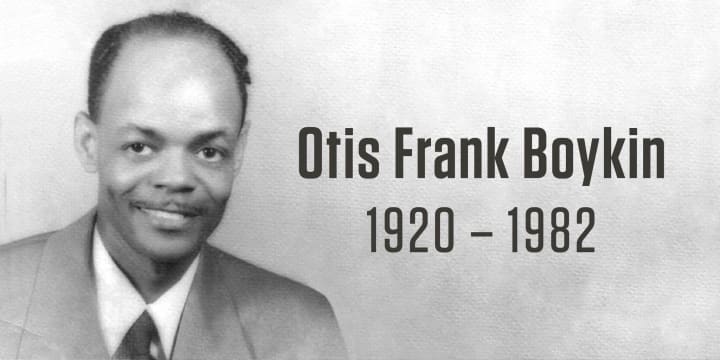
To many, a resistor is a tiny, unremarkable component. But Boykin saw its power. He recognized that improved resistors could make electrical devices more efficient, more durable, more reliable—and more advanced than ever before. His resistor was unique because it could withstand extreme temperature changes, sudden shocks, and rapid acceleration. It didn’t fail under pressure, didn’t break when pushed to the limits. For industries that depended on stability—such as aerospace, military defense, and computing—Boykin’s resistor was revolutionary.
Guided missiles required components that would function flawlessly even in violent conditions. Boykin’s resistor became the solution they had long needed. The U.S. military incorporated it into their systems, finally able to rely on a device that performed consistently under intense strain. His resistors also elevated the quality of IBM computers at a time when the computing industry was evolving at lightning speed. And perhaps most famously, his resistor became integral to the modern pacemaker, helping regulate heartbeats and save countless lives.
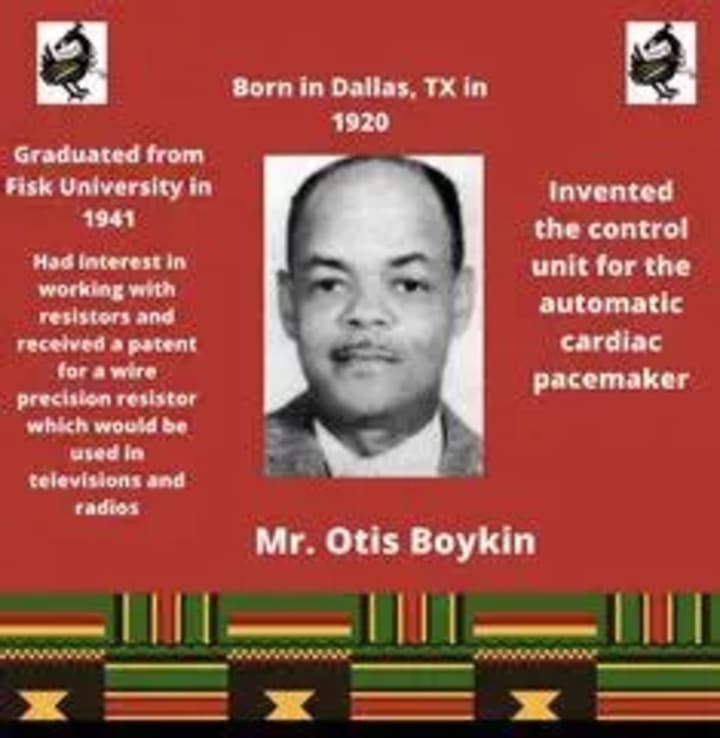
Imagine that—an invention small enough to hold in your hand, yet powerful enough to help keep a human heart beating.
But Boykin did not stop there. His creativity bloomed endlessly. Among his 26 patents were innovations such as an electronic air filter and a cash‑register locking mechanism—devices that showed how wide his imagination truly stretched. He saw problems not as barriers but invitations. Every malfunction, every inefficiency was simply a chance to do better. For Boykin, invention was not a job—it was a calling.
Despite his brilliance, he faced systemic challenges his entire life. Opportunities that flowed effortlessly to others came to him only through persistence, resilience, and relentless self‑belief. But that struggle only strengthened his resolve. Instead of focusing on recognition, he focused on contribution. Instead of asking for applause, he asked how he could help the world move forward.
When Otis Boykin passed away in 1982, he left behind more than patents. He left behind a blueprint for excellence—one built on creativity, determination, and a refusal to accept limitations. His inventions touch industries that define modern society: healthcare, computing, aerospace, and defense. His brilliance continues to pulse quietly inside machines and devices that power the everyday world.

His name may not always appear in textbooks, yet every guided missile system, every durable electronic device, every pacemaker that keeps a heart alive echoes the legacy of a man who believed that small improvements could lead to monumental change.
Otis Boykin didn’t just create resistors.
He created reliability. He created progress. He created possibility.
About the Creator
TREYTON SCOTT
Top 101 Black Inventors & African American’s Best Invention Ideas that Changed The World. This post lists the top 101 black inventors and African Americans’ best invention ideas that changed the world. Despite racial prejudice.
Keep reading
More stories from TREYTON SCOTT and writers in Education and other communities.
The Remarkable Legacy of Bessie Blount Griffin
In 1914, in the quiet community of Hickory, Chesapeake, a young girl named Bessie Blount began a journey that would eventually reshape the future of medical independence and forensic science. Born into a world where opportunities for Black women were exceedingly limited, she refused to let society dictate her path. Instead, she forged her own—brick by brick, challenge by challenge, invention by invention.
By TREYTON SCOTTabout 8 hours ago in Education
What Drivers Should Know Before Renewing Car Insurance 2026
The ritual of renewing car insurance has undergone a radical transformation. In 2026, simply letting your policy auto-renew is a financial mistake that could cost you hundreds, if not thousands, of dollars. The automotive landscape has shifted beneath our feet, driven by rapid advancements in vehicle technology, fluctuating economic conditions, and a fundamental change in how insurers assess risk. Today, your car is more than just a mode of transport; it is a data-generating hub that communicates constantly with the digital world. This connectivity has given rise to new insurance models that prioritize actual driving behavior over statistical generalizations.
By social xpertsolutions2 days ago in Education
Leading with Imagination: How Global Experiences Strengthen Leadership Creativity
Creativity is one of the most valuable qualities a leader can possess. It shapes decision-making, drives innovation, and empowers leaders to navigate challenges with fresh ideas. One of the most effective ways to cultivate creativity is through global experiences. When leaders travel, interact with diverse cultures, and immerse themselves in different environments, they gain new insights that expand their imagination. These global experiences help leaders think more deeply, act more confidently, and lead more creatively. By stepping outside the familiar, leaders discover ideas and perspectives that reshape how they approach their roles.
By Nathalie Kyriakou3 days ago in Education
The Tango Connection
I suppose I've become a writer so I wouldn't bore everyone to death telling them my stories. Reading them is reading. Not the same. There's rhythm. And timing and, most importantly, drama and suspense. Unless you have tremendous magnetism and an undeniable stage presence, there's no way you can engage an audience the way you can by writing your story. That's my opinion.
By Rene Volpi 7 days ago in Beat



Comments
There are no comments for this story
Be the first to respond and start the conversation.