
Thomas L. Jennings
America’s First Black Patent Holder
February 2026
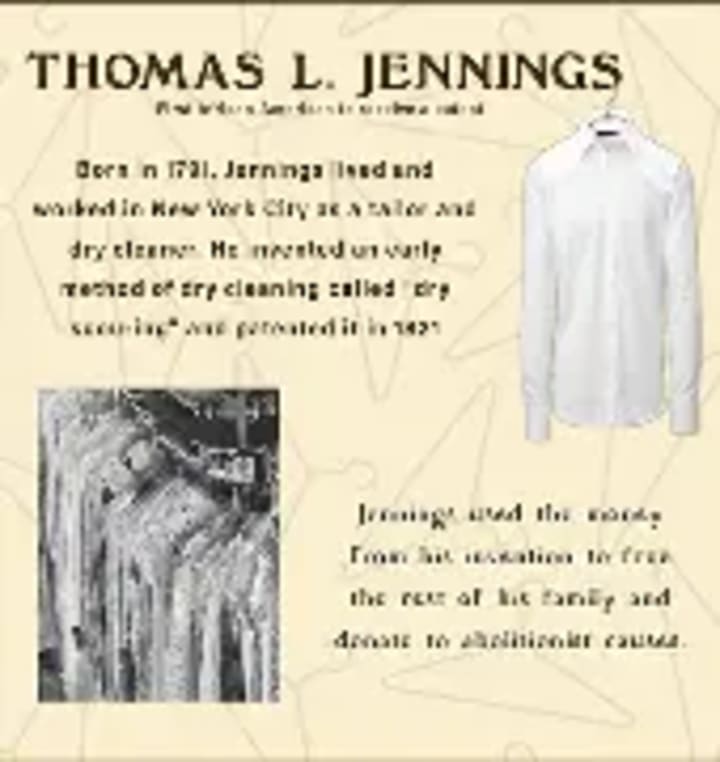
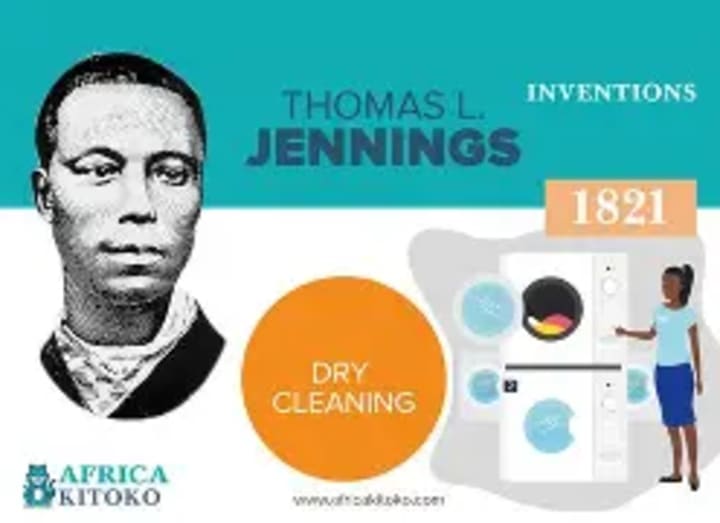
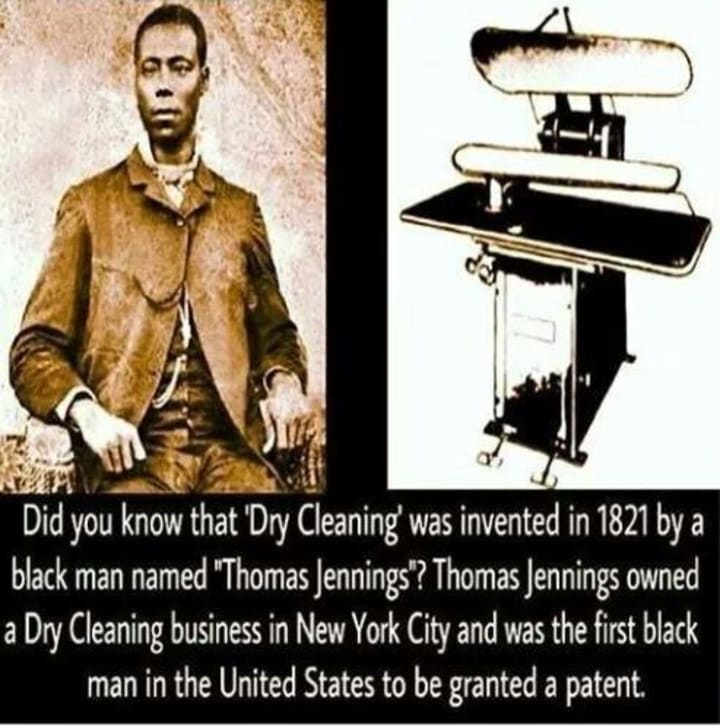
Jennings secured his patent in 1821, when the U.S. Patent Office granted him exclusive rights to a breakthrough fabric‑cleaning method he called “dry scouring.” The invention, a precursor to modern dry‑cleaning systems, revolutionized garment care at a time when delicate fabrics were nearly impossible to clean without damage.
A Career Built in the Tailoring Trade
Jennings’ groundbreaking invention emerged from his everyday work. As an accomplished tailor and shop owner in Lower Manhattan, he regularly handled fine garments for elite clients. Traditional washing methods often shrank or ruined expensive fabrics, prompting Jennings to experiment with new solutions. His research led to a solvent‑based process capable of cleaning wool, silk, and other delicate materials without distortion — an innovation that quickly gained commercial success.
Though the original patent document was later destroyed in the 1836 Patent Office fire — part of the infamous lost “X‑patents”contemporary newspapers confirm its issuance, and historians credit Jennings as the first African American to legally hold a patent under U.S. law.
Using Innovation to Advance Freedom
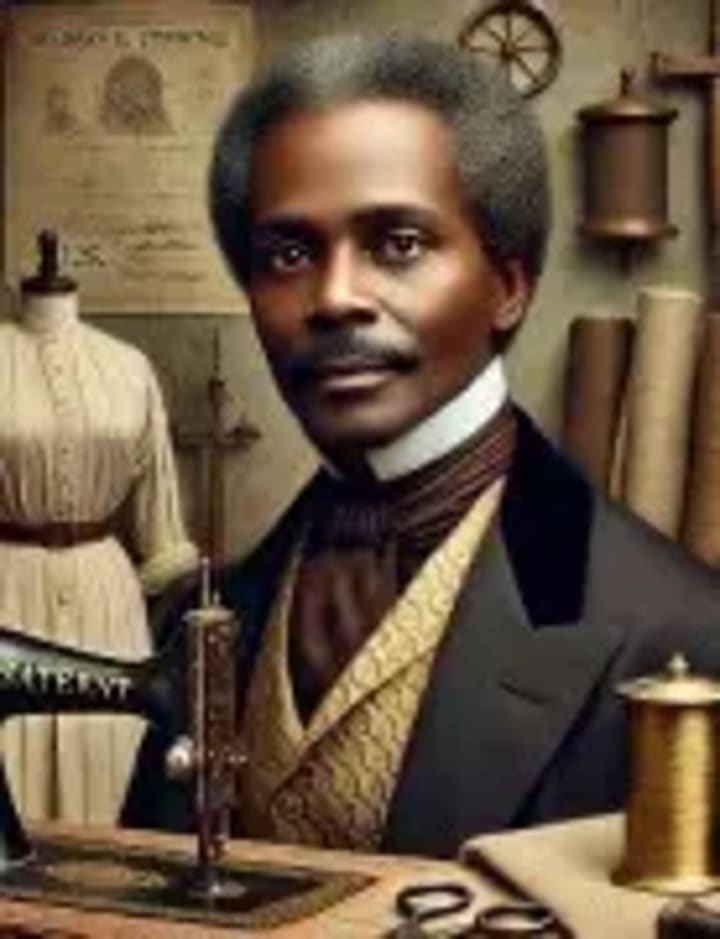
Unlike many inventors of his time, Jennings used the wealth generated from his discovery not for personal luxury but for liberation. His wife, Elizabeth, had been born enslaved and became an indentured servant under New York’s gradual emancipation laws. Jennings used earnings from his dry‑scouring process to purchase her freedom — and later secured freedom for their children.
He then directed substantial portions of his business profits toward abolitionist causes, helping fund legal defenses, civil rights campaigns, and the operations of early Black‑led institutions. Jennings was a founding member and trustee of the historic Abyssinian Baptist Church, one of Harlem’s most influential religious and political centers.
Celebrating African-American Scientist And Inventor Day:
In 1831, he served as assistant secretary at the First Annual Convention of the People of Color in Philadelphia, a major early gathering focused on equal rights and anti‑slavery strategies.
A Family at the Heart of Civil Rights History
Jennings’ commitment to justice extended to his family. In 1854, his daughter Elizabeth Jennings Graham, a New York schoolteacher, was forcibly removed from a segregated streetcar reserved for white riders. Her father organized the community response, hired a legal team, and won a landmark case that helped end racial segregation in New York City’s public transit system.
The case became one of the earliest successful civil rights lawsuits in the nation, nearly a century before Rosa Parks.
Enduring National Legacy
Thomas L. Jennings died in 1859, six years before the abolition of slavery in the United States. But his legacy — as a scientist, entrepreneur, activist, and community builder — has grown steadily. In 2015, the **National Inventors Hall of Fame** inducted Jennings for his pioneering dry‑scouring process and his groundbreaking role as the first Black American to be awarded a U.S. patent.
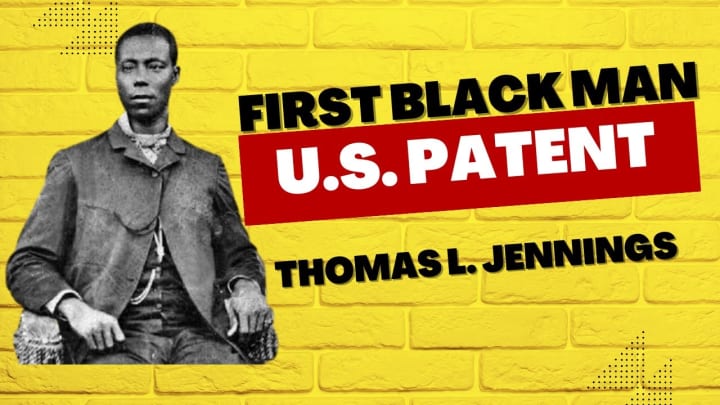
Historians consider Jennings a bridge between American innovation and Black liberation: a figure who used invention not just to solve a problem, but to create opportunity for himself, his family, and future generations.
Follow for More Stories & Explore the Store
If you enjoyed this historical feature and want more reporting on Black inventors, innovators, and world‑changing African American achievements:
👉 Check out my store for products celebrating Black excellence and invention
Your support helps keep these stories alive.
About the Creator
TREYTON SCOTT
Top 101 Black Inventors & African American’s Best Invention Ideas that Changed The World. This post lists the top 101 black inventors and African Americans’ best invention ideas that changed the world. Despite racial prejudice.
Keep reading
More stories from TREYTON SCOTT and writers in Education and other communities.
Youth Volunteering: A Personal Story of Leadership Growth
Volunteering with youth is often seen as an opportunity to give back, but for me, it became a pivotal experience that completely transformed my understanding of leadership. Before I began volunteering, I had a narrow view of what leadership truly entailed. Leadership was about taking charge, making decisions, and guiding others from the front. However, my experience working with young people opened my eyes to a much broader and deeper definition of leadership. This personal story will share how volunteering with youth not only helped me grow as a leader but also reshaped my perspective on the qualities and responsibilities that make a true leader.
By Jett Harris of Arkansas4 days ago in Education
Real Time Success: Simple Time Management Methods That Deliver Real Results
Time can feel hard to control, but simple time management methods can make each day easier and more productive. Many people think they need complex systems or expensive tools to stay organized. The truth is that small changes often bring the most significant results. When you use simple time management methods that fit your daily life, you build habits that last and help you get more done with less stress. This article shows how to use these methods clearly and practically so you can see real results fast.
By Norman Badgera day ago in Education


Comments
There are no comments for this story
Be the first to respond and start the conversation.