
What is an enterprise portal? A beginner's guide
The benefits of using an enterprise portal for your business


In today's digital age, businesses rely heavily on technology to improve productivity, efficiency, and communication. One tool that has become increasingly popular in recent years is the enterprise portal. In this beginner's guide, we'll define what an enterprise portal is, its benefits, and how it can help your business.
What is an Enterprise Portal?
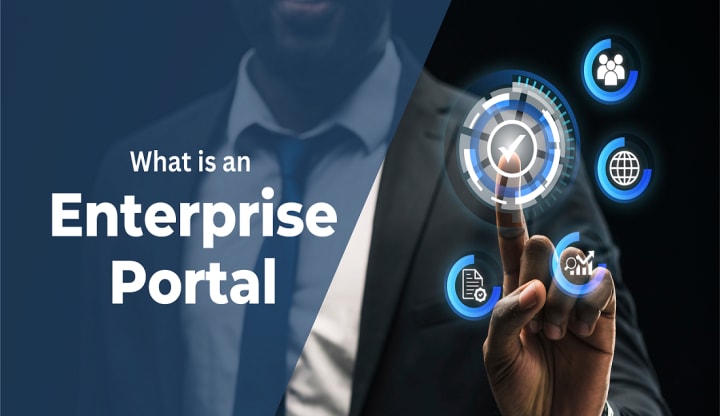
An enterprise portal is a web-based platform that provides a single point of access to applications, information, and services for an organization's employees, partners, and customers. It's designed to be a centralized hub that connects different systems, processes, and data sources within an organization, making it easier for users to find and access the information they need.
Enterprise portals typically have a customizable interface that allows users to personalize their experience based on their roles, preferences, and permissions. They can also provide a range of features and functionalities, such as document management, collaboration tools, workflow automation, analytics, and more.
Types of Enterprise Portals
Employee Portals:
Employee portals serve as a central hub for employee-related information and services. These portals typically provide access to HR services, employee directories, benefits, training materials, and other resources that employees need to perform their job functions. Employee portals can also facilitate communication and collaboration among employees, such as through team sites, forums, and chat.
Customer Portals:
Customer portals provide customers with a self-service platform for managing their accounts, accessing product information, making purchases, and receiving support. These portals can help businesses improve customer engagement and satisfaction by providing a personalized and convenient experience. Customer portals may also offer chat support, order tracking, and loyalty programs.
Partner Portals:
Partner portals facilitate collaboration and communication between a company and its partners. These portals typically provide access to shared resources, such as training materials, product information, and marketing collateral. Partner portals can also enable partners to manage leads, track sales, and collaborate on joint projects.
Supplier Portals:
Supplier portals enable companies to collaborate with their suppliers and manage the supply chain more effectively. These portals provide a platform for sharing information, such as inventory levels, pricing, and delivery schedules. Supplier portals can also facilitate the procurement process, such as by allowing suppliers to submit bids and invoices electronically.
Knowledge Management Portals:
Knowledge management portals provide a platform for storing and sharing organizational knowledge and expertise. These portals can help businesses capture and disseminate knowledge across the organization, improving decision-making and innovation. Knowledge management portals may also provide search, discussion forums, and content creation tools.
Executive Portals:
Executive portals provide executives and other senior leaders with access to key business information and metrics. These portals typically feature dashboards, analytics, and reports that help executives monitor performance, identify trends, and make informed decisions. Executive portals may also provide collaboration and communication tools that enable executives to work more effectively with their teams.
Each enterprise portal has unique features and benefits. Businesses should choose the right portal type based on their specific needs and requirements.
Benefits of an Enterprise Portal
Implementing an enterprise portal can benefit your organization in the following ways:
Improved productivity:
By providing a unified access point to various applications and services, an enterprise portal can reduce the time and effort needed to switch between different tools and systems. This can result in improved productivity and efficiency for your employees.
Enhanced collaboration:
An enterprise portal can facilitate collaboration and knowledge sharing among employees, partners, and customers, regardless of their location or device. This can help break down silos and improve communication across teams.
Better data management:
Enterprise portals centralize data from multiple sources and provide a unified view of critical business information. This can help your organization make better-informed decisions and improve overall data governance.
Increased security:
Enterprise portals can provide a secure and controlled environment for accessing sensitive information and applications. This can help mitigate security risks and ensure compliance with regulatory requirements.
How can an Enterprise Portal Help Your Business?
An enterprise portal can help your business in several ways, such as:
Streamlining workflows:
By automating and integrating business processes, an enterprise portal can reduce manual effort and improve workflow efficiency.
Enabling self-service:
An enterprise portal can empower employees, partners, and customers to access information and services on their own, without IT support.
Improving customer engagement:
An enterprise portal can provide a personalized and engaging experience for customers, allowing them to access self-service features, track orders, and receive relevant content and recommendations.
Supporting remote work:
An enterprise portal can enable remote workers to access critical business tools and information from anywhere, using any device.
Conclusion
An enterprise portal can improve productivity, collaboration, and data management in your organization. By providing a centralized hub for accessing applications and services, an enterprise portal can help your employees, partners, and customers work more efficiently and effectively. Choosing an enterprise portal that meets your specific needs and requirements is important if you're considering implementing one.
About the Creator
Anand Kanzariya
Anand Kanzariya is a Senior Marketing Manager at Aixtor Technologies, a leading provider of software and services for the finance and banking industry. With over 5 years of experience in the technology and marketing sectors.
Keep reading
More stories from Anand Kanzariya and writers in Education and other communities.
Digital Insurance Customer Experience Trends 2023
Digital Insurance Customer Experience refers to the experience customers have when interacting with insurance companies through digital channels such as websites, mobile apps, and social media platforms. In recent years, customer experience has become more critical for insurers due to customers' demands for more convenient, personalized, and seamless experiences.
By Anand Kanzariya3 years ago in Education
THE STAR
On the first day of the new year, astronomers across the world announced that the motion of the planet Neptune had become irregular. The discovery came almost simultaneously from several observatories. At first, ordinary people paid little attention. Many had never even heard of Neptune.
By Faisal Khan6 days ago in Education
Billionaire Legacy Through Design: Permanence and the Pursuit of Taste
Extreme wealth often shifts ambition away from accumulation and toward endurance. Once financial security reaches unimaginable levels, attention turns to what will remain decades or even centuries later. As a result, design becomes more than decoration. It becomes a declaration of identity, values, and permanence.
By Inspirata Group6 days ago in Education



Comments
There are no comments for this story
Be the first to respond and start the conversation.