
Navigating Relationships with Emotional Intelligence
The Unseen Threads
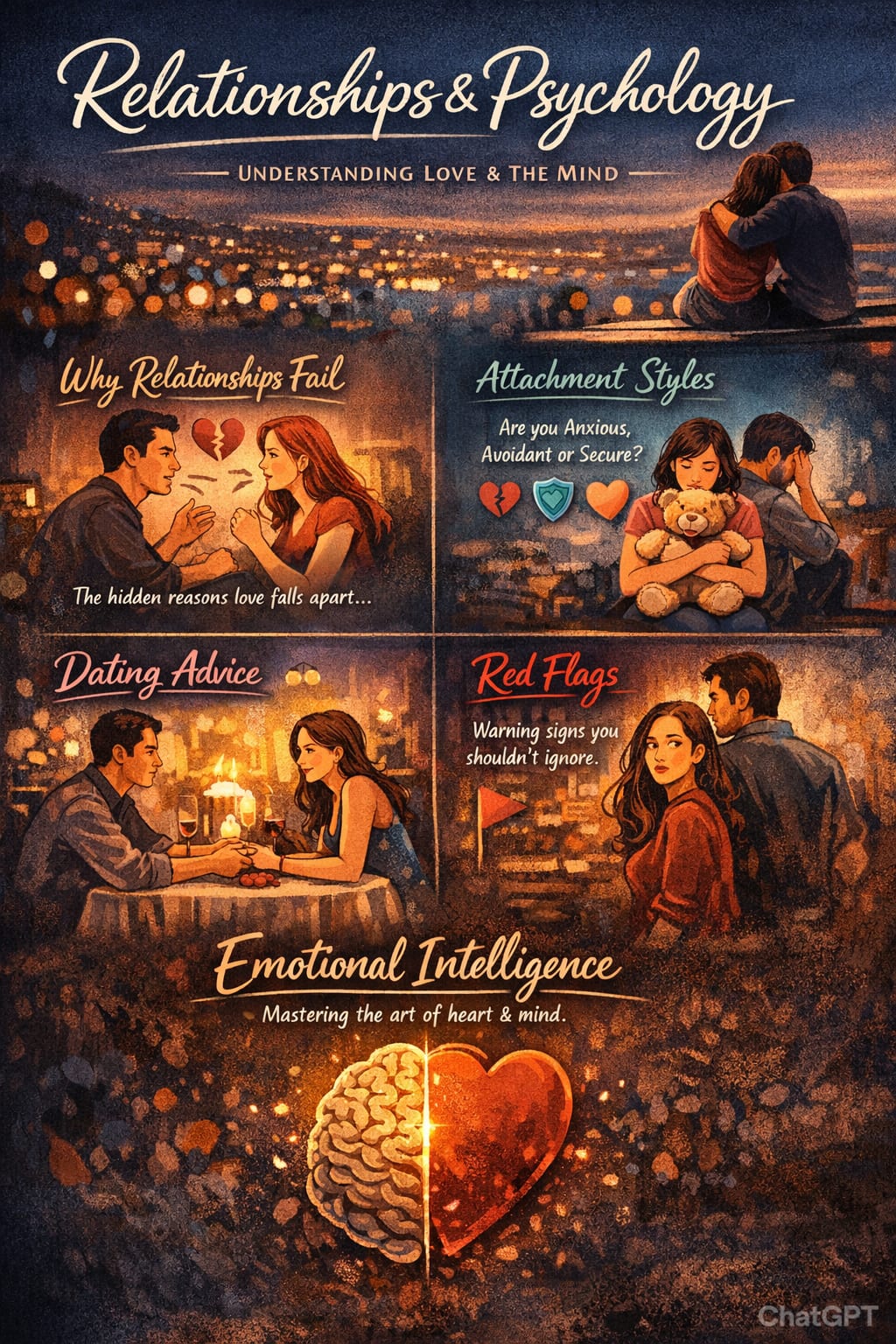
Relationships are the very fabric of our lives, weaving together our experiences, shaping our identities, and providing a profound sense of connection. Yet, they are also incredibly complex, often fraught with misunderstandings, heartbreak, and the bewildering question: "Why do relationships fail?" It's a question that echoes in countless hearts, hinting at deeper psychological currents beneath the surface.
Imagine Sarah and Tom. They started with fireworks – shared laughs, deep conversations, and an undeniable spark. Everyone thought they were perfect. But after a few years, the laughter faded, replaced by quiet resentment and frequent arguments. Tom felt Sarah was always distant when he needed support, quick to defend herself rather than listen. Sarah, on the other hand, felt suffocated by Tom's constant need for reassurance, and believed he never truly understood her independent spirit. Their story isn't unique; it's a narrative many of us recognize, highlighting the powerful, often invisible, forces at play in our most intimate bonds.
Let's pull back the curtain on these forces, exploring key psychological concepts that illuminate why some relationships thrive while others falter.
1. The Echoes of Our Past: Understanding Attachment Styles
One of the most profound influences on our relationship patterns comes from our earliest experiences with caregivers, forming what psychologists call attachment styles. These are essentially blueprints for how we perceive and interact in close relationships.
- Secure Attachment: Individuals feel comfortable with intimacy and independence. They trust easily, communicate effectively, and are resilient in conflict.
- Anxious Attachment: Often crave high levels of intimacy, approval, and responsiveness from partners, leading to clinginess or heightened emotionality. They may fear abandonment.
- Avoidant Attachment: Tend to suppress emotions and maintain emotional distance. They value independence highly and may feel uncomfortable with too much closeness.
Sarah, with her need for independence and discomfort with "suffocation," might have leaned towards an avoidant style. Tom, feeling abandoned and craving reassurance, could exhibit anxious tendencies. When these styles clash without understanding, it creates friction rather than harmony.
2. Decoding the Signals: Red Flags and Green Lights
In the intoxicating early stages of dating, it's easy to overlook crucial signs – the red flags – that signal potential trouble ahead. These aren't always dramatic outbursts; sometimes they're subtle patterns of behavior that erode trust and respect over time.
- Red Flags: Lack of empathy, consistent disrespect, controlling behavior, chronic dishonesty, inability to take responsibility, or a refusal to discuss difficult topics.
- Green Lights: Consistent respect, open and honest communication, genuine empathy, shared values, mutual support for personal growth, and a willingness to compromise.
Had Sarah and Tom recognized early red flags like an inability to truly listen (for Tom) or a pattern of emotional withdrawal (for Sarah), they might have addressed these issues proactively.
3. The Cornerstone of Connection: Emotional Intelligence
At the heart of successful relationships lies emotional intelligence (EQ) – the ability to understand, use, and manage your own emotions in positive ways to relieve stress, communicate effectively, empathize with others, and overcome challenges.
- Self-Awareness: Recognizing your own feelings, strengths, and weaknesses.
- Self-Regulation: Managing your impulses and emotions constructively.
- Motivation:Driving yourself with purpose.
- Empathy: Understanding and sharing the feelings of others.
- Social Skills: Managing relationships, inspiring others, and resolving conflict.
Sarah and Tom’s struggle highlighted a deficit in mutual empathy and effective communication – core components of EQ. If Tom could better regulate his need for reassurance and Sarah could empathize with his need for connection, their dynamic would shift dramatically.
4. Dating with Insight: Advice for Meaningful Connections
Armed with an understanding of attachment, red flags, and EQ, dating transforms from a game of chance into a journey of intentional discovery.
- Be Authentic: Present your true self. The right person will love you for who you are.
- Communicate Needs Clearly: Don't expect your partner to read your mind. Express your boundaries and desires respectfully.
- Observe Behavior, Not Just Words: Actions speak louder. Pay attention to how someone treats you and others consistently.
- Practice Empathy: Try to understand your partner's perspective, even if you don't agree with it.
Why relationships fail often boils down to a lack of self-awareness, an inability to communicate effectively, and a struggle to empathize with our partner's inner world. By cultivating emotional intelligence and understanding these psychological undercurrents, we can build stronger, more resilient, and truly fulfilling connections.
Q&A: Deepening Your Relationship Wisdom
Q1: Can attachment styles change over time?
A1: Yes, absolutely! While deeply ingrained, attachment styles can evolve through self-awareness, therapy, and most powerfully, through corrective emotional experiences in secure, healthy relationships.
Q2: How can I improve my emotional intelligence?
A2: Start with self-reflection: journal about your feelings, observe your reactions. Practice active listening in conversations, trying to truly understand others' perspectives. Seek feedback from trusted friends or mentors.
Q3: What's the biggest mistake people make in dating?
A3: Often, it's ignoring red flags in the hope that someone will change, or rushing into commitment without truly understanding a person's character and compatibility on core values.
Q4: Is conflict always a bad sign in a relationship?
A4: Not at all! Conflict is inevitable. What matters is how you handle it. Healthy conflict involves respectful communication, active listening, and a willingness to find a resolution together, rather than attacking or withdrawing.
Q5: How can I encourage my partner to develop their emotional intelligence without being critical?
A5: Lead by example. Model good EQ yourself. Encourage open communication about feelings using "I" statements ("I feel [emotion] when [situation]") rather than "you" statements ("You always [do something]"), and suggest resources like books or articles casually.
About the Creator
Being Inquisitive
Blogging can provide a creative outlet for expressing your thoughts, feelings, and ideas. It can be a way to share your passion and interests with others and to engage with like-minded individuals.
Keep reading
More stories from Being Inquisitive and writers in Families and other communities.
What meaning the cost of living? How do we measure the cost of living?
The cost of living refers to the amount of money needed to maintain a certain standard of living. This includes the cost of basic necessities such as housing, food, transportation, healthcare, and other expenses necessary for day-to-day living. The cost of living can vary greatly from one geographic location to another, and can also change over time due to factors such as inflation, economic growth, and changes in the job market.
By Being Inquisitive3 years ago in Families
When Court Felt Like the Only Option: A Mum’s C100 Form Journey
I never thought I'd be the kind of person who filled in a court form at her kitchen table at midnight, crying into a mug of cold tea. But there I was, reading the same paragraph on the C100 for the third time, trying to work out whether I was supposed to tick "lives with" or "spends time with" for a child who hadn't seen his dad in eleven weeks.
By Jess Knauf6 days ago in Families
At My Wits’ End
Life is about taking out the trash and calling it trash because you have every reason to. It wasn't meant to be linear, they say. But the times you tried to make it straight led to problems, and you didn’t have the tools to put any of it to use. You don't put your right shoes on the right feet; you put the left shoes on the left feet. The grey hardened slab will trip you up anyway.
By Caitlin Charlton4 days ago in Humans




Comments
There are no comments for this story
Be the first to respond and start the conversation.