
One Move and The Baby Gets It!
Just kidding. I love babies.

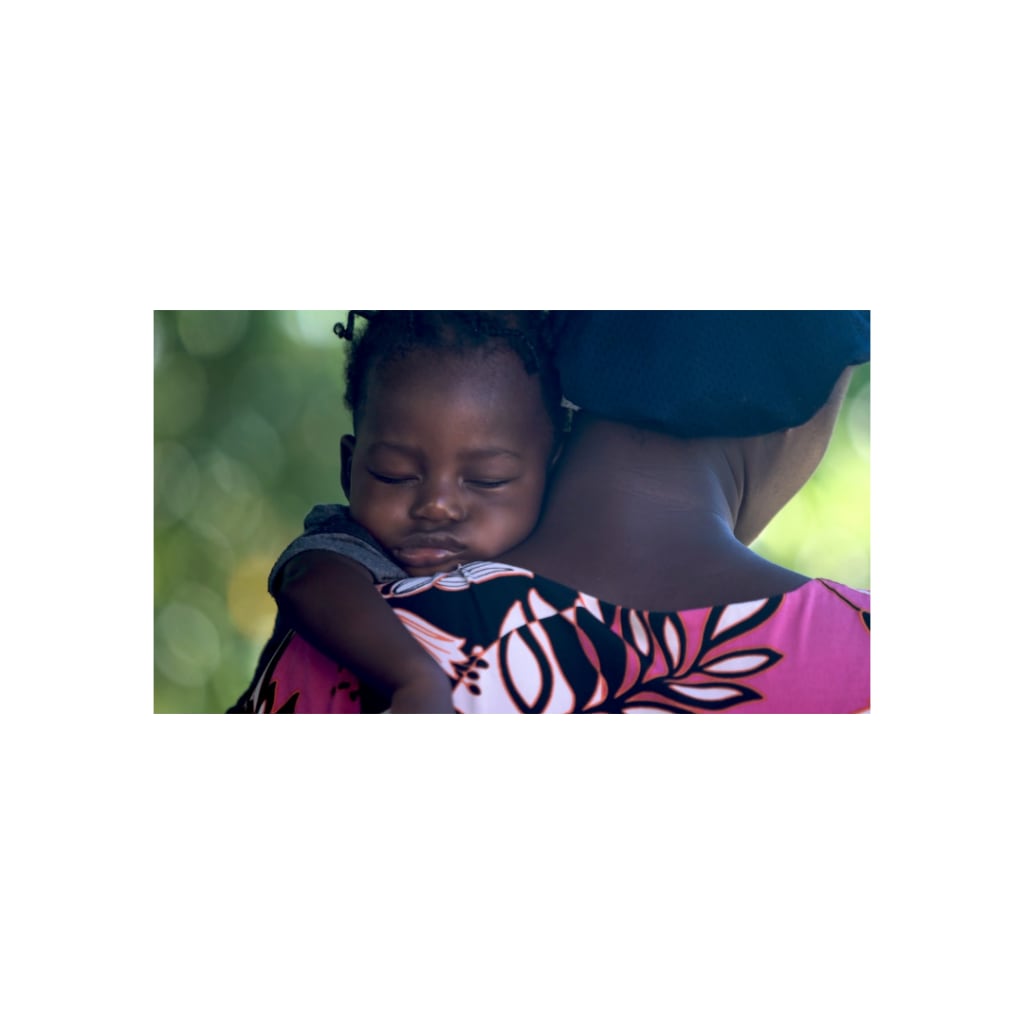
But did you know that, historically, Black women weren’t allowed to breastfeed their babies?
It’s true!
It is the 10th year of Black Breastfeeding Week and I’m here to give you just a little information about it, ok?
SO
In America, during the period of slavery, Black women were forced to use artificial means to feed their babies — like cow’s milk (or even flour and water) because their masters believed that breastfeeding was a sign of animalism; meaning that Black women were animals and not fit to be mothers. This stereotype has been used to justify a lot of inhumane treatment of Black women, including forced sterilization in the mid-20th century.
In more modern times, Black women were not allowed to breastfeed their babies in public and they were even discouraged from doing so in private. This went on for centuries due to negative cultural beliefs that were perpetuated in times of enslavement by white slave masters; Furthermore, it’s been perpetuated in modern times by doctors, nurses, and other medical staff in charge of taking care of Black women by openly discouraging them NOT to breastfeed, or by not providing the same support or encouragement to breastfed as other women.
I am here to tell you if you’re a Black woman who wants to breastfeed, know that you have a right to do so and many people and communities will support you and make you feel empowered to do whatever you feel is best for you and your baby.
Now, for the more fun stuff! Lol
If you’re a first-time mom, the prospect of breastfeeding can be overwhelming. There are so many questions and so much conflicting advice. How often should you breastfeed? What are the signs that your baby is getting enough milk? Should you breastfeed in public?
It can be tough to sort through all of the information, especially when everyone around you seems to have a different opinion. The best thing you can do is to educate yourself as much as possible. Read books, talk to other mothers, and reach out to a lactation consultant if you have any questions. (I’ll also include some resource links at the end of the article)
And I’ll tell ya, you’re never sure if you’re doing it right:
One of the biggest challenges of breastfeeding is the lack of control. You can’t see how much milk your baby is getting, so it’s hard to tell if you’re doing it right. The good news is that most babies are born with a built-in instinct to breastfeed. They will instinctively search for the nipple and latch on. Even in the middle of the night when you’re half asleep and drooling and you can’t find your glasses or the glasses to find the glasses….
You know what I mean? Whew!
But more about that later.
For Black women, there are often cultural barriers to breastfeeding. In many African cultures, breasts are seen as sexual objects, not as sources of food for babies. This can make it difficult for Black women to breastfeed in public, or even to talk about breastfeeding with their families and friends.
Plus, There is a lot of pressure on mothers to breastfeed, and this pressure can be even greater for black mothers. We are often made to feel like we are not doing enough for our babies if we don’t breastfeed, or like we are doing something wrong if we can’t breastfeed successfully. Black Breastfeeding week has a mission to change that.
Black Breastfeeding Week was created in 2011 by Dr. Katlyn Bogan (as a response to the maternal mortality crisis in the Black Community) to help normalize breastfeeding among black women and to celebrate the many benefits of breastfeeding for both mother and child. It is important because it celebrates and raises awareness of the unique challenges that black women face when it comes to breastfeeding.
Since then, Black Breastfeeding Week has continued to grow. In 2017, Black Breastfeeding Week was held August 25–31 with over 100 events in 28 states. In 2022, the turnout is expected to be even larger, even with COVID and his friends running around trying to rain on our parades.
Black Breastfeeding Week is an important time to remember the Black women who have fought for our right to breastfeed and to celebrate the progress we have made in normalizing breastfeeding for Black women.
By liking, following, and sharing this event, you can help support our efforts.
And you would make THIS Black woman feel very warm and fuzzy inside :)
So thanks!
Oh! If you’re interested in learning more about black breastfeeding week, or if you want to get involved, visit
https://blackbreastfeedingweek.org/
https://blackmothersbreastfeeding.org/
https://www.baeculture.org/bbq4bae
About the Creator
Alexis Reeves
Amateur journalist. I love learning and posting facts and opinions on facts lol. I'm always looking to discover something new.
What are you curious about?
Tweet me! @SixSeveer
Keep reading
More stories from Alexis Reeves and writers in Families and other communities.
F8%k Nice
Whew, chile**, this new Meg album, Traumazine*, is one that I was NOT expecting, but I am so glad I listened. This album is the volcanic-field-slapping paradise of my dreams, and from someone who’s never been a big fan of modern hip-hop, I can say that I was converted after listening to this record.
By Alexis Reeves3 years ago in FYI
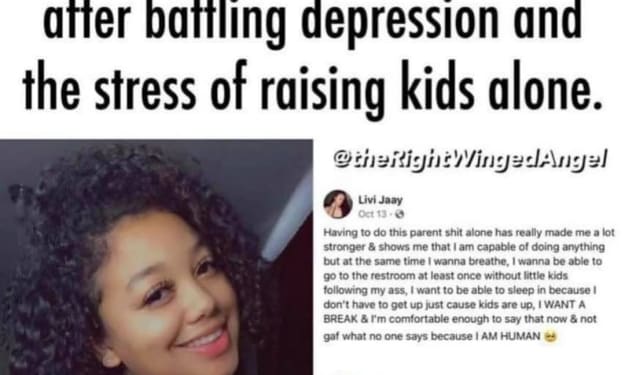
Being a Single Mother is not easy....
Women would say it is biased when it comes to being a single mother however it is not easy. Absolutely not!!!! This is coming from a single mother born from a single mother of 3 learning a lot from her. In this story, this doesn't just involves me and my mother and all the single mothers reading this story. This tragic story involves on how difficult it can be a single mother. This story involves with a young mother age 21 with 2 kids named Livi Jaay. It is unclear what she does however that she lived in Texas with her kids. She has posted on Facebook that she had battled depression and express her mental being on social media.
By Gladys W. Muturia day ago in Families
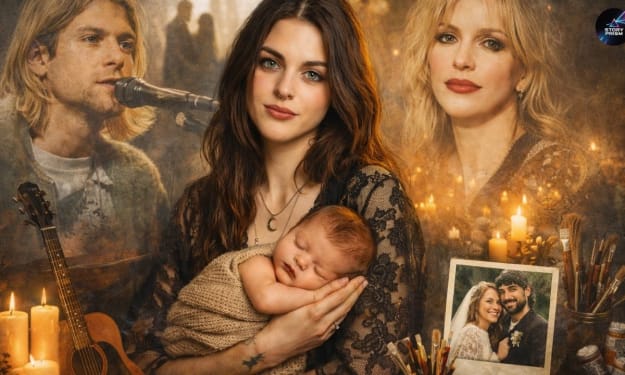
Kurt Cobain’s Daughter: The Life and Legacy of Frances Bean Cobain
Frances Bean Cobain, born on August 18, 1992, in Los Angeles, California, is widely recognized as the only daughter of the legendary Nirvana frontman Kurt Cobain and the iconic Hole singer Courtney Love. While her parentage immediately placed her in the global spotlight, Frances has spent her life defining herself on her own terms, navigating the intersections of fame, art, and personal identity. Today, she is celebrated as a visual artist, model, and mother, carrying forward the legacy of her famous parents while cultivating a life uniquely her own.
By Story Prismabout 9 hours ago in Families
Mismatch Challenge Winners
Blending genres isn’t about stacking elements side by side. It’s about what happens when two sets of expectations refuse to cooperate. The strongest entries in the Mismatch Challenge understood that tension and leaned into it. Rather than smoothing the edges, these stories let their chosen genres complicate one another, creating friction that carried through voice, structure, and consequence.
By Vocal Curation Teamabout 11 hours ago in Resources

Comments
There are no comments for this story
Be the first to respond and start the conversation.