
The Letter I Never Sent: How a Forgotten Draft Changed My Life
Sometimes the things we leave unsaid hold the power to shape everything.

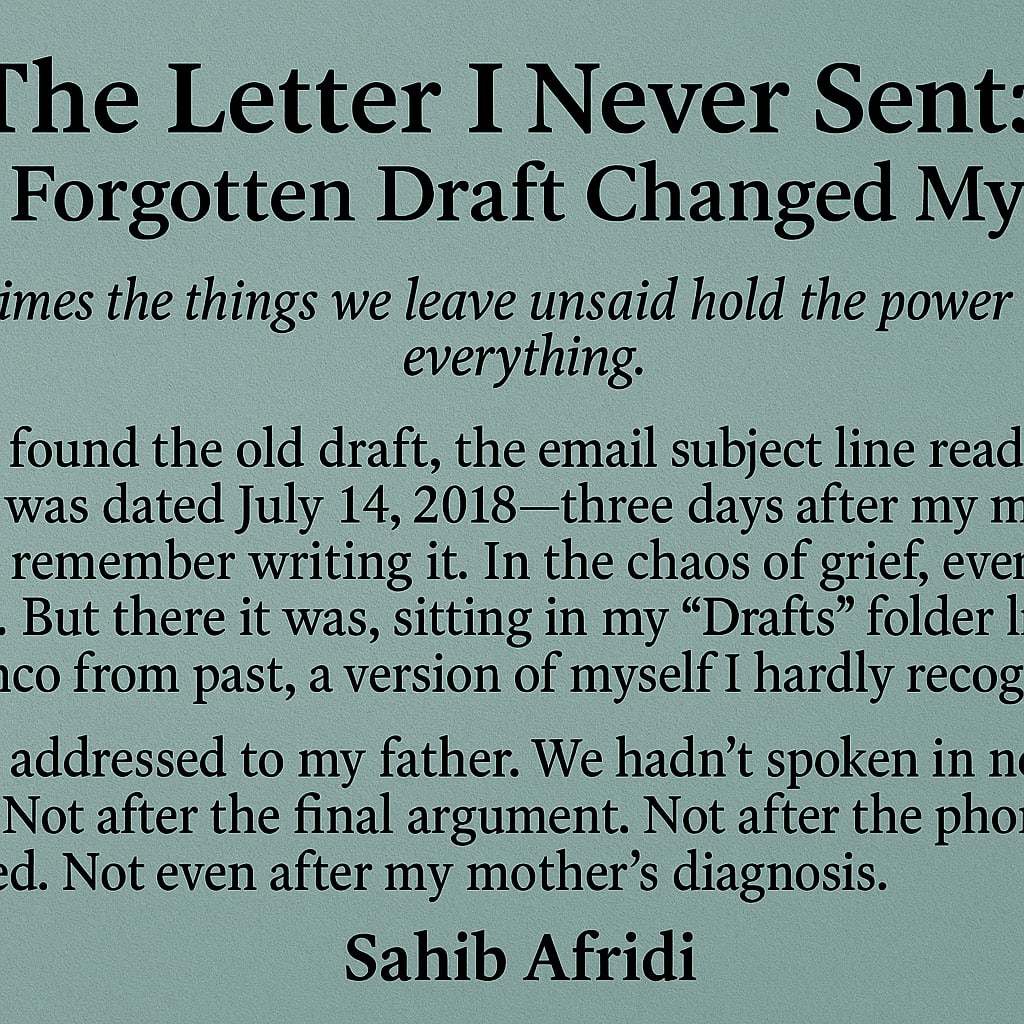
When I found the old draft, the email subject line read: "I Forgive You." It was dated July 14, 2018—just three days after my mother died.
I didn’t remember writing it. In the chaos of grief, everything blurred. But there it was, sitting in my “Drafts” folder like a quiet echo from the past, a version of myself I hardly recognized.
It was addressed to my father.
We hadn’t spoken in nearly four years. Not after the final argument. Not after the phone calls stopped. Not even after my mother’s diagnosis.
Growing up, my father was more shadow than substance. Present in the house, sure—but emotionally unreachable. His silence filled the room louder than any fight ever could.
When he left, I was fifteen. My mother called it “a necessary ending.” I called it abandonment. And I promised myself I’d never need anything from him again.
The years that followed were heavy with quiet resentment. He’d send birthday cards once in a while. A few awkward texts. Then nothing. Eventually, I stopped wondering why.
When my mother got sick, I didn’t tell him. When she passed, I didn’t think to reach out. I told myself it wouldn’t matter. That he wouldn’t care.
But three days later, apparently, I had tried.
The email wasn’t long.
“I don’t know what I expect by writing this. Maybe nothing. But maybe everything.
You hurt us. You hurt me.
But I’m tired of carrying that weight.
I forgive you.
Not because you asked. Not because you deserve it.
But because I need to let go.
I don’t want to be angry anymore.”
That was it. No greeting. No signature. Just those words. Raw and unfinished.
And I never sent it.
I sat staring at the draft for a long time, wondering what version of myself had written it. Who was I then—brave enough to offer peace, even in the middle of grief?
Maybe I meant to send it but got scared. Forgiveness is terrifying. It requires vulnerability. And I wasn’t ready for silence—or worse, rejection.
But I kept thinking about it. About the weight I’d been carrying all these years. About my mom, who had always told me that forgiveness was more about freedom than fairness.
Eventually, I copied the words, gave them a small update, and hit send.
Two days later, my phone rang. It was him. His voice cracked before he even said hello.
“I never knew,” he said. “I didn’t know she was gone. I didn’t know you were hurting. I wanted to reach out so many times, but I thought you hated me.”
We cried on that call. For the years lost. For the words unsaid. For the pain buried so deeply it almost turned to stone.
That conversation didn’t fix everything. But it opened a door. A door we’d both locked for too long.
We talk now. Not every day, but often enough that it no longer feels like a stranger’s voice on the other end of the line.
And that draft? I kept it. I never deleted it. It sits there as a reminder that healing begins when you decide you’re ready to move forward.
Not every apology comes with words. Not every wound gets closure. But sometimes, sending that one message can be the start of something new.
If you’re holding on to something unsaid, consider letting it go. Not for them—for you.
You never know what could happen when you finally press send.
About the Author
Sahib Afridi is a storyteller who writes from the heart, exploring themes of healing, family, and emotional truth. Through personal reflections and lived experience, he invites readers to sit with life’s quiet moments and find meaning in the things left unsaid.
About the Creator
SAHIB AFRIDI
Su
Writer of real stories, bold thoughts, and creative fiction. Exploring life, culture, and imagination one word at a time. Let’s connect through stories that matter.
Let me know if you want it to lean more toward a specific genre or tone!
Keep reading
More stories from SAHIB AFRIDI and writers in Families and other communities.
What My Parents Got Wrong — And What They Got Right
For a long time, I thought my parents got almost everything wrong. That’s dramatic, I know. But when you’re twenty-two, broke, and trying to figure out who you are, it’s easy to turn your childhood into a courtroom. Every rule becomes evidence. Every “because I said so” becomes a scar.
By John Smith6 days ago in Families
At My Wits’ End
Life is about taking out the trash and calling it trash because you have every reason to. It wasn't meant to be linear, they say. But the times you tried to make it straight led to problems, and you didn’t have the tools to put any of it to use. You don't put your right shoes on the right feet; you put the left shoes on the left feet. The grey hardened slab will trip you up anyway.
By Caitlin Charltona day ago in Humans




Comments
There are no comments for this story
Be the first to respond and start the conversation.