

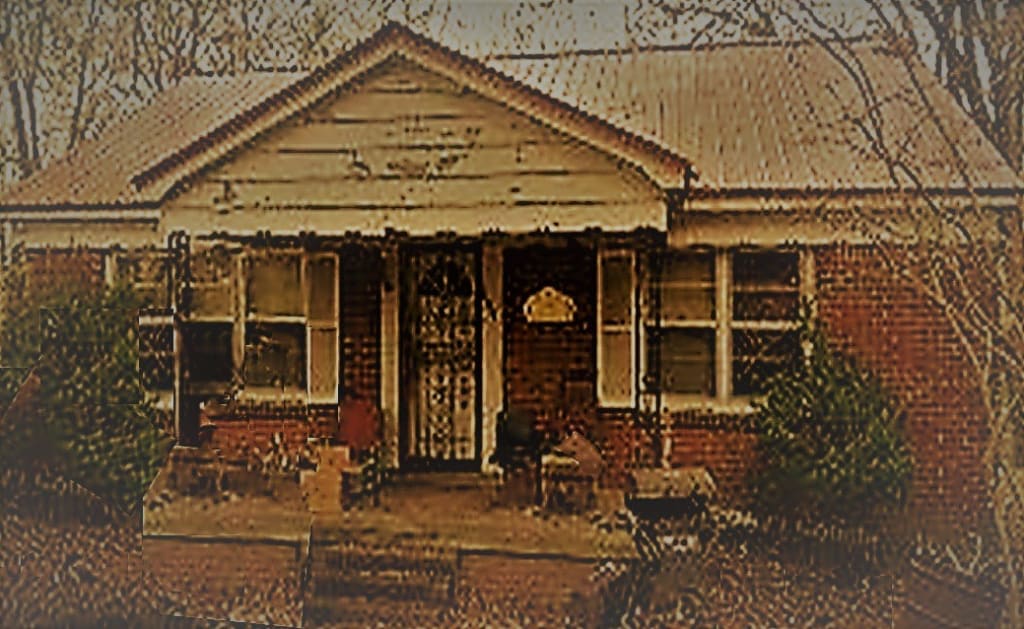
“If walls could talk,” he said with a mournful laugh. The emotion in his voice briefly revived the sweltering heat of forgotten summer nights in the little bedroom that he and his four siblings had shared, a tear appearing on his cheek as he remembered their first home. Half listening to the unseen speaker on the phone, his desire to see again the clapboard shack where he was born revived an almost forgotten sorrow. But the walls that once witnessed his tender youth were torn down like unwanted chapters in a book, a cherished period of his life suddenly ending.
‘If those walls could only talk,’ he thought with trembling feeling. A lonely vision of it returning to his mind, rotting beams rose like skeletal remains from the earth. Closing his eyes, he tried to imagine the old house whole again, but saw it as if from a great distance. How many families had those walls sheltered over the decades while they still stood? How many lives had they silently witnessed and loved before hard men came with long handled sledgehammers and knocked them to the ground?
But the caller said something that made him laugh out loud. His thoughts returning to their discussion, they drifted away from the crowded bedroom of his childhood, its ghost returning mournfully to the hard clay.
“No … what he said was ‘Daddy’s parenting style was benign neglect’,” he replied with a second burst of laughter. “Yeah … we were a couple of terrors … drove poor Mama to distraction.”
If these walls could only talk, what a tale they could tell.
“Daddy was laid off the year they built it,” he said into the phone. And yet they found a way to pay for it, their ownership a testament of something more than the magic animating the old woman’s home, the little brick house a monument to her thrift, ingenuity, and resolve. A vision that burned wakefully in her heart through long years of hot and humid nights, its realization ennobling the dreamer with a dignity that families born wealthy can never fully experience or understand.
Such was the old woman’s desire – a secret vision inscribed in the well-springs of her heart. Advancing upon it with deliberate and measured patience, years passed as she struggled to serve and provide for her family in one clapboard shack after another and yet she found a way to silently maneuver their pathway toward a home that for half of her life existed only in her dreams.
“Yep,” he told the caller, “Mama could grow anything.”
It was her special magic, sowed in the rusty clay beneath the former home till in the fullness of time it grew into the little brick house on Young Street, rising from the ground like spring corn. Her love brought life affirming goodness to everything her hands touched and conferred blessings to friend and stranger alike. If any walls might have born testimony to the world of men, it would have been ours.
The squealing of hinges on the front door as it opened caused him to interrupt the caller before yelling anxiously “where ya goin’ Mama?” But he was a little too slow, his voice echoing across the sitting room as the screen door banged shut. The old woman, with arms wrapped tightly around an old envelope, stopped at the end of the porch at the sound of his voice, her own responding with breathless complaint.
“I’m goin’ home.”
“Mama!” he yelled with sudden exasperation, his sandals noisily flapping as he rushed toward the door – “This is your home.”
Searching for something unseen she felt deep in her bones, she gazed intently at the road where it dipped and turned before disappearing under the darkened railroad trestle, the sensation of it more real than the familiar concrete beneath her soles and yet somehow buried in the tangled periphery of her memory. “Goin’ home,” she growled, her head jerking defiantly downward, as if it might be possible to journey backward in time and be young again, even if only in her mind, turning her back on adult cares forever more.
Staring at the shadow beneath the railroad trestle where it turned and disappeared into the past, she imagined the old man walking home with an easy stride, a line of sweat beading across his forehead beneath the brim of his narrow hat.
How many times have we witnessed her with hand cupped above her eyes, gazing longingly into the past? She can almost see the sinewy musculature of his shoulders and the slow deliberate swing of his lanky arms. It’s how she liked to remember the old man, the low evening sun reaching softly toward him as he emerged from the trestle’s dark shadow.
But the vision is not powerful enough to restore him to life, the street as empty as the sound of his body slowly skidding across the upholstery in the taxi where they sat together for the last time, his head coming to its final, peaceful rest on her shoulder.
As her youngest placed his arm carefully around her, the old woman’s eyes sparkled with astonishment, her voice rising in sudden alarm, “Whaddam I doin’ out here?” The genuine confusion in her expression filled him with a sudden feeling of helplessness, her mental frailty reawakening the trust and dependency he knew as a child and like most adults believed he had outgrown.
Smiling bravely, he suggested returning to the house for some tea. But in the moment, he was as disconcerted as she, the thought of her death raising the hair on the back of his neck as they passed the old man’s empty chair, his Father’s restless ghost returning in both memory and imagination in the early afternoon.
Walking briskly through the dining room to the kitchen, he hurried to prevent another attempted escape. The old woman seemingly lost in her own living room placed her hand nervously to her lips and whispered, “What in the world is the matter with me?”
Tightening her arm around the precious package, her thoughts returned to her husband and the dull ache of his absence. The later years with him were better, once the last of their children left. She had welcomed his company and knew how to accommodate his moods. There was something oddly comforting in hearing the squeak of the glider as it rocked slowly on the porch in the still, dark evening, a soothing reminder that she was not alone.
And it’s a terrible thing to be alone, much harder than she had ever imagined. Looking nervously about the room the brightness in her eyes began to dull, the ghostly image of her husband rocking contentedly on the porch fading, the sitting room’s familiar furniture shifting strangely out of place, the sensation of it making her uneasy in her mind.
How many times had we attempted to comfort her in her grief and loneliness? How many times did we reach out our invisible arms? But the magic of our creation began to fade even before the old man died. Those moments when she remembered the miracle of the little brick house and stared longingly at our walls grew fewer and fewer till it hardly ever happened at all.
As her son returned to the room with the ice-filled pitcher and two tall glasses between his fingertips her eyes flickered with momentary recognition. A moment later the spark was gone. Turning away wearily, she muttered, “I wanna go home.”
“Have some sweet tea, Mama,” he replied softly as he poured her a glass.
Tightening her grip on the package, she looked apprehensively at the perspiring glass before taking it from his grip, the other hand still pressing the precious envelope to her breasts.
“How’s your tea?” he asked after taking a long swallow of his own.
“Fine,” she murmured, returning it without tasting to the coffee table, her deep-set eyes straining at a vision from the distant past. Her ears began to impossibly conjure Commodore’s strong baritone as it carried the melody and Grand Mommy’s quavering alto the harmony, Mama and Daddy, brothers and sisters, all of them singing as they walked, every hand deftly pulling cotton from the open bolls and pushing it into rough sewn sacks, the spiny bristles on the plants scraping wrists raw behind the protection of old leather gloves.
Their ghostly voices rising above bent backs, the chorus began – 'Farther along we’ll know all about it,' the old woman’s lips silently mouthing the words as she plucked invisible handfuls of cotton in the forgotten present. Lifting her gaze skyward she sung tremulously along – “Further along we’ll understand why,” her son watching her with tears welling in his eyes. Her voice softening to a whisper, she stared in bewilderment at the mute walls, the cotton she had seen so clearly in her mind’s eye only moments before no longer in view. “Wanna go home,” she murmured, but he pursed his lips without speaking, gazing at his mother with silent exasperation.
These rooms, once filled with happy activity, are quiet and bare, the youthful voices that in former years brought us to life forever departed, something vital passing to faraway lands with them, memory alone unable to revive the magic once filling the fragrant air with love. Her oven is cold from disuse, cooking for herself a joyless activity, her few remaining teeth unfit to find any real pleasure in eating anymore. The kitchen, once the heart of her home, has become the loneliest place in the world.
The solitude of the last few years had uncovered a hurt she had not realized still existed, reviving an inarticulate longing for the deep past and with it the desire to return to the joys of her childhood even if the only pathway home leads through the grave. More than anything she wants to run away and return to the loving arms that raised her, but she does not remember the way home, her body hopelessly trapped in the singular loneliness of now.
Leaning backward against the cushions she closed her eyes, trying to remember the familiar sounds of home, trying to recall her father and mother singing in harmony as he stood in the sittin’ room with fiddle in hand. Her heart swelled with remembered joy, but she could not see her brothers and sisters singing the chorus or clapping along, her longing for the past on some days unable to revive the emotion of forgotten youth, the chasm separating it from seventy years of adult cares too terrible to bridge. “Wanna go home,” she whispered like an incantation, a stream of tears slipping unseen from her closed eyes. “Wanna go home.”
‘Where money was wanting,’ her son thought wistfully, ‘her love found a way.’ He admired her efforts to bring her vision of a proper home into reality even as he believed she had already given them all far greater gifts.
Like all children who grow up impoverished, what he and his siblings really needed were opportunities that could be purchased. They needed an advocate in the spiritless realm of men, someone who could empower them to live out a vision as though it were a fairy tale of old. The old woman was made of such stock, she found ways to meet more than her children’s needs, she poured out her life as if a costly unction, finding a way to do what lesser mortals could not do, to place in her children’s hands the tools they needed and could not have obtained by any other means.
But she poured herself into us as well. Wasn’t she our mother every bit as much as he?
The amber tea growing pale from melted ice, the old woman wearily fell asleep as her son breathed a sigh of relief. Carefully removing the package off the cushion by her side he carried it quietly to the dining room and spread the old photographs within across the table, the forgotten sounds of laughing youths spilling out into the hot and languid atmosphere: her children, grandchildren, and great-grandchildren gathering together in defiance of time.
Their youthful ghosts somehow never growing older, their remembered voices reawakened the scent of freshly baked pies, corn sticks and angel biscuits, the image of a table of old returning to mind newly covered in warm meats, casseroles, and freshly picked vegetables. Its heavenly fragrance infusing the air with warmth.
Somewhere deep in the earth below rotting timbers infused with memory and feeling reawakened, their voices crying out from the clay, the detritus of the past trembling in sympathy within darkened corners of rooms or whispering quietly atop picture frames and old, forlorn knick-knacks.
The onrushing memories took him by surprise as he leaned on the table heavily, his body weakened by the emotion of traveling rapidly backward in time. He achieved in a moment what the old woman had strived and failed to do for half the afternoon. Staring with eyes brimming with tears at the photos, he unexpectedly heard our still voices, his awareness intensified by the familiar spirits arising from the soil beneath us.
But in the living room, the old woman’s eyes searched restlessly behind tightly shut lids as she slept, her voice calling out incoherently. Hidden deep in the earth, an ancient magic stirred at her plaintive voice, but does not answer with power as it had in former years. It had retreated into a distantly remembered past, the gift that had spared three of her little ones from death’s encircling arms in the lean depression years finally weakened by absence of need.
Within the dream she called out again and again to her dead son as he walked with solemn stride across a field of stately lilies, but the words catch helplessly in her throat, his slender figure growing increasingly distant, till she could hardly see him at all. As old age has moved her further backward in time, even the memory of his tiny body as she held him in her arms has begun to fade.
Awakening with a sudden gasp, she opened her eyes without remembering where she was. Once familiar furnishings, misshapen and twisted by semi-consciousness, unleash waves of forgotten feeling. An unexpected voice calling her name, our covered porch appears in her mind brand new, the remembered concrete forming beneath her shoes, hard and yet damp and gray. Her worried gaze fixated on the empty sitting room as she stared through the open front door, our walls within smelling of fresh paint.
“What do you think, Velmer?”
Breathless in surprise she stares at the ghost of her tall husband as he gives the freshly laid bricks a friendly slap, her consciousness shifting uncomfortably between the sofa where her body still reclines and the priceless image semi-consciousness has briefly embodied, several languorous seconds ticking away before she finally whispers in timid answer – “It’s beautiful.”
It was the last time she would remember us in this manner; the last time we heard the longing in her voice for the home her dreams had brought to life.
As the wonder of the moment grew, she began to yield to the deep feelings swelling within, placing her small hand into the rough calloused one her wraithlike husband offered. But the love and longing impossibly bridging the forty-year gap cannot shake free from the dread of stepping inside to look, fearful that they might never find a way to pay for it.
“Ten thousand dollars is a lot of money… and you without a job….”
“Ahhh … hell,” her husband’s voice interrupted her with familiar irritation, “I can always get work.” Remembering his sly, wicked boy grin, her heart skipped a beat as his hand briefly squeezed hers. But no one else remained who remembered his expression save for our still and silent walls, the last vestiges of the darkened porch veiling a fleeting memory of flashing brown eyes.
The fragile connection of their clasped hands disrupted by the chiming of the hour, the living room furnishings slowly drew her into the vacancy of the present as they regained their former shapes and colors, the richness of the familiar past slipping quietly away.
Blinking in the afterglow of the memory, she looked about the room with something of the awe that she had known in the precious early weeks when our walls were fresh and new, a deep, remembered satisfaction filling her with a sense of latent joy. But the sudden memory of standing at her son's coffin ended the revery. Bowing in surprise and pain, the minister’s words returned briefly to mind –‘Are not two sparrows sold for a penny? And yet not one of them will fall to the ground apart from your Father in heaven.’
The old woman would have happily laid down her own life if death had accepted the exchange. But the whispered offer she made a few nights before his death went unacknowledged and unanswered.
That in a word was the defining tragedy of the old woman’s life. For her the suffering of any creature great or small was intolerable. No other character trait so clearly defined her as this one. But the suffering of one of her children was made all the more intolerable by the years she laid down her life for each. A love of that magnitude only comes at a terrible price. The pain of watching her son suffer when no balm was at hand to heal seemed magnified a thousand-fold.
If the inanimate might grieve, water would have beaded upon our walls like perspiration on the skin, for who other than us ever witnessed her silent grief, or knew the torments of her inmost soul?
Her son did not witness the grief as it shook the old woman's frame with silent emotion. After he repacked the precious contents of the envelope, he tiptoed into the kitchen and opened the fridge. Thinking this would be a good opportunity to finally drink a beer, he inconveniently recalled a conversation with his eldest brother as his hand reached for a bottle. “I wish you wouldn’t drink so much around Mama,” his brother had pleaded, his voice laden with emotion. He wasn’t one to harangue his younger brother about how he lived his life, the words coming as something of a shock, both of them silent for many seconds before their conversation began again. Withdrawing his hand from the bottle he briefly stared into the half-opened fridge before unhappily closing the door.
The moment awakened unexpected feeling, his head involuntarily glancing through the entryway into the dining room as if expecting to see his dead brother smiling back, the resultant shiver coursing violently up his spine. But the room was empty, the table and surrounding chairs pregnant with remembered happiness and yet as silent as if no one had ever eaten there at all. For a disorientating moment the room felt like a portal to a world where his brother was not born prematurely, but instead lived a long and happy life, the reckless magic that burned for so many years within his flesh wished away by merely changing the circumstances and timing of his birth.
In the magic of the brief emotion, he was tempted to step through the entryway and into an imagined future where they both grow old enough that their friendship would have outlasted the lives of their elder siblings. Children, grandchildren, and great grandchildren of both men would have gathered together annually to hear their fathers recite the family history and to debate family lore, each taking turns retelling favorite stories of their youthful adventures.
But as he blinked back tears both the dining room and the longed-for portal blurred out of recognition; the imagined moment displaced by the stubborn reality that his brother would not return. Unconsciously turning to the fridge again, he reflexively removed a bottle of beer as he wiped the tears from his eyes.
An hour later the old woman awakened a second time, a deep sense of overstaying her welcome filling her with sudden unease. Uncharacteristically, she did not take note of the weather as she prepared to depart – simply tying a scarf over her short hair before grabbing her purse and the precious envelope of family photos and walked rapidly to the front door. She did not notice her son as he dozed on the divan and he did not fully awaken as the door banged behind her, his head briefly lifting before it returned to the comfort of the welcoming cushion.
This time she did not pause on the front porch or stare vacantly at the heavy shadow under the old trestle. She walked instead with a short but determined stride down her front walk, turning right unto Young Street after passing between the jack pines standing silent watch at the walk’s end. It was a cold day, the wind angrily lashing about her bare arms and cruelly chapping her lips, barren branches in the surrounding trees twisting and bowing in the violent gusts, the occasional bird watching quietly from a protected nook as she passed beneath. Turning right at the end of the block, she continued to step briskly down Tate Street till she approached the little house that her dead son had rented a decade before.
Despite the increasing cold, she paused at the walk leading to his former home, something disquietly familiar in its appearance holding her briefly in place. But the space in her memory where the house once dwelt had already grown so distant that she could no longer consciously recall it, her body remembering what her mind could not, but unable to speak – its stubborn inaction before his door the only language within its limited powers.
Even without making an explicit connection with his former home she recalled her son’s return from New York City, the image of it in her mind appearing as if it were only yesterday rather than twenty plus years before, his eyes filled with inexpressible sadness as he wrapped his arms around her and hugged her with all his might, the starry-eyed boy who had left home so many years before no more than a poorly remembered dream. In the moment the memory made her uneasy in her mind, her son seemingly both alive and dead, the feeling that she could never know for sure cruelly muddling her thinking.
She does not tremble quite as much on the way back, the wind that buffeted her face now comfortably blowing at her back. As her steps began to slow with the exertion of walking up the long hill she remembered again and again the destruction of her son’s dreams, her grief filled thoughts seemingly lost in the increasingly timeless realm where the ravages of memory forced her to live.
But by the time she turned left on Young the memory that seemed so vivid as she stood staring vacantly at his former door had already passed to distantly remembered regions as well, her feet alone guiding her back to the little brick house even as her eyes stared at it upon arrival with incomprehension, the expected clapboard shack of her youth nowhere to be seen.
Two weeks later her daughter came to help her pack her things before taking her away. She had wandered away from us one too many times and much further afield than her initial escape. Once the police were called to find her, her children agreed that they needed to move her to a facility that could her care and keep her from mischief.
The little brick house finally empty, the next few months were lonely and silent, the remembered echo of the old woman’s voice rising and falling, but without restoring her to our waiting, invisible arms. We spent those months remembering the long, sad years when she lived here alone. We remembered how she would pause in a room as if listening for the old man. Worst of all, we remembered how she longed to leave us and return to the home of her youth.
We knew then without anyone saying it out loud that she would not return. In late spring a For Sale sign was pounded into the front yard, people visiting in ones and twos to inspect the house. Her daughter came several times to supervise the removal of furniture, framed pictures and assorted knick knacks. Save for the cherry dining room set, little in the house possessed any monetary value. The furnishings with sentimental value were divided among her remaining children and the rest was sold or taken to the dump.
Her eldest son was the last of her family to enter our door and pay his respects to the old woman's memory. Although he had already left home before we were built, it was more difficult than words could convey for him to say goodbye to the little house the old woman had fervently worked to create. In the end we weren't worth much since they built us on the wrong side of the railroad tracks. In those days we were still surrounded by homes that were little more than clapboard fire hazards.
But the land where we stood still connected him to the homes of his youth, their ghostly features seemingly abandoned with the sale of the house as well. A practical man, he did not linger. We believed that one day he would regret that he had not stayed long enough to grieve our loss, and perhaps he eventually did.
The door closing softly, the sound of his shoe leather snapped on the concrete as he briskly crossed the porch before pausing at its end for a brief backward glance. Moments later his car engine roared to life, the tires grinding atop the stony drive for the last time as it backed out onto the road.
In the end her children did not love us enough to keep the home, at least not the way she once did. But we shall be her final epitaph. Maybe they will remember us only because they wish to remember her. But they will remember us, nevertheless.
One day we shall suffer the same fate as the clapboard shack that preceded us. Thirty years after her death the luster and magic that endeared our walls to the old woman and her family have long passed. But even now, it will take more than mere men with sledgehammers to level our brick and timber skin. We were built with love and love is never easily brought low.
We will not forget the woman whose dream brought us to life. We will outlive her children and grandchildren and maybe even great grandchildren. When we are all that remains of her memory, who will honor the old woman after those who knew her have passed from the earth?
Where does the soul of the hero journey when her story has ended, to what new countries ventured and to what strange people brought greeting? When the memory of her expressive face and spirited voice begin to fade and crack with time who will carry word of her back to the land of the living? Who might we send to navigate that rough and dangerous road and not be lost to us as well? Who shall bear witness to her life when none who knew and loved her remain?
“We shall,” the still and silent walls answer, “we who sheltered her from the rain and the wind and the breathless heat of the mid-summer sun. “We shall bear witness.”
About the Creator
John Cox
Twisted writer of mind bending tales. I never met a myth I didn't love or a subject that I couldn't twist out of joint. I have a little something for almost everyone here. Cept AI. Ain't got none of that.
A Love Forboding
The chipped stone slope caused unbearable footing. I slid, skirting on my heels. I cast my shield, relinquishing my guard to stay upright. Left with my double-edge and a prayer to the maker, I skated toward my objective. The earthly stubble gave way to solid ground. I found myself restored, a trail of dust in my wake.
By James U. Rizzi5 days ago in Fiction


Comments (2)
John, there is so much to this story. The old woman and her befuddlement; the family history told through the son's visit; the voice of the walls as testament to the old woman's life and as a memorial to her. There is so much love here and I like the fact that the house is telling the story. I lived on a farm when I grew up and one of the most difficult things was when I first moved away. I loved that place - it had been there, or a settlement had, since the 1300s and I was linked to all of that history by living there. I'd like to think that it could tell good stories about me. I loved this so much.
Brillant!