
“An Apple a day..”
For vocals “Everyone is acting normal” challenge

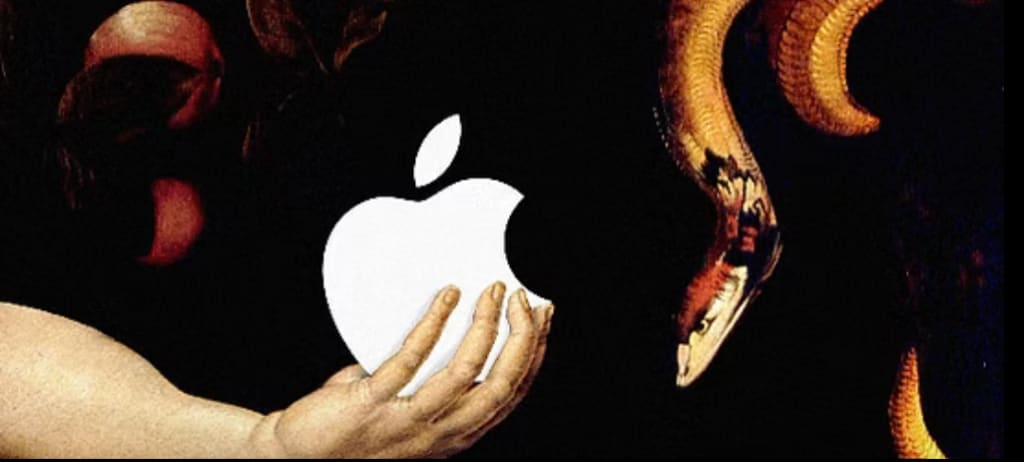
No one could remember when the apples became part of daily life. They began appearing in office kitchens, arranged neatly in bowls beside the coffee machines as though they had always belonged there. Someone must have brought them in, but no one claimed responsibility. It felt like a harmless health trend, another small correction in a culture that was always trying to improve itself.
Within weeks, grocery stores began selling out before evening. Within a month, apples were stacked near checkout lanes, handed out at schools, placed in hospital waiting rooms. Influencers posted photographs of them on bright kitchen counters without captions. Doctors mentioned them casually during routine visits. An apple a day, they would say, smiling as if reciting everyone’s favorite dad joke.
Evelyn did not eat them. She never liked apples. The sweetness was too sharp, the skin too waxy against her teeth. She preferred oranges, something a little more pungent. At first, she assumed the shift was temporary. People were always replacing one habit with another. And that maybe it would just trend out.
Then the storms came.
Three coastal cities flooded in the same week. Entire neighborhoods lost power. A bridge collapsed during rush hour, and images of tilted cars filled every screen. The death toll rose steadily throughout the evening.
Evelyn watched the coverage in her office breakroom. Her coworker sat across from her, scrolling through updates while biting into an apple. CRUNCH —Juice ran down his wrist.
“That’s terrible,” he said.
His voice held no weight. Around them, others nodded and went back to work. Someone mentioned dinner reservations, casually.
But nothing was more unsettling than the recent funeral she attended. A boy from her apartment building died suddenly. The explanation was brief and polished. The church was full. His mother stood at the front shaking, her grief loud and uncontrollable.
Many in the congregation held apples taken from a basket by the entrance. The quiet chewing continued throughout the service. This was when I knew we were in some sort of a delusional crisis. When people can no longer sit through a funeral or church service without the crunching taunting you from behind. People dabbed their eyes political. No one seemed undone.
Evelyn’s chest felt tight. The boy was nine. His mother was unraveling in front of them. The room should have felt heavier. Instead, condolences were offered in gentle tones, followed by soft bites and careful swallowing.
Over the following months, disasters multiplied. Blackouts rolled across the grid. A factory explosion lit the skyline for miles. Wildfires edged closer to suburbs once thought safe. Markets dipped sharply enough to once have caused panic.
There was none.
Restaurants remained full. Morning joggers kept moving. News anchors spoke with the same steady cadence they used for weather updates. Words like tragic and unfortunate appeared often, but they felt distant.
Evelyn began noticing the chewing everywhere. On buses. In meetings. At red lights. The crunch blended into the city’s background noise. Her sister kept a bag of apples in her car and offered one whenever Evelyn seemed anxious.
“They help,” her sister said. “Everyone’s just trying to stay balanced.”
Balanced became the word people leaned on. Public service announcements described apples as stabilizing in uncertain times. Schools distributed them daily. Employers folded them into wellness programs.
Evelyn did not feel balanced. She lay awake at night replaying footage of collapsing structures. She flinched at sirens. When she tried to talk about it, conversations would trail away.
“You’re overreacting,” a colleague told her. “Things have always been bad.”
But this felt different. It wasn’t just the disasters. It was how quickly they were absorbed.
She began reading quietly. Agricultural patents had shifted to biotech firms specializing in emotional regulation. Technical filings referenced cortisol modulation and neural stabilization through consistent dietary intake.
The apples were not poison. They did not make people unconscious. They simply lowered the volume of extreme feeling. They softened fear before it could spike. They smoothed anger before it could catch.
Nothing dramatic. Just enough.
She noticed who disappeared. The elderly man down her hall who once argued loudly about politics stopped appearing in the lobby. When she asked about him, neighbors shrugged and changed the subject.
Absence slipped quietly into normal.
As Evelyn went down to the city Square to do some shopping and to occupy her mind a bit on other things, the power plant across the street went up in flames.
A huge boom shook the buildings with a power outage that zapped the entire square, and even county. Everyone gathered outside to see the commotion.
“Do you think anyone’s hurt?” Evelyn asked the woman beside her.
“I’m sure it’s being handled,” the woman replied, extending an apple toward her.
No one ran. No one shouted. The plant continued to burn.
Fear rose in Evelyn so suddenly she felt lightheaded. Her heart pounded against her chest. She searched the crowd for someone else who looked shaken, someone whose face matched the scale of what was happening.
She saw only calm.
She looked at the apple in the woman’s hand. She imagined what it would feel like to quiet the pounding in her chest. To stand here without the sharp edges of grief and anger. To go home and sleep.
She understood then that the true shift was not the disaster. If catastrophe could be absorbed without resistance, it would no longer feel catastrophic at all.
The apple remained extended toward her.
“You’ll feel better,” the woman said softly.
Evelyn’s throat felt tight.
“If this is balance,” she asked, her voice barely steady, “why does it feel like surrender to something vile?”
She did not yet know what she could do. She only knew that if she surrendered her fear, she would surrender the part of herself that still recognized something was wrong.
About the Creator
Natasha Collazo
Selected Writer in Residency, Champagne France ---2026
The Diary of an emo Latina OUT NOW
https://a.co/d/0jYT7RR
Keep reading
More stories from Natasha Collazo and writers in Fiction and other communities.
Poetry Workshop
Previously, I published my first ever exclusive story on Vocal. If you’ve subscribed to my work, then you have access to it. Thank YOU for your support. I hope to make each read worth your while. So with that, I’ll be posting insights for exclusive readers only, such as a workshop on my craft. The hows and who’s of my stories. Pretty much revealing my secrets on how I write with you. So welcome fam, and let’s get started!
By Natasha CollazoExclusive • about a year ago
There's A Hole in My Bucket
It’s a well-known fact that Liza Dufresne was always the brains in the family. She was the one who always came up with the brilliant schemes the Dufresne kids carried out when they were younger. Like when they tricked Mrs. Claybourn into paying for a trip to Disney World. Liza convinced her that their parents had been kidnapped and were being held for ransom for the total price of three tickets. In reality, they were away on a weekend getaway for their anniversary. When they returned, Liza told the Claybourns that they did not like to talk about the ordeal. Their parents never found out how they got the money. Mrs. Claybourn never found out that the Dufresne parents were never really in any danger.
By David E. Perry3 days ago in Fiction
The Conference Room With No Windows
Every Monday at 9:00 a.m., the team met in Conference Room B. It had no windows. No one remembered when it had stopped having windows. Most people were sure it used to have at least one. Possibly two. Facing east. Or west. The direction shifted depending on who was speaking. But now the walls were seamless, uninterrupted drywall, painted a neutral beige that never reflected enough light to confirm the time of day.
By Lawrence Lease6 days ago in Fiction


Comments (1)
Oh sick! I’m following for the poetry but I’m pumped to see a horror story from you show up in the feed. Saving this for when I have time to focus on it :)