
Before the Guns Went Silent
Hope, loss, and love in the darkest year of the war
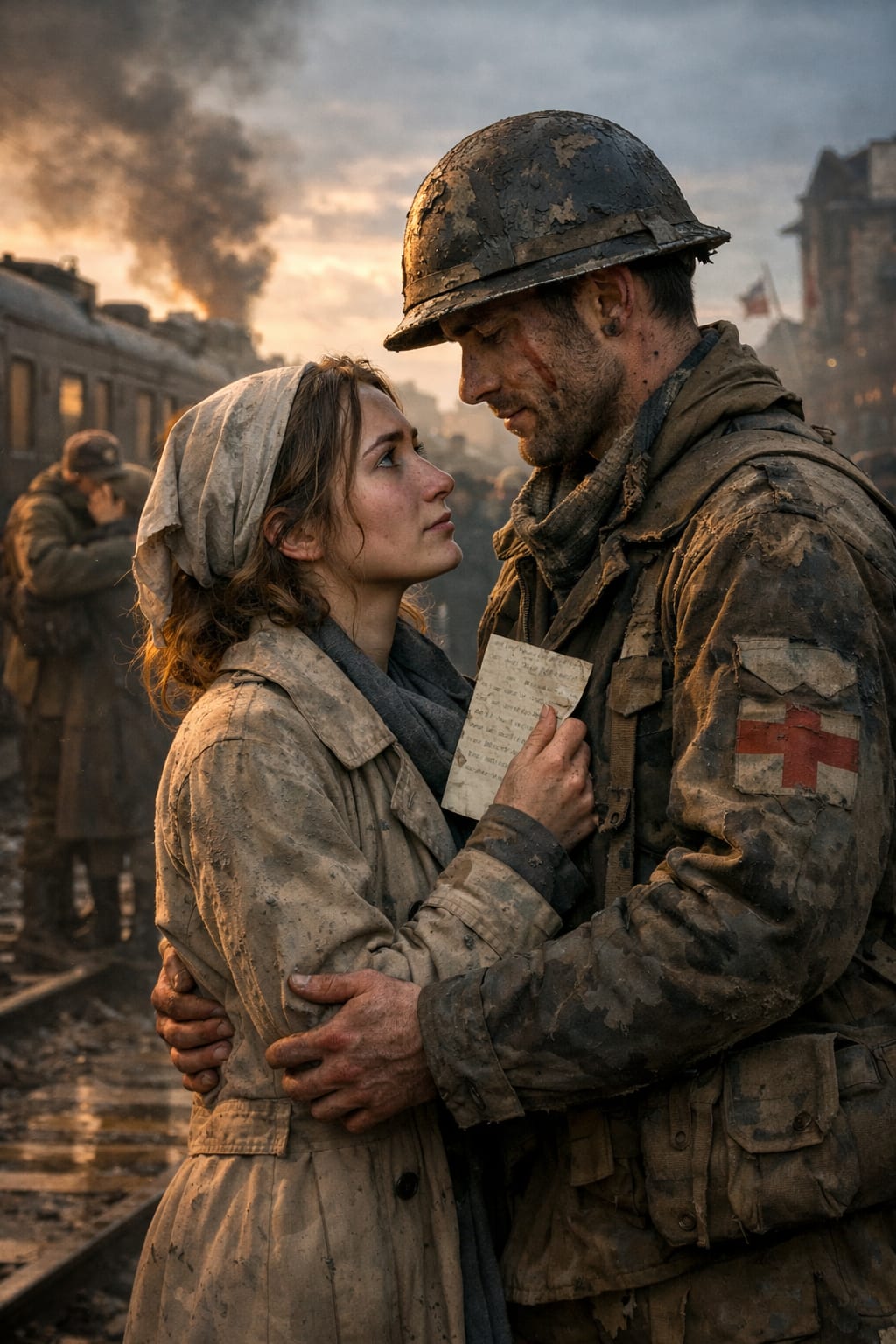
The winter of 1943 was the coldest Anna could remember. Snow covered the broken streets of her village like a white lie, hiding the scars left by bombs and boots. Every morning, she woke to the same sound—the distant thunder of guns reminding her that the war was still breathing, still hungry.
She lived in a small house near the railway line, once full of laughter, now full of echoes. Her parents were gone. Her brother had been taken by the army two years earlier, and no letter had come since. War had not just taken people—it had taken certainty.
Anna worked as a nurse in a temporary medical shelter built from wood and hope. Every day, wounded soldiers arrived—some screaming, some silent, some already gone. She cleaned wounds, held hands, and whispered comfort she wasn’t sure she believed herself.
One evening, as the sun bled into the horizon, they brought in a soldier barely older than herself. He was unconscious, his uniform torn, his face pale beneath layers of dirt and blood. Anna noticed his hands first—steady, strong, unfamiliar.
“He’s been shot near the forest,” a medic said. “If he survives the night, he might live.”
Anna stayed with him long after her shift ended. She cleaned his wounds slowly, carefully, as if gentleness alone could keep death away. When he finally opened his eyes, she was there.
“You’re safe,” she said softly.
His eyes met hers—tired, afraid, but alive.
“My name is Daniel,” he whispered.
From that night on, Daniel became her quiet miracle.
He recovered slowly. Each day, he spoke a little more. He told her about his childhood near the sea, about his mother who sang while cooking, about dreams that now felt foolish in a world on fire. Anna listened, sharing stories of her village before the war, of summers filled with light and music.
They never spoke of the future. It felt too fragile.
Outside the shelter, the war raged on. Trains screamed through the night, carrying soldiers to places that swallowed them whole. Sirens wailed. The sky burned. But inside those thin wooden walls, something human survived.
Hope.
One night, during an air raid, the shelter shook violently. Bombs fell close—too close. Anna and Daniel huddled together in the darkness, her hands shaking, his arms around her without thought.
“If we survive this,” Daniel said quietly, “I don’t want to forget you.”
Anna swallowed hard. “Then don’t.”
The bombing stopped by morning. But peace did not follow.
Orders came. Daniel was fit enough to return to the front.
The day he left, snow fell gently, as if the world was unaware of what it was taking. They stood near the railway line, steam rising from the train like a final breath.
“I don’t know if I’ll come back,” Daniel said.
Anna pressed a folded piece of paper into his hand. “Then take this.”
It was a letter—not to be read now, but later. If later ever came.
They did not kiss. They did not promise forever. War made promises cruel.
The train pulled away. Anna watched until it disappeared into the white distance.
Days turned into months. Winter became spring, but warmth felt meaningless. Letters came from Daniel at first—short, careful, hopeful. Then they stopped.
Anna kept working. She kept surviving. But every siren, every knock on the door, felt like a warning.
One afternoon, a soldier arrived with a sack of personal belongings. Anna recognized the handwriting on a name tag before she opened the bag.
Daniel.
Her hands went numb. The world blurred.
Inside the bag was her letter—still sealed.
She did not open it that day. Or the next.
Grief during war had no ceremony. No time. Anna buried her pain deep and continued helping others, even as something inside her went quiet.
Then, in the summer of 1945, the guns began to slow. Rumors spread like cautious light.
The war was ending.
On the day the ceasefire was announced, the village gathered in silence. No cheers. Just exhausted relief.
That evening, Anna sat alone near the railway line, holding Daniel’s unopened letter. Her fingers trembled as she finally unfolded it.
If you are reading this, it began,
then I am still alive somewhere—or I am gone, but I lived knowing someone saw me as more than a soldier.
Tears fell freely now.
Before the guns go silent, I want you to know this: loving you gave meaning to the noise. If I survive, I will find you. If I don’t, remember that in the darkest year of this war, something beautiful existed.
Anna pressed the letter to her chest.
Footsteps crunched behind her.
She turned.
A man stood there—thin, older, scarred. But his eyes…
“Anna,” he said.
Time collapsed.
Daniel had survived. Captured. Imprisoned. Forgotten by history—but alive.
She crossed the distance between them without a word, holding him as if the war itself might try to pull him away again.
The guns had finally gone silent.
And love, somehow, had survived the noise. 🕊️
About the Creator
Keep reading
More stories from moeez yousafzai and writers in Fiction and other communities.
The Sinking That Shook the World
On May 7, 1915, the cold waters of the Atlantic Ocean became the grave of one of the most famous ships in history—the RMS Lusitania. What began as a routine transatlantic voyage ended in tragedy when a German submarine fired a single torpedo that sent the great British passenger liner to the bottom of the sea. The sinking shocked the world, killed nearly twelve hundred people, and forever altered global opinion about the war raging in Europe.
By moeez yousafzai2 months ago in History
Trouble at the Tea Leafing Café
The rain had started right around the time that Annie was buttering her second thick slice of homemade toast for breakfast, and hadn’t paused since. Not that anyone could tell. The windows of the café were fogged over, and with every seat filled with happy customers munching on fresh baked pastries or steaming bowls of the delicious soup of the day, it was hardly surprising. Annie looked around the room, finally taking a moment to breathe after the lunch time rush. Her old life already felt like a bad memory, a part of her history, always, but just that. History.
By Hannah Moore7 days ago in Fiction
When the City Forgot the Stars
The city never truly slept. It only pretended to rest between waves of noise and light. Neon signs pulsed like artificial heartbeats, flooding every street with color. Giant billboards promised happiness in bold fonts and perfect smiles. Cars rushed past like they were late for something important. And above it all, the sky stood silent, empty, stripped of its stars.
By Salman Writesa day ago in Fiction



Comments
There are no comments for this story
Be the first to respond and start the conversation.