
Before The Second Well
The beginning of two strangers...

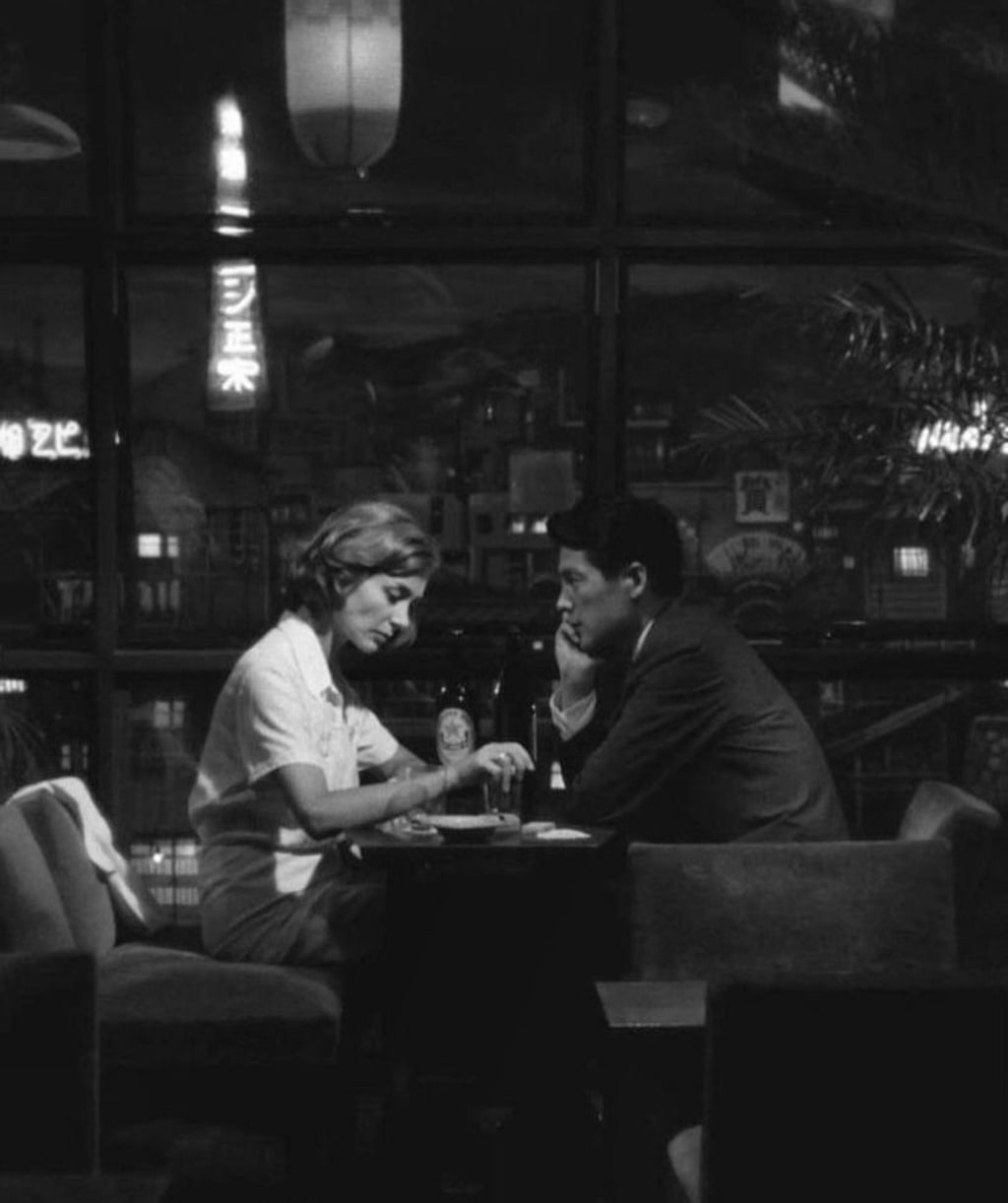
The beginning did not announce itself. It stood slightly off to the side of the room, as if unsure it had been invited.
They met because the rain had pressed everyone inward.
The café was narrower than it looked from the street, a corridor of small tables and damp coats. Windows fogged over in patient layers. The bell above the door rang too brightly each time it opened, as if it were trying to convince the weather to behave.
Elena had taken the last seat at the long communal table, her bag tucked between her boots. She had chosen the chair not for any reason she could defend—only because it was empty, and she was tired of standing in doorways pretending she was about to leave.
He asked if the seat across from her was taken.
It was the sort of question that requires very little from the person answering it. She looked up. He was already half out of his wet jacket, hair darkened by rain, holding a cup he had not yet tasted.
“No,” she said.
That was all.
He sat. The table wobbled faintly under the redistribution of weight. Between them lay a sugar jar, a folded newspaper abandoned to its own headlines, and the quiet understanding that strangers sometimes occupy the same surface without obligation.
The beginning—if it was one—could have dissolved there.
They did not speak for several minutes. The café hummed around them: the hiss of milk steaming, the low thrum of conversation, the clatter of a spoon against porcelain. Elena traced the rim of her cup with her thumb. He unfolded the newspaper, then folded it again without reading.
“You’d think it would let up,” he said finally, nodding toward the windows, where rain streaked down in crooked paths.
She looked at the glass as though it had personally offended her. “It won’t,” she said. “It likes the drama.”
He smiled at that—not broadly, not in a way that claimed too much. Just enough to suggest he understood the pleasure of assigning motives to weather.
“My bus was supposed to come ten minutes ago,” he added. “I think it’s given up.”
“Or it’s waiting,” she said. “For something.”
They both glanced at the door, as if expecting the bus to walk in, apologetic and soaked.
He laughed—short, surprised by it. She felt the sound land somewhere between them and remain there, as tangible as the sugar jar.
Names were exchanged almost reluctantly, as though naming things might make them too real. He was Daniel. She was Elena. They did not shake hands. Their fingers brushed once when he reached for the sugar, and the contact was so brief it could have been mistaken for coincidence.
The rain continued.
He asked what she did. She gave him the version that required the least explanation. He told her he had just moved back to town, which sounded less like a decision and more like a correction. There were small hesitations in his sentences, spaces where other stories might have lived.
Outside, a car sent water fanning up against the curb. Inside, someone dropped a plate and everyone looked up at once, unified by the sharpness of the sound.
The beginning gathered itself in these interruptions—in the way she noticed the thin scar along his wrist, in the way he noticed she never quite finished her coffee. It was not grand. It did not swell with certainty. It assembled itself from glances that lingered half a second too long and questions that could have been left unasked.
When the rain softened, it did so without apology. The windows cleared in small ovals where sleeves had wiped them. The bell above the door rang again.
“I should check if the bus is running,” Daniel said, though he made no move to stand.
“You could,” Elena agreed.
Neither of them did anything.
There is a moment, early on, when leaving is still simple. Before routines adjust. Before a chair across from yours begins to feel provisionally yours. That moment hovered now, patient and easily offended.
He stood first. She felt the absence of his weight at the table immediately, the faint correction of its wobble.
“Well,” he said, as if the word might carry the rest of the sentence for him.
“Well,” she echoed.
He hesitated, then scribbled something on the corner of the newspaper—numbers, hurried but legible. He slid it toward her with two fingers, careful not to presume.
“In case,” he said.
“In case,” she repeated.
The bell rang. The door opened. A gust of damp air moved through the café, rearranging nothing and everything at once.
He stepped out into the thinning rain.
Elena remained seated, the scrap of newsprint beneath her palm. The headline above his number declared something decisive about the world—markets rising, storms approaching, a council vote concluded. It felt unrelated to the small, unverified shift that had just occurred at her table.
Through the window, she could see him pause at the curb, looking left, then right, as though unsure which direction constituted forward.
Her phone was in her bag. The number was already there, waiting in ink.
The beginning did not resolve itself. It lingered in the space between dialing and not dialing, between buses arriving and buses passing through, between a name spoken once and a name spoken again.
Outside, the rain considered returning.
Inside, Elena folded the newspaper carefully along its old crease and did not yet decide.
About the Creator
Kam
My belief: Either write something worth reading or do something worth writing.
Winterthorne
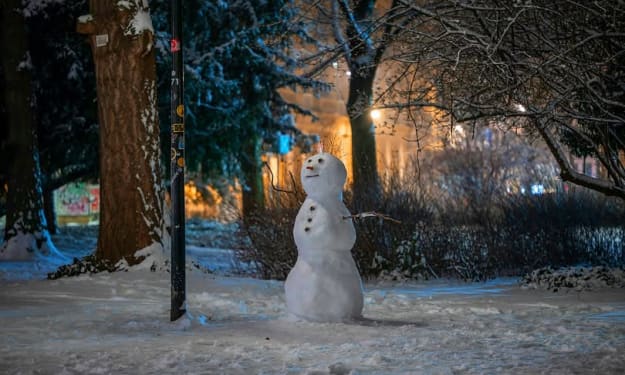
Winterthorne stood alone at the edge of the park. The beautiful snow that had surrounded him was all trampled now, from the feet of all of the children who had built him. He missed the sparkly clean snow blanket, but he was happy that so many children had come out to make him.
By Laura DePacea day ago in Fiction
Comments
There are no comments for this story
Be the first to respond and start the conversation.