
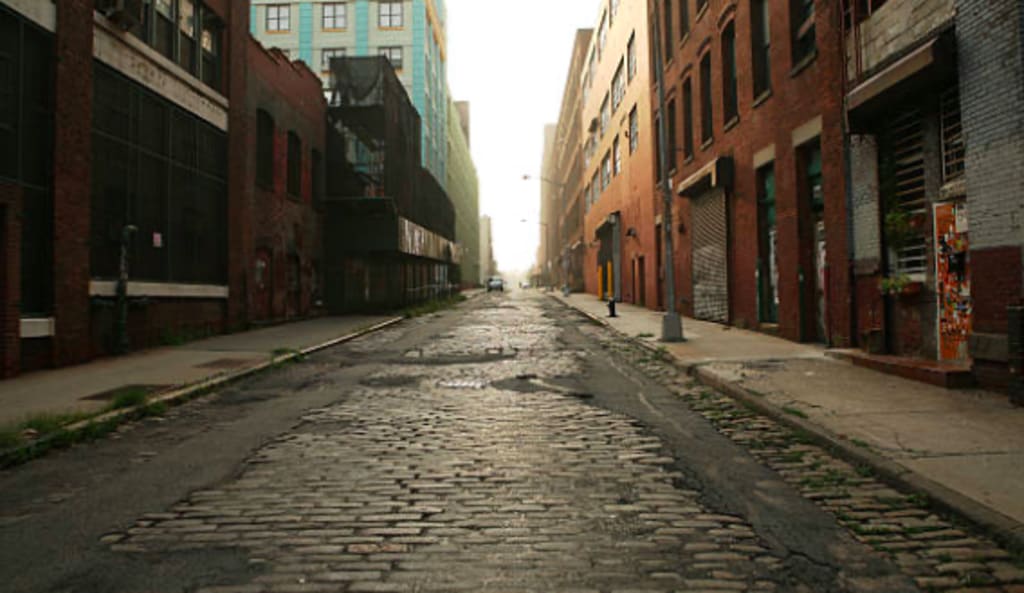
After it all comes apart, we shelter wherever we can.
At first, no one even left the City. After all, enough of the population had left the country before the Collapse. The Whole Foods was fully stocked, bottled water plentiful enough, solar panels still operating at their full capacity, none of it having yet fallen victim to the tolls of time and neglect. It was like a weird vacation, like when you’re in a resort but the power goes out because of hurricanes.
Belí knew they’d soon tire of the lack of wifi and leave for the suburbs, for the white picket fences, the chance to live in enough space that the absence of internet connectivity and three thousand work emails wouldn’t force them to face the fact that they hadn’t actually spoken to each other in years.
Of course, she was right; those starry amber eyes never missed a thing. The first to go were the rich ones, to their summer homes or ski lodges or country cottages or whatever people had when they could afford extra homes but not to flee the Terror.
As they left, the middle class took their place, moving into the luxuries afforded by two hedge fund salaries. In some cases the new residents showed up before the owners had even finished packing. It was an odd dynamic, watching these scenes unfold: younger vultures circling a desert carcass being abandoned by older birds of prey who were unable to withstand the heat. The wealthy ones grabbing anything they could before leaving the City to the stronger, more virile generations. Knowing that they couldn’t come back; wondering if they would even miss it.
As the middle class took to the penthouses, the poor flooded the downtown areas. Finally able to move into the metropolis itself, out of the crowded boroughs filled with house sharing and loud parties and community and love, we arrived in droves, unsure why we had left our homes but understanding that this was The Millennial Dream: to move into an apartment better than the last one you rented. (The dream, after all, was never to own. We knew our place.)
Belí told me that the middle class would leave before too long, and she wasn’t wrong. We lived on, existing in what was at once a beautiful dream and an actual Orwellian nightmare.
At night we smoked joints on the roof of the building, gazing out over the river to the defunct camps just one thin channel of water away. What fucking bullshit, I muttered, over and over, night after night. Belí sat silent. They meant different things to her and me, those cement warehouses full of chain link fencing. When the smoke finally stopped that day all those months ago, it filled me with relief that no one else would be taken; it filled Belí with dread that no one would return.
One day, I walked in on her fingering a heart shaped locket she’d found on the dresser. She slowly opened it, showing me the photos inside.
It’s their kids, she said. What they lived for. She paused. They’re probably all dead.
She would never take the necklace off again.
We lived in the loft for six weeks before she was right, and the middle class started moving out to the suburbs, pillaging at a different Whole Foods, living in what were once described as “All-American” neighborhoods with “Great school systems” but now they weren’t because those things didn’t exist anymore, America, schools.
Slowly, deliberately, we followed the migratory path to the luxury high rise buildings that had been left to us. They’d been abandoned quickly, only out-of-date clothes and furnishings remaining inside the palatial spaces we had long been denied. But it didn’t matter to us, to any of us, to any of the throngs of service industry employees and public transit workers and student-debt laden baristas who came pouring into these residences. We were living like kings.
Belí threw open the double doors to the master bedroom and took a running dive into the unmade California King bed. I’ve never felt luxury like this, she cried, even if it has someone else’s skin cells all over it. Feel these sheets, Ellie. I didn’t know thread counts came this high.
Knowing nothing about thread counts, I obliged for the simple reason that when a girl as beautiful as Belí tells you to come join her in bed, you do it. Yeah, I replied, burying my face into the pillows and my limbs into hers, these are nice sheets.
After sleeping for the better part of the afternoon in someone else’s tangle of linens, we emerged to explore the rest of the condo. We availed ourselves of the comically oversized Jacuzzi, wrapped ourselves in bathrobes so fluffy they felt like an apology from the universe, unpacked our few belongings, replaced the bedsheets with crisp new ones, raided the pantry. As the sun set, we laid together on a chaise on the balcony, listening to the quiet hum of the solar powered generators that kept these castles lit up against the falling expanse of an unknown night.
Belí leaned forward to get up, saying nothing; I listened to the quiet pad of her feet until it faded away into this sprawling penthouse that was at once our prison cell and Paradise. I closed my eyes, quietly breathing in the smog-free city air.
I don’t get rich people, she announced as she reemerged onto the terrace. I looked up at her, at all five feet five inches of her, at the gentle curve of her arches as she leaned ever so slightly forward on the balls of her feet, at her thin and strong legs that were crossed at the knees, at the way the robe cinched her waist and opened directly above it, revealing the tattoos on her ribs and collarbone. She stared at me with laughter in her eyes. I wanted to remember this – her, this place, this sense of peace, even in what could only be described as the worst of times – I needed to remember this forever.
Would you believe it, she continued, leaving an entire room full of good wine and not a single glass to drink it from?
From behind her back she produced two bottles of rosé. She handed me one and fished into the pocket of the robe (her robe? Does property ownership still apply after the Collapse? Or is it a wasteland of finders keepers?) to pull out a wine key (definitely her wine key, ever since that Christmas three years ago when the GM of our restaurant gifted personalized wine openers to the FOH staff). She tossed it to me and reached into her pocket again, fumbling with her lighter, sparking a joint as I opened the wine that cost more than a week’s worth of groceries in the Before. After inhaling deeply, she sat down beside me, passed it to me, and slowly began gathering her chestnut hair into a loose bun. I passed her the wine as she swung her legs over mine, her ankles crossed over my thighs, the prominent scar on her right knee somehow even more noticeable in the moonlight.
We stayed this way for half an hour, quiet, introspective, completely surrounded by each other’s limbs and simultaneously completely alone, until the weed and the wine kicked in, and the introspection became conversation, and we opened the second bottle and began to speak.
When it started, when the Terror was in its infancy, the color of my skin protected me; my family’s status protected me; my privileged upbringing protected me. Not simply from physical harm, but from understanding the potential of this tyranny. Belí, I knew, had no such protection. Her skin, while light, was distinctly brown; her parents, immigrants; her socioeconomic status, low. Her biggest protection, she always told me, was her knowledge that she was unprotected.
The first time they raided a nearby restaurant, I crumbled, froze, lost my nerve as I looked at all of my cooks whose status I knew left them vulnerable. Thank god for Belí. Not even scheduled that day, she had shown up to wait for me to finish work. Sitting at the bar as the text messages came in, she calmly took a sip of her drink, covered it with a cocktail napkin, came back to the kitchen, and told everyone to leave. They’re still fifteen minutes away from our block, she told them in her lyrical cadence, so just get your shit and go home. Ellie will text you tomorrow.
Most of the guys just tossed their aprons in the linen bag and changed their shoes, grabbed beers from the walk-in, and sauntered into the night. Scared, sure, but not letting it on. Laughing, joking about having a free night off. But one guy – not even a guy, just a kid, our teenage dishwasher – began to cry. No, no, said Belí. No time for that now. Come with me. And she took him downstairs and helped him get his things, told him to text her when he got home, that he would be fine. No idea where she found the hubris to guarantee that he would be safe from the badge bedecked bullies who were moving their focus to cities resistant to deportation and incarceration, but she said it convincingly enough for him to believe her. And he got his things, and he left. And he texted her when he made it home.
It was that bravery that carried us through, her insistence that things would be alright. When the camps opened, she stoically told me that we would be fine. When my family left for other countries, she stoically told me that we would be fine. When her family was taken, she stoically told me that we would be fine. When they started taking people who were born here, whether for political motivations or inherent traits of their identities, she stoically told me we would be fine. And then the Collapse came, and she had no stoicism left, and she was empty and saddled with a girl like me, whose courage was measured in thimblefuls while hers was measured by the gallon, and all we could do was talk about it, wonder what the future held, wonder if we had a place in it.
Maybe we could still get out, I said to her, to this magnificent woman on this magnificent balcony overlooking a once-magnificent city in a country that no longer was. Go North.
She shuddered, and I watched as silent tears streamed down her face. I put my hand on her knee, gently moving my thumb against her scar in a circular motion, waiting for her to speak, waiting for her to let me into the darkness that she so rarely shared with anyone but her dreams.
They never came back, she finally whispered. When the camps shut down. They never came back.
Maybe they made it home, I offered thinly. We both knew better. Most of the people who went in never came out, and anyway, her family couldn’t go home. That’s why they were in the camps in the first place. Home was gone.
She smiled weakly, grabbed the bottle, and swilled half of it. Passing it back to me, she dexterously swung her legs off of me and slid into the crook of my arm. Yeah, she whispered. Maybe.
We lay entwined in silence, watching as the lights slowly went out around us, waiting for the familiar buzz of a generator about to run out of the power it gathered during daylight hours. As it began to sing, we chugged the rest of the bottle, stumbled through some investment banker’s park side palace, and collapsed into a nest of sheets that cost more than all of the furniture in our first apartment combined.
In the dark, it was impossible to know where she ended and I began.
About the Creator
Keep reading
More stories from writers in Fiction and other communities.
Feelings Never Die
It is Valentine's Day again, and it bought back memories that were over fifty years old. It bought me back to 1971, and I woke up and I knew my baby was due today. I was big and pregnant, and I felt like I was about to burst wide open. Imagine my surprise when the doctor told my I had a due date of February 14. I couldn't believe it, and since my baby was due today, I felt I could indulge myself a bit. I had gained a lot of weight, and chocolate was on the no-no list, but I had came to the end of this pregnancy, and I hoped it would be okay, after all I would deliver this baby today. So I walked across the street to the grocery story, and bought myself, a peppermint patty, covered in chocolate, my favorite. Me and my Valentine's baby would enjoy it together.
By Susan Payton6 days ago in Fiction
Public Announcement Challenge Winners
For the Public Announcement Challenge, writers were asked to work inside voices built for control. These were notices, warnings, and updates meant to inform rather than confess. The strongest entries committed to that form and didn't break from it. Corporate memos, formal government alerts, and internal policy language were held consistently, allowing emotion, fear, grief, or humor to surface indirectly through pressure rather than declaration. The following poems recognize the voice of authority, and let human feeling slip through despite all its rules and restraint.
By Vocal Curation Team5 days ago in Resources


Comments
There are no comments for this story
Be the first to respond and start the conversation.