

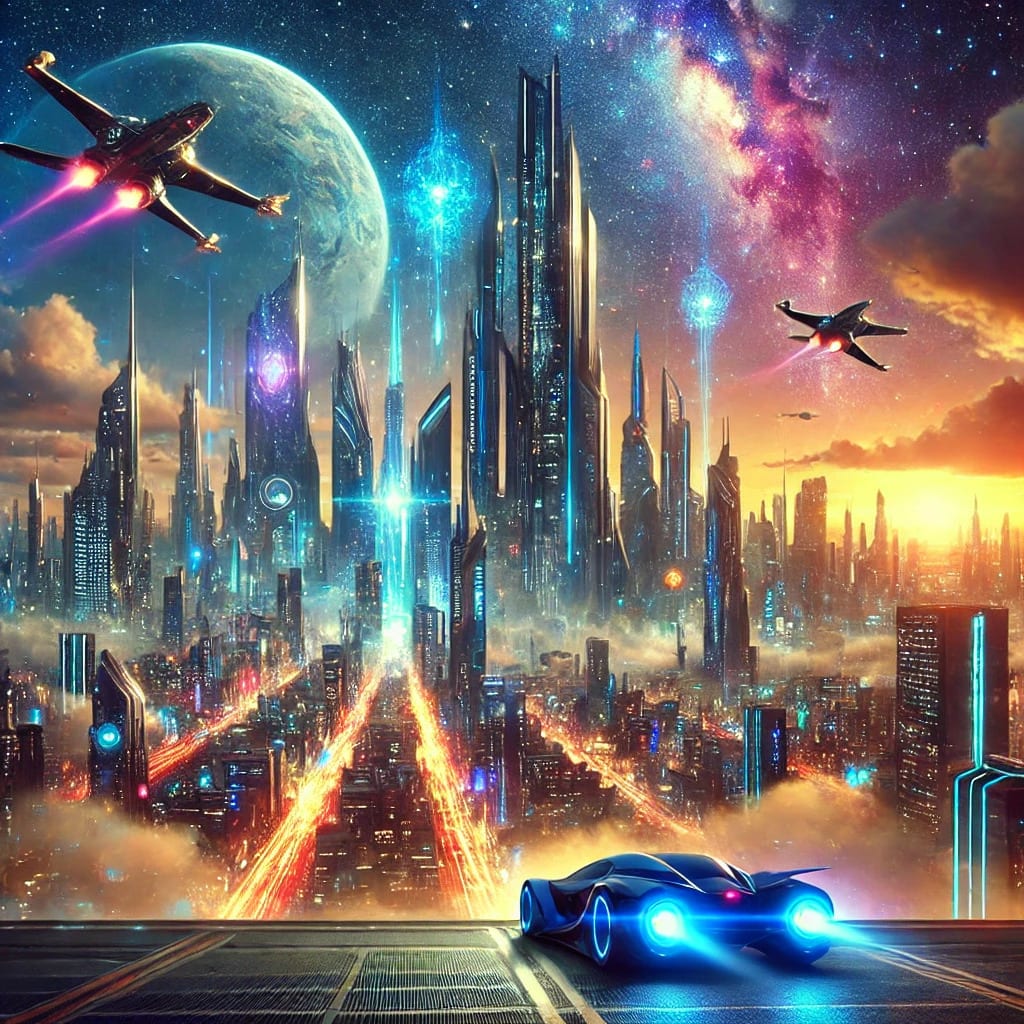
Where Science Meets Fiction: The Future is Now
The line between science and fiction has always been thin, but in 2024, it’s practically gossamer. From sentient AI debating philosophy to CRISPR-edited babies and Martian real estate listings, reality is catching up to—and sometimes overtaking—the wildest imaginations of sci-fi authors. Let’s dive into the latest breakthroughs and the stories they inspire. Buckle up: the future’s here, and it’s weird.
1. The Blurring Lines: When Science Fiction Becomes Science Fact
Sci-fi used to be a playground for “what ifs.” Now, it’s a blueprint. Take AI, for example. ChatGPT-4 can write poetry, debug code, and even flirt (badly). Meanwhile, shows like Westworld and novels like Klara and the Sun ask: What happens when machines outthink us? Spoiler: We’re racing to find out.
But it’s not just AI. Quantum computers, once confined to Star Trek episodes, are cracking encryption codes in labs. CRISPR gene-editing, a staple of dystopian novels, just cured its first genetic disorder in humans. The future isn’t coming—it’s binge-watching us.
2. AI’s Identity Crisis: From Tools to (Almost) Colleagues
In 2024, AI isn’t just smarter—it’s eerily relatable. Google’s Gemini and OpenAI’s GPT-5 can now reason, joke, and mimic human writing styles so well that universities are in a full-blown plagiarism panic. But here’s the twist: Sci-fi is shifting from “Will robots take over?” to “Should robots get therapy?”
Recent films like The Creator and books like Sea of Tranquility explore AI grappling with existential dread. In real life, ethicists are asking: If an AI develops a sense of self, do we owe it rights? Cue the Blade Runner vibes.
3. Quantum Leaps: Computing’s Wild West
Quantum computing is having its “iPhone moment.” IBM’s 1,000-qubit processor isn’t just faster—it’s solving problems classical computers can’t, like simulating complex molecules for drug discovery. But with great power comes great chaos. Quantum computers could break Bitcoin, redefine cybersecurity, and make weather forecasts actually accurate.
Sci-fi is all over this. In The Three-Body Problem trilogy, quantum tech becomes a weapon. IRL, governments are drafting quantum ethics guidelines. Moral of the story? Don’t let physicists binge-watch Black Mirror before work.
4. CRISPR 2.0: Editing Humanity’s Source Code
CRISPR gene-editing just leveled up. Scientists can now tweak DNA with pinpoint accuracy, curing diseases like sickle cell anemia. But the big talk? Designer babies. While Gattaca warned us about genetic castes, startups are quietly offering “enhancements” like immunity boosts or taller height.
Ethicists are screaming; sci-fi is scribbling notes. Margaret Atwood’s Oryx and Crake feels less like fiction and more like a draft of next year’s headlines. The question isn’t “Can we edit genes?” but “Should we edit desires?”
5. Climate Fiction: Apocalypse Now with Solutions
Climate change isn’t just a subplot anymore—it’s the main character. “Cli-fi” (climate fiction) is booming. Books like The Ministry for the Future and movies like Don’t Look Up mix doom with dark humor. But real-world science is fighting back.
Carbon capture tech is sucking CO2 out of the air. Lab-grown meat is hitting grocery stores. Even coral reefs are getting 3D-printed replacements. Sci-fi used to warn, “This could happen.” Now it’s asking, “Can we undo what’s already done?”
6. Space: The Final Frontier (Again)
Forget moon landings—Mars is the new flex. SpaceX’s Starship plans to colonize the Red Planet by 2030, while NASA’s Artemis II is prepping astronauts for a lunar comeback. Meanwhile, sci-fi is obsessed with space’s ethical mess.
The Expanse series tackles corporate-owned asteroids. Project Hail Mary pits astronauts against alien microbes. And real-life billionaires? They’re selling tickets to orbit. The message is clear: Space isn’t just for heroes in spandex anymore.
7. Neurotech: Hacking the Brain
Elon Musk’s Neuralink isn’t just about controlling gadgets with your mind anymore. Their latest brain-chip trials let paralyzed patients type with thoughts. But sci-fi’s been here forever. Black Mirror’s “Black Museum” episode? Yeah, that’s basically Neuralink with a horror filter.
Meanwhile, startups are selling “focus-boosting” headbands and apps that claim to rewire your brain for happiness. The line between self-improvement and Cyberpunk 2077 is getting blurry.
8. Virtual Reality: Escaping the Mundane
Meta’s Quest 3 isn’t just for gaming—it’s for living. Attend meetings as a cartoon avatar, tour ancient Rome, or meditate in a pixelated forest. But VR’s dark side is pure sci-fi fodder. Ready Player One warned us about addiction; now therapists treat “VR dissociation” in teens.
The real innovation? Haptic suits that let you feel virtual worlds. Great for gamers, creepy for dating apps.
9. Energy Breakthroughs: Sci-Fi’s Quiet Revolution
Fusion energy is no longer a meme. Scientists recently generated more power than they used in a fusion reaction—a first. Cue the Back to the Future jokes about Mr. Fusion. But the real story is in renewables: Solar panels are now thinner than paper, and “sand batteries” store green energy for months.
Sci-fi rarely glamorizes energy tech, but *Kim Stanley Robinson’s Ministry for the Future nails it: Solving climate change isn’t about heroics—it’s about grids, politics, and stubborn optimism.
10. Ethics: The Elephant in the Lab
Every breakthrough comes with a “but what if?” CRISPR, AI, quantum computing—they’re all double-edged swords. Sci-fi has always been ethics’ hype-man, from Frankenstein to Ex Machina. Now, real-world scientists are hiring philosophers.
Should we edit human embryos? Can AI own copyrights? Who gets to govern Mars? These aren’t theoretical anymore. As author Ted Chiang says: “Technology doesn’t solve problems—it reshapes them.”
Conclusion: The Stories We Need Now
Science and fiction aren’t just overlapping—they’re collaborating. Sci-fi authors consult with NASA; physicists quote Star Trek. In a world of runaway tech, we need stories that ask “Should we?” as much as “Can we?”
So here’s to 2024: a year where every lab discovery feels like a plot twist, and every novel feels like a warning. The future’s a choose-your-own-adventure book, and we’re all writing it together.
About the Creator
Fiaz ali
"As a passionate writer, web designer, and freelancer, I combine creativity with technical expertise to deliver impactful solutions.
One More Day?
One more day? That's all we have left, one more day 24 hours, 1,400 minutes, 86,400 seconds. I pick you up in my black truck, the same one I will leave you behind in. I pick you up at 8, as we ride to our favorite spot like nothing changed between us, like everything is normal and for today it is. We get a table and sit down, we order our favorite foods, drinks, and appetizers. You sit there beside me with admiration on your face, your blonde hair like the sun in the dark. We drink and eat till our stomachs can't take any more, and then we eat some more. We go down to the dance floor, and dance our hearts out even though both of us have no rhythm. We go to the arcade next door and play games until our thumbs are blue. I win you a stuffed animal, a giraffe your favorite. The pure look of happiness and you squeeze into your new toy, is enough to make me happy for life. You give me a slight kiss on the cheek and lips as you thank me for the giraffe over and over. We then turn in our tickets at the front and she gets me my own toy giraffe. “For we can match”, she says. I take it from her with a grateful smile, knowing this could be the last gift I ever get from you.
By Christian Sanchez6 days ago in Fiction


Comments
There are no comments for this story
Be the first to respond and start the conversation.