
The Fifth Element -2 Potential
Craft Over Catharsis Challenge Entry

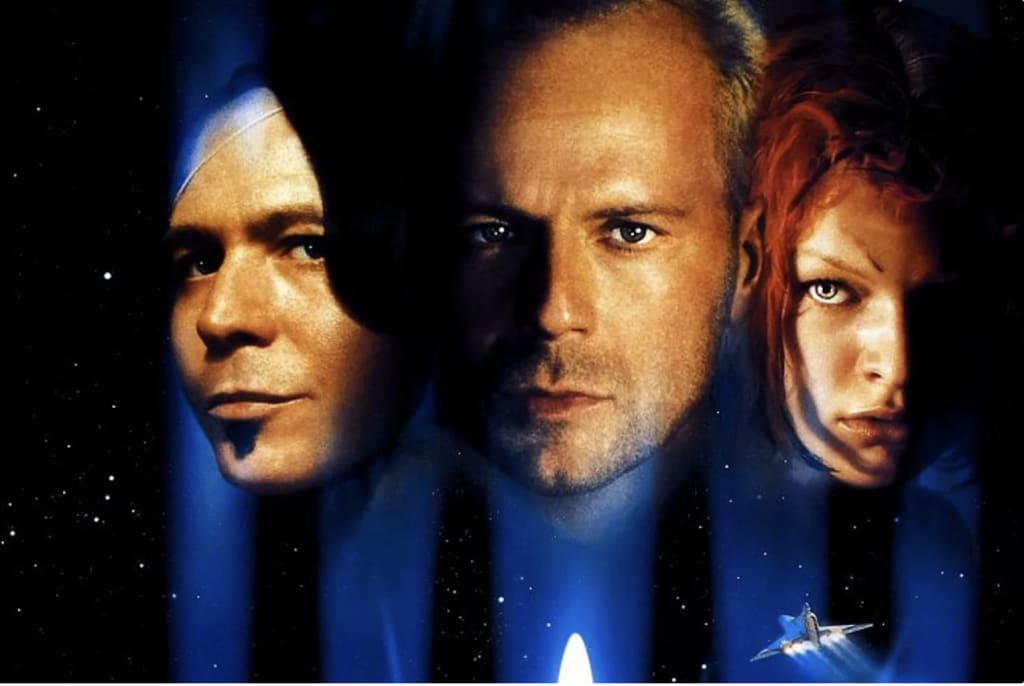
MEMO
STAMP: For Sony Pictures internal circulation only
DATE: February 5, 2026
TO: Maurizio Vitale, EVP, Worldwide Marketing & Brand Strategy
RE: The Fifth Element US Under-performance and Sequel Viability
Dear Mr. Vitale,
Per your request, I’ve reviewed the performance history of The Fifth Element with a focus on (1) why the film under-performed in the U.S. market relative to its global success, and (2) whether those findings suggest conditions under which a sequel could be commercially viable today, almost 30 years after its 1997 theatrical release.
Below is a concise synthesis.
Executive Summary
The Fifth Element did not fail commercially, given that it grossed a total of $263M in the global box office against its $90M production budget. Rather, it misaligned with U.S. audience expectations at the time of release while performing exceptionally well internationally. Its long-term global cult status, success in the home video and streaming markets, strong transnational quotability, and continued relevance to contemporary franchise culture suggest that a sequel could succeed if positioned correctly, particularly outside the traditional U.S.-centric marketing frame. The original weak performance in the U.S. was primarily a marketing and genre-framing problem, not a content problem.
Reasons Why the Film Under-Performed in the U.S.
To be precise, The Fifth Element performed solidly in the U.S., collecting $63M in ticket sales. However, it is believed to perform weakly because it did not meet its genre potential, especially taking into account that even the Batman and Robin, which came out in the same year and was considered a box office bomb, grossed $107M domestically. Nonetheless, The Fifth Element became a much bigger phenomenon internationally. The reasons for such bifurcation are a mix of culture, timing, and taste:
1. Expectation Mismatch in Marketing
U.S. marketing framed the film as a conventional Bruce Willis action sci-fi, emphasizing:
- explosions,
- vehicle chases,
- militarized conflict,
- linear hero narrative.
However, the actual film delivered:
- European absurdism,
- camp aesthetics,
- fashion-forward visual excess,
- visual-first storytelling over tight realism,
- tonal hybridity bordering on parody.
This mismatch led to:
- weak word-of-mouth among early U.S. audiences,
- disappointment among viewers expecting a Die Hard-style experience,
- slower domestic uptake despite high production values.
- genre blending (sci-fi + comedy + opera + fashion)
- overt camp in blockbuster-scale films,
- stylized non-ironic absurdity.
- European and Asian markets had higher tolerance for surrealism and tonal play,
- international audiences embraced the film’s visual language more readily.
2. Genre Hybridity vs. U.S. Genre Purity
In the late 1990s, U.S. mainstream audiences preferred either serious sci-fi (Gattaca, Matrix) or straightforward action (Die Hard) and were less prepared for:
By contrast:
3. Style/vibe over plausibility
At the time, U.S. critics and audiences complained that the movie was:
- “nonsensical”
- “cartoonish”
- “thin on plot.”
International audiences were more willing to accept vibes over logic, especially in:
- France,
- Germany,
- Japan, and
- Eastern Europe
where visual imagination and allegory are often valued more than realism.
4. Fashion vs functionality in costume design
Jean-Paul Gaultier’s costumes mattered more outside the U.S., where sci-fi wear was supposed to be futuristic, minimalist and functional. However, the fashion dimension was huge globally:
- Over 1,000 vibrant custom costumes
- Recognizable haute-couture signatures.
In Europe and Asia, the costumes were seen as a legitimate cultural event rather than a distraction.
5. Visionary auteur vs Action director (Luc Besson)
Outside the U.S., Luc Besson was already a star with a strong following abroad. Before The Fifth Element, Besson was well known for Léon: The Professional and La Femme Nikita. International audiences trusted him as a visionary filmmaker, not just a genre director.
American audiences, even those familiar with Léon, did not expect French surrealism with jokes and opera aliens in leu of a fast-paced action sci-fi.
6. Cultural Translation Advantage (Outside the U.S.)
Ironically, what confused U.S. audiences helped the film translate and travel globally thanks to its key features:
- Minimal reliance on culturally specific dialogue
- Heavy use of visual humor
- Memorable, phonetic catchphrases (“Multipass,” “Big bada boom”)
These features:
- reduced translation friction,
- increased meme potential before the social media era,
- enabled long-term global circulation through home video and reruns.
Long-Term Performance & Cult Status
Although initial U.S. box office was modest, the film:
- became an instant cult classic internationally and overtime, with DVD/BlueRay sales, cable reruns, and streaming -- in the US;
- performed strongly in DVD and Blu-ray markets, making an estimated $11M in the US market and between $80-120M globally;
- was repeatedly re-released globally, with the most recent theatrical re-releases and special engagements happening in 2020, 2024 and 2025;
- remains highly quotable and visually recognizable nearly three decades later.
Perhaps most importantly, The Fifth Element consistently receives favorable reviews, as the following data from the leading movie ratings websites show:
🎥 IMDb
7.6 / 10 based on over 535,000 user ratings -- Strong overall audience appreciation, especially among fans of sci-fi and cult films.
🍅 Rotten Tomatoes
- Tomatometer (Critics): ~71 % -- generally fresh, though mixed.
- Audience Score (~Popcornmeter): ~87 % -- very positive from general viewers.
🔥 Metacritic
- Critic score: ~52 / 100 -- mixed or average reviews from professional critics.
- User score: ~8.1 / 10 -- highly positive audience reception.
📺 Amazon Prime Video
4.8 / 5 stars with tens of thousands of user ratings (e.g., ~33,900 on the U.S. storefront).
In summary, The Fifth Element succeeded internationally because it embraced camp and excess, rejected Hollywood realism, and felt like cinema-as-art, rather than cinema-as-product. In the U.S., it was simply ahead of audience taste.
Implications for a Sequel
Taking into account the presented data and analysis, it can be concluded that The Fifth Element sequel is highly plausible now, thanks to the media environment that has changed in ways that favor The Fifth Element’s DNA. First, contemporary audiences everywhere in the world are accustomed to:
- tonal hybridity,
- camp and self-aware spectacle,
- visually extravagant franchise worlds.
Second, streaming platforms have normalized:
- delayed discovery,
- cult-first success trajectories.
Third, global box office now outweighs domestic box office in franchise calculus, which should minimize concerns over US domestic box office weak performance.
Strategic Recommendations
If Sony were to consider a sequel or reboot of The Fifth Element, success would depend on:
1. Marketing honesty
- Position the film as stylized, absurdist, and visually maximalist.
- Avoid selling it as a traditional action film.
2. Global-first framing
- Treat international audiences as primary, not secondary.
- Lean into visual storytelling over dialogue-driven exposition.
3. Cult continuity
- Preserve the film’s camp, fashion, and surrealism.
- Avoid “grounding” the tone in realism, which would undermine brand identity.
4. New characters, cast, and (possibly) director
- Come up with a creative and plausible explanation as to why the film will have entirely new characters played by new cast.
- Resolve if the film will be feasible and possible without Besson, who has not directed since 2019 due to allegations of sexual misconduct.
Bottom Line
The Fifth Element under-performed not because it lacked appeal but rather because it was marketed against its own strengths in the U.S. context of the late 1990s.
A sequel, properly framed and globally oriented, would likely perform significantly better today than the original did domestically, while capitalizing on an already proven international audience and cult following that has been eagerly awaiting for a continuation of the story for almost 30 years now.
Please let me know if you’d like me to expand this into a pitch deck, comparative franchise analysis, or audience segmentation brief.
Best regards,
Lana Lynx, independent film analyst, consultant, and contributor to the Geeks community on Vocal Media
About the Creator
Lana V Lynx
Avid reader and occasional writer of satire and short fiction. For my own sanity and security, I write under a pen name. My books: Moscow Calling - 2017 and President & Psychiatrist
@lanalynx.bsky.social
Keep reading
More stories from Lana V Lynx and writers in Fiction and other communities.
Ditched - Index
This index is just for my subscribers. I finished and published this long story or short novella of 6,000 words recently. I tried to link all previous parts of the story in the next one, so if you went along you shouldn't have been lost. This index is just put everything in one place.
By Lana V LynxExclusive • 4 months ago
A Love Forboding
The chipped stone slope caused unbearable footing. I slid, skirting on my heels. I cast my shield, relinquishing my guard to stay upright. Left with my double-edge and a prayer to the maker, I skated toward my objective. The earthly stubble gave way to solid ground. I found myself restored, a trail of dust in my wake.
By James U. Rizzi6 days ago in Fiction
Star Fairy
Little Sheila was busy one day preparing tea for her dolls, carefully arranging tiny cups and pretending to be a gracious hostess. Suddenly, there was a knock at the door. Sheila thought one of her friends must have come to visit. Excitedly, she ran to open the door—but instead of a friend, she saw a strange and beautiful woman standing there with three small children in her arms.
By Sudais Zakwan3 days ago in Fiction



Comments (3)
p.s. I loved that movie!!
Wow - so detailed, and excellent, Lana. Good luck in challenge. And Simu Liu should play in the .sequel, or Alexander Skarsgård
I've not watched this movie before but I'm intrigued as to whether I would like it. Also, just wondering, is this piece correctly placed in Fiction community for the Craft Over Catharsis challenge?