
The Nephilhim
Flash Fiction | Psychological Horror | Assassination Thriller | Dark Speculative Historical Fiction

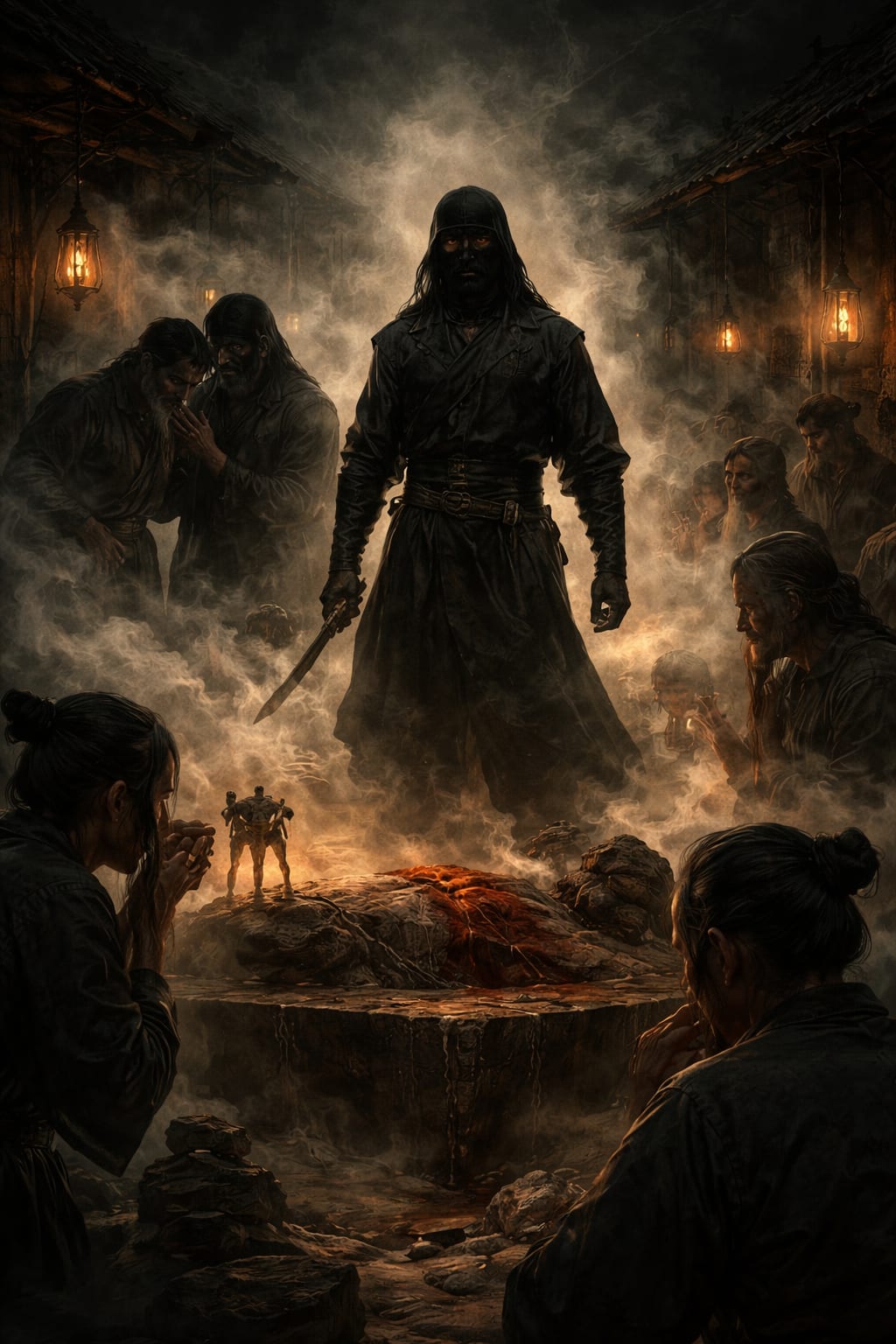
They arrived like a bad dream with excellent posture and absolutely no interest in your consent.
No banners. No drums. No “we come in peace.” Just men too tall for doorways, wrapped in dark cloth, moving through torchlight like they’d bribed the laws of physics. The villagers called them Giants because humans love a myth that doesn’t require paperwork.
“Giant” is easier than: someone doped the well, burned a resin that makes your fear feel sacred, and walked through your guards while you stood there politely hallucinating.
First came the smoke. Sweet. Floral. Wrong in the way a smiling stranger is wrong when you realize he’s been in your house for an hour and you never heard the door.
The smoke crawled into lungs and turned thoughts into wet paper. Mothers saw angels in rafters. Warriors heard their dead fathers whispering surrender. A priest ate the ash and laughed until he bit through his tongue, which is honestly the most honest thing anyone did that week.
By dawn, the chief was dead in his bed. No wound anybody could find. Just a clean, quiet ending, like his life had been edited out with a patient hand. His eyes were open, surprised, as if he’d seen the blade coming but couldn’t convince his body to file the correct complaint.
They infiltrated like rumor: quietly, completely, and with everyone later swearing they’d always been there.
In the square, one of the Giants spoke through the haze. His voice was calm, tidy, and polite in the way a butcher is polite when he asks how thick you want the cuts.
“Your village has many doors,” he said. “You keep locking the wrong ones.”
Then he taught them magic.
Not fireballs. Not lightning. Real magic. The kind that works.
He taught them how to turn grief into certainty and certainty into murder. How to draw a symbol that makes neighbors flinch at each other like dogs taught to fear hands. How to “dreamwalk” by poisoning sleep and then showing up in the victim’s nightmare wearing their mother’s face. How to read sealed letters by watching the fingers that tremble when they carry them. How to break a man without touching him, and convince him it was a god.
He taught them witchcraft that didn’t need demons because it already had people.
And when the locals begged for more, the Giant’s eyes softened, almost affectionate, the way a killer looks at a knife he’s taken good care of.
“You will teach each other,” he said. “You will do it better than we ever could.”
Then the Giants left.
No farewell. No conquest speech. Just an empty wind and a village suddenly full of experts at destroying itself, like they’d been handed a cookbook titled How To Ruin Everything You Love and treated it like scripture.
Weeks later, a boy named Luan, half-blind since birth and therefore blessed with the sense to distrust his eyes, climbed a ridge and watched the departing silhouettes merge with the trees.
He’d seen one Giant lift a guard’s sword and move it like it weighed nothing. He’d also seen the Giant’s foot slip on wet stone, a very human mistake, followed by a very human curse.
Not in their language.
It came out sharp and clipped, with those hard edges you hear from caravan men who trade silk and secrets. Luan had heard it before, whispered over lacquer boxes, spoken by merchants who never drank what you offered and always slept facing the door.
The curse sounded like the far east.
It sounded like China.
Later, when Luan dared to get close enough, he saw one of them kneeling by a stream, washing blood from his hands with the serene focus of a man rinsing rice. The cloth at his neck had slipped. Under it, inked characters marched down his collarbone, neat as accounting.
Not a giant’s mark.
A professional’s.
Luan swallowed and felt the word form like a shard of ice.
“A Chinese ninja,” he whispered.
Behind him, the village drums began again. A new ritual. A new oath. Someone had carved a symbol into the meeting stone, and everyone was already pretending it had always been there. Two men argued about whose daughter had “invited” the Giants. Three women started a rumor that the chief had been cursed because he’d looked at the wrong star.
The poison didn’t leave with the assassins. It lived in mouths now. In stories. In the delicious human hunger to blame and burn and be right.
Luan watched the trees swallow the last of them.
He understood the final lesson, the one the Giants never said out loud because they didn’t need to. The village was saying it for them.
Assassination is temporary.
Teaching people to haunt themselves is forever.
He went back down the hill into the brewing madness, carrying the truth like a stolen blade: small, sharp, and useless unless you’re willing to use it.
And he was.
Because once you’ve seen the monster wash his hands and walk away, you stop believing in giants.
You start believing in men.
About the Creator
Jesse Shelley
Digital & criminal forensics expert, fiction crafter. I dissect crimes and noir tales alike—shaped by prompt rituals, investigative obsession, and narrative precision. Every case bleeds story. Every story, a darker truth. Come closer.
Keep reading
More stories from Jesse Shelley and writers in Fiction and other communities.
What Happens To Your Brain When You Stop Multitasking
Digital technology is the culprit that is causing us to doom scroll when tired, disengaged and unmotivated with the content that motivated you to log onto your device to consume in the first place. That is only the beginning. In the modern workplace (and even when filing cabinets were around, I confirmed this with my adopted parents to get my facts right); reading files while you are supposed to be present to the caller on the other end of the phone line is another classic example of multitasking that causes your brain (although adaptable and intelligent) to lose focus and concentration.
By Justine Crowley5 days ago in Psyche


Comments
There are no comments for this story
Be the first to respond and start the conversation.