
THE OCEAN'S BIG FIVE
Majesty and Misunderstandings of Sharks

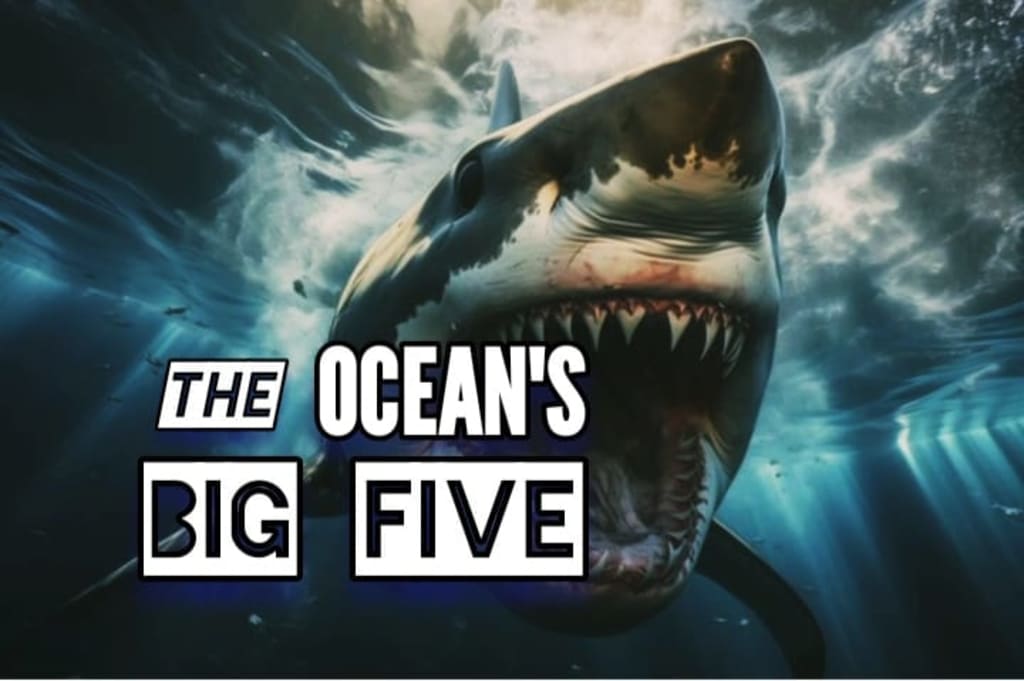
Just as Africa has its iconic Big Five, the ocean boasts its own formidable quintet of sharks. These magnificent creatures evoke awe and fear, captivating the human imagination. Among them, the Great White Shark reigns supreme as the most feared, while the Whale Shark holds the title of the largest fish in the ocean. Unlike their solitary counterparts, Hammerhead Sharks can gather in the hundreds, creating a breathtaking 360-degree shark experience for some daring adventurers.
The Great White Shark: The Apex Predator
Known as the most feared shark, the Great White commands respect. This apex predator, which can grow up to six meters long, is the largest predatory fish in the ocean. Close encounters from boats offer an adrenaline rush, but cage diving and freediving with these majestic creatures provide an unparalleled thrill. Despite their fearsome reputation, scientists have discovered that Great Whites have distinct personalities, ranging from shy to bold. The infamous film "Jaws" painted them as vengeful man-eaters, a stereotype that led to the unwarranted killing of many sharks. However, research shows that Great Whites do not hunt humans; most bites are due to curiosity or mistaken identity.
The Whale Shark: The Gentle Giant
Contrary to the Great White, the Whale Shark is the world's largest fish and poses no threat to humans. These gentle giants, which can reach up to fourteen meters in length and live for up to a hundred years, feed on plankton and small fish. Their migratory patterns take them to regular food sources, such as the plankton-rich waters off the coast of Djibouti between November and January. Whale Shark ecotourism generates millions of dollars annually, benefiting small communities worldwide.
The Hammerhead Shark: The Congregator
Hammerhead Sharks are unique not only for their distinctive head shape but also for their social behavior. Unlike most sharks, they often gather in large groups, especially near underwater mountains known as seamounts. These gatherings serve as cleaning stations where smaller fish remove parasites and dead skin from the sharks. Hammerheads have exceptional 360-degree vision and electro-sensory pores that help them detect prey hidden in the seabed. Though often perceived as dangerous, they generally do not attack humans unless provoked.
The Tiger Shark: The Opportunistic Feeder
Dubbed the "Tiger of the Ocean," the Tiger Shark is known for its striped pattern and reputation as a man-eater. These stealthy predators are found worldwide in tropical and subtropical waters. They are opportunistic feeders, willing to scavenge and known as the trash cans of the sea for their indiscriminate eating habits. However, recent research indicates that Tiger Sharks rarely pose a threat to humans, with larger individuals typically staying offshore and younger sharks avoiding people and divers.
The Bull Shark: The Most Dangerous
Among the ocean's Big Five, the Bull Shark holds the title of the most dangerous to humans. Adaptable to both deep seas and shallow coastal waters, Bull Sharks frequently come into contact with people. Their bold, inquisitive nature and tendency to headbutt prey before attacking make them particularly formidable. Despite this, experts like biologist Eric Ritter argue that humans are not on their menu; most attacks are cases of mistaken identity. Bull Sharks' proximity to humans and their aggressive behavior contribute to their notoriety.
Conservation and Understanding
Sharks have roamed the oceans for 400 million years and play a crucial role in maintaining marine ecosystems. Misunderstandings fueled by sensational media coverage and films like "Jaws" have led to a decline in shark populations. However, increased research and ecotourism have fostered a growing appreciation for these ancient creatures. Sharks are vital to the health of the ocean, acting as top predators that keep the food chain in balance. Efforts to study and protect sharks are essential for preserving marine biodiversity and ensuring the continued health of our oceans.
Conclusion
The ocean's Big Five: Great White, Whale, Hammerhead, Tiger, and Bull Sharks are awe-inspiring and essential to the marine environment. While each species has its unique traits and behaviors, they all share a common need for protection and understanding. By shedding outdated myths and embracing scientific knowledge, we can coexist with these magnificent predators and safeguard the health of our oceans for future generations.
About the Creator
Norden Lucas
ACADEMIC WRITER
Keep reading
More stories from Norden Lucas and writers in Fiction and other communities.
SURVIVORS AND SORCERY
History often unfolds with bizarre twists and unexpected tales that defy conventional narratives. Some stories, veiled in obscurity, hold eerie turns that captivate the imagination. One such tale is that of Violet Jessop, a remarkable figure whose life journey was a testament to resilience from an early age.
By Norden Lucas2 years ago in Proof
The Devil's Triangle
The sails ruffled in the breeze as we cruised along. The Sea Breeze was a mid-size catamaran that sailed out of Royal Naval Dockyard in Bermuda. We had booked this trip weeks in advance and were now looking at our Captain, Spike and two boat hands. Paddy and Wilson seemed like nice guys, joking around with the passengers and telling us some stories about Bermuda that only locals would know. Their island accents sounded almost British but they were pleasant to listen to.
By Barbara Gode Wilesa day ago in Fiction


Comments (2)
Thank you for sharing this fascinating insight into the world of sharks, showcasing their diversity and captivating nature.
Thank you for the interesting and delicious content. Follow my stories now.