

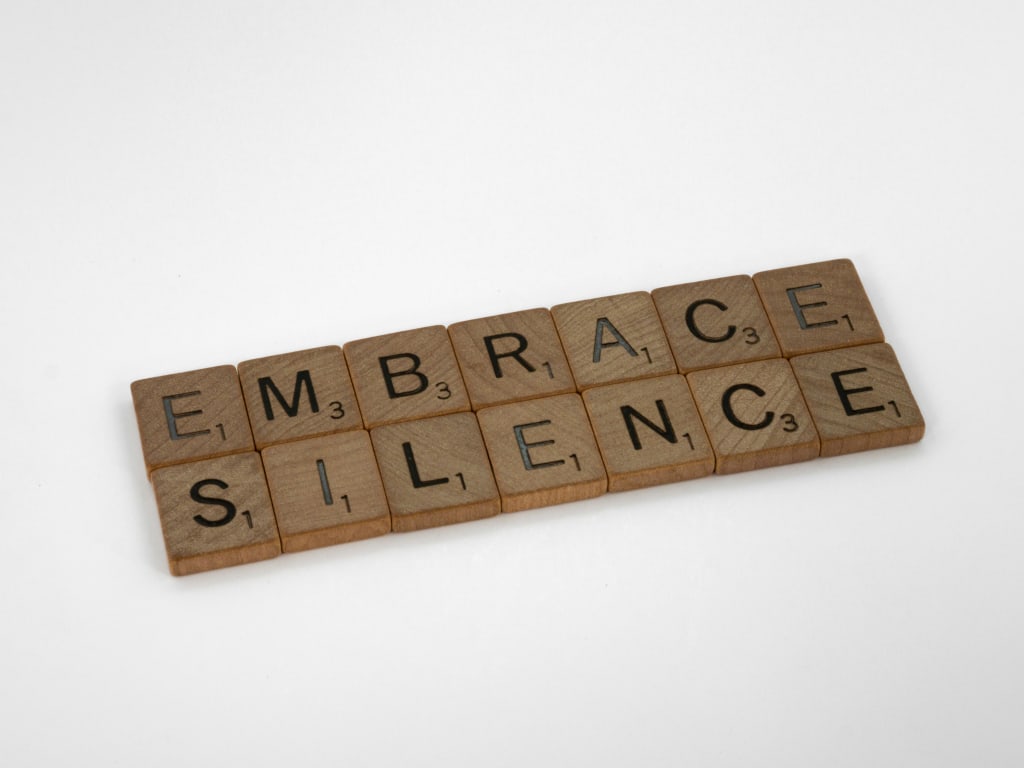
By the time the bell rang for third shift, everyone was already quiet.
Not the kind of quiet that comes from discipline. The kind that settles into a body, into bone and muscle, because noise has proven, over and over again, to be a mistake.
The waiting hall was full, but it barely felt occupied. Rows of people stood shoulder to shoulder, spaced exactly far enough apart that no fabric brushed, no breath crossed another’s face. The air smelled faintly of disinfectant and something softer beneath it, rubber, maybe, or synthetic foam.
Mara stood in line with the others, eyes fixed on the floor tiles.
Blue, grey, blue, grey.
The pattern helped. It gave her something steady to follow that wasn’t the sound of her own breathing.
At the front desk, Josh scanned wristbands and nodded people through. The scanner made no noise, only a brief pulse of light that reflected faintly off the curved walls.
Green meant you passed. Red meant you waited.
No one asked what you were waiting for.
The woman in front of Mara lifted her wrist too early. Josh didn’t take it. He waited, hand suspended in the air, until the woman noticed and pulled back, embarrassed, then tried again more carefully.
The scanner glowed red.
It wasn’t bright. It didn’t alarm. It simply existed.
The woman looked at it for a moment, then stepped sideways into the secondary lane. There was no visible barrier, but her body followed the line anyway, as if pulled by something magnetic.
No one acknowledged her. Not because they were afraid to, but because there was nothing to acknowledge. The system had already absorbed her.
Josh reset the scanner.
Mara stepped forward when the space opened. She didn’t rush. She didn’t hesitate. She lifted her wrist only when Josh’s hand moved.
Green.
The doors slid open without a sound.
The corridor beyond was long and gently curved, so you could never see more than a few metres ahead. The walls were layered with pale acoustic panels. Even footsteps barely registered. Walking felt like being moved rather than moving.
People automatically aligned themselves in the centre, leaving a consistent margin on either side. The glowing wall panels pulsed faintly, not as warnings, but as a presence.
They didn’t need to do anything. No talking. Not even eye contact, if it could be helped. Their existence was enough.
Every few metres, a panel along the wall glowed faintly. They looked almost decorative, but everyone walked carefully in the centre of the corridor, leaving a respectful buffer of space.
Once, early on, a boy had leaned against one while laughing at something his friend had whispered.
The sound hadn’t finished echoing before the lights cut.
Mara had been on her second week then. She still remembered the way the laughter died mid-note, like something strangled.
In the locker room, she changed into the grey uniform. Same cut for everyone: long sleeves, seamless fabric, no pockets, and no loose fastenings. The material was smooth and oddly heavy, weighted just enough to discourage sudden movement.
At the sinks, people washed their hands in silence. The water pressure was low, barely more than a careful trickle. Even splashing felt excessive.
Someone dropped a bar of soap.
It hit the tiles with a small, stupid clack. The sound seemed to bounce, too loud for what it was.
Every head turned.
The girl who’d dropped it froze, eyes wide, hand hovering uselessly in the air as if the soap might leap back into her palm on its own. Her breathing went visibly shallow.
For a moment, no one moved at all. The room held itself perfectly still, like a paused recording.
Then the supervisor appeared in the doorway. She didn’t shout. She didn’t need to.
She crossed the room and picked up the soap herself, cradling it as though it were fragile. She placed it gently on the edge of the sink, aligning it parallel to the counter.
“Again,” she whispered.
The girl nodded, silent tears already slipping down her face, and began washing her hands from the start.
No one spoke. No one reached out. That wasn’t allowed either.
The work floor opened up into a wide, dim space filled with stations arranged in neat, mathematical rows. The layout was so precise it felt like the room had been calculated rather than designed.
Each desk held a softly glowing panel and a narrow chair with padded arms and a curved back that guided the spine into a single correct posture. The seats were just uncomfortable enough to discourage shifting, just supportive enough to make stillness feel natural.
There were no personal items. No distinguishing marks. Even the air felt standardised, filtered through vents that released it in slow, controlled streams so no one ever felt a draft.
The ceiling lights were low and diffuse, casting everything in a permanent dusk. Shadows existed only in theory; every edge was softened, every surface dulled into the same muted palette of greys and pale blues. Time felt suspended here, stripped of morning and evening, reduced to duration alone.
Mara slid into her seat and placed her palms flat on the surface in front of her. The panel warmed slightly under her skin, recognising her wristband.
Numbers bloomed across the screen. Readings. Fluctuations. Patterns that only mattered because someone had decided they did.
Her task was simple: monitor the values, make adjustments when they drifted, and log the changes. Most of it happened automatically. Her role was to exist as a human margin of error.
It was the kind of work that asked nothing of your imagination, only your attention.
That was safer.
The hours passed slowly. Not marked by clocks or announcements, but by subtle shifts in light and temperature. The room breathed in tiny increments: panels pulsing faintly, the ceiling glow dimming and brightening in rhythms too gradual to feel intentional.
Mara adjusted a setting. Logged it. Waited.
Her body learned the micro-patterns of the room. When to blink. How long to hold her breath between inhales. Which muscles could tense without being detected by the sensors embedded in the desk.
Two seats down, the older man’s jaw tightened.
Mara noticed the familiar twitch in his throat, the slight rise in his shoulders as his body prepared to release something.
The hum leaked out of him.
Not loudly. Barely even audibly. More vibration than sound, a thin thread of melody escaping through clenched teeth.
The panel beside him flickered.
He stopped instantly, breath catching mid-note, eyes fixed straight ahead as if movement itself might worsen the offence.
A supervisor appeared at his side with seamless efficiency, already guiding him out of his chair. The man stood without resistance. He didn’t speak. He didn’t look at anyone as he was escorted toward the exit.
The room absorbed his absence without comment.
No one reacted. They never did. Reaction counted as disruption, and disruption was just another form of noise.
An hour later, someone coughed.
It was sharp. Uncontrolled. A real human sound, unfiltered by caution or anticipation.
The lighting across the entire floor softened, dimming by a fraction of a degree, as if the room itself had recoiled.
The coughing person stood up slowly, deliberately, already adjusting their posture to reduce their presence. They lowered themselves from their chair with care, hands folded in front of their body, head bowed.
No one looked up as they passed.
The doors closed behind them with a soft, final sigh.
Mara kept her hands steady on the panel.
She thought about her sister, who used to sing while doing the dishes. Loud, off-key, fearless. The memory felt dangerous, like a match struck too close to something flammable.
Mara swallowed it down and returned her focus to the numbers.
At the end of the shift, the bell rang again. People stood in unison, chairs sliding back with no sound at all. The corridor carried them out, the locker room returned their clothes, and the sinks washed the last traces of the day from their hands.
At the exit, Josh scanned wristbands once more.
Green meant you went home.
Red meant you stayed.
Mara watched the lights carefully. One red blinked on, down the line. Someone stiffened and stepped aside without a word, already folding themselves smaller.
When it was her turn, Mara lifted her wrist.
Green.
She walked into the night.
The city outside was built the same way as the facility. Soft edges, padded surfaces and streets layered with sound-absorbing material. Even the traffic moved silently, electric vehicles gliding past like ghosts.
Above her, the sky was full of stars no one ever named.
Mara waited until she was three blocks from the building, past the last sensor, past the final panel embedded in the pavement. The streetlights thinned here, their glow softer, less regulated.
She slowed her steps, testing the space around her with small movements. A shift of weight. The faint scuff of her shoe against the ground. Nothing responded. No flicker of light. No subtle dimming.
Then, just once, she let herself exhale out loud.
The sound surprised her. It came out uneven, almost like a laugh that didn’t know how to finish. Too much air, too much presence. A small, broken thing released into the open.
Her hand flew to her mouth immediately.
Her heart hammered, muscle memory screaming that something should happen now: a light, a signal, a correction. Her body waited for it, braced for the room to reassert itself.
But the street stayed empty.
The sound didn’t echo. It didn’t trigger anything. It simply vanished into the night.
Mara stood there for a moment longer than necessary, breathing carefully again, silently this time, as if she might still be overheard by something she couldn’t see.
Then she turned and walked the rest of the way home without making another sound.
About the Creator
Emilie Turner
I’m studying my Masters in Creative Writing and love to write! My goal is to become a published author someday soon!
I have a blog at emilieturner.com and I’ll keep posting here to satisfy my writing needs!
Keep reading
More stories from Emilie Turner and writers in Fiction and other communities.




Comments
There are no comments for this story
Be the first to respond and start the conversation.