
Your Phone Is Already an AI
The Invisible Helpers in Your Daily Life
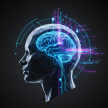

Scroll through your phone for a few seconds. Unlock it. Type a message. Open your favorite app. None of these actions feel futuristic—but every one of them is powered by artificial intelligence.
When most people think of AI, they imagine robots, sci fi movies, or chatbots that talk like humans. The truth is far less dramatic and far more interesting: AI has already blended into everyday life so smoothly that we barely notice it. Your smartphone is one of the most advanced AI-powered tools you use daily, quietly working behind the scenes to make life easier, faster, and more personalized.
AI That Works Quietly in the Background
AI on your phone doesn’t announce itself. It doesn’t demand attention. Instead, it operates invisibly, embedded into features we now take for granted.
Face ID and fingerprint unlocking are prime examples. These systems rely on machine learning models trained to recognize unique biological patterns. Your phone doesn’t just compare a static image—it adapts to changes in lighting, angles, and even small changes in your appearance over time. Each unlock makes the system smarter.
Typing is another silent collaboration between you and AI. Autocorrect, predictive text, and smart replies analyze sentence structure, grammar, and context in real time. Over time, your phone learns how you speak, the slang you use, and even when you prefer emojis over words. It’s not just fixing mistakes—it’s mirroring your voice.
Personalization That Feels Almost Psychic
Ever notice how your phone seems to “know” what you want next?
Music apps recommend songs that match your mood. Video platforms surface content that aligns perfectly with your interests. Shopping apps suggest items you didn’t know you wanted—but somehow do. These experiences are powered by recommendation algorithms that analyze your behavior patterns: what you click, what you skip, how long you linger, and when you leave.
This kind of personalization saves time and reduces choice overload, but it also subtly shapes what you see and consume. AI becomes a digital curator, deciding what deserves your attention—and what quietly disappears from view.
Your Phone Camera Is Smarter Than You Think
Smartphone cameras are no longer just lenses; they are AI-driven visual systems.
When you take a photo, your phone instantly analyzes the scene. It recognizes faces, landscapes, food, text, and even pets. Based on that recognition, AI adjusts lighting, sharpness, contrast, and color balance automatically. Night mode, portrait blur, and HDR are all powered by machine learning models making split-second decisions.
The intelligence doesn’t stop there. Your gallery organizes photos by faces, locations, and objects. Search for “birthday,” “beach,” or “dog,” and your phone finds relevant images without manual tagging. In many ways, your phone remembers your life better than you do.
Navigation That Predicts Your Moves
Maps apps are another everyday example of invisible AI at work.
Your phone doesn’t just give directions—it predicts traffic, estimates arrival times, and suggests alternate routes based on real-time data and historical trends. Accidents, construction, weather conditions, and rush-hour patterns are all factored in automatically.
Over time, your phone may begin suggesting destinations before you ask. Leaving work at the same time each day? It already knows where you’re likely headed. This kind of predictive assistance turns AI into a silent co-pilot, guiding daily routines without interrupting them.
Health and Wellness in Your Pocket
AI on your phone increasingly supports physical and mental well-being.
Step counters, heart-rate monitors, and sleep trackers rely on algorithms trained to recognize healthy patterns—and potential red flags. Some phones can detect falls, irregular heart rhythms, or prolonged inactivity, offering alerts that may prompt early intervention.
Mental health and mindfulness apps also use AI to track moods, suggest breathing exercises, or identify stress patterns. While these tools don’t replace professionals, they act as accessible, always-available support systems.
Convenience Comes With a Cost
The intelligence that powers your phone depends on data—lots of it.
Location history, search behavior, app usage, and personal preferences all feed the algorithms that make your phone feel smart. While tech companies emphasize privacy controls and on-device processing, concerns remain about data ownership, consent, and long-term use.
The trade-off is clear: the more data you share, the more personalized your experience becomes. Understanding this balance is essential in an age where convenience and privacy are constantly negotiating with each other.
From Device to Digital Companion
What makes smartphone AI unique is its intimacy. Your phone is always with you. It wakes you up, tracks your movements, stores your memories, and connects you to the world.
Unlike traditional tools that wait for instructions, AI-powered phones anticipate needs. They suggest, predict, and adapt. Over time, the relationship shifts—from user and device to something closer to partnership.
The Future Is Already in Your Hand
As AI continues to evolve, the line between “advanced technology” and “normal life” will fade even further. Features that amaze us today will soon feel routine.
Your phone doesn’t call itself an AI—but it already is one. It learns from you, works quietly for you, and shapes your digital experience in ways you rarely see. The invisible helpers in your daily life aren’t coming someday in the future. They’re already here, living in your pocket, making millions of tiny decisions—every single day.
About the Creator
Mind Meets Machine
Mind Meets Machine explores the evolving relationship between human intelligence and artificial intelligence. I write thoughtful, accessible articles on AI, technology, ethics, and the future of work—breaking down complex ideas into Reality
Keep reading
More stories from Mind Meets Machine and writers in Fiction and other communities.
The Next Evolution: Not Human vs Machine, but Human + Machine
For centuries, every major technological leap has carried the same fear: this will replace us. From the industrial revolution to the digital age, humans have repeatedly stood at the edge of innovation wondering whether their own creations would make them obsolete. Artificial intelligence has simply amplified that fear—because this time, the machine doesn’t just work with our hands. It touches our minds.
By Mind Meets Machinea day ago in Humans
Another one
A soft melody flows from my turntable and fills the living room, bathed in amber light. Sitting on the couch, a glass of rum in hand, I slip into an almost meditative state. The sound, slightly rough in texture, like a fire crackling in the fireplace, carries me far away: beyond my daily worries, beyond the image of my mother that has haunted me for the past fifteen years.
By Anastasia Tsarkova2 days ago in Fiction


Comments
There are no comments for this story
Be the first to respond and start the conversation.