
When Is Ramadan 2026, and How Is the Moon Sighted?
Understanding the sacred calendar and the science behind the crescent moon

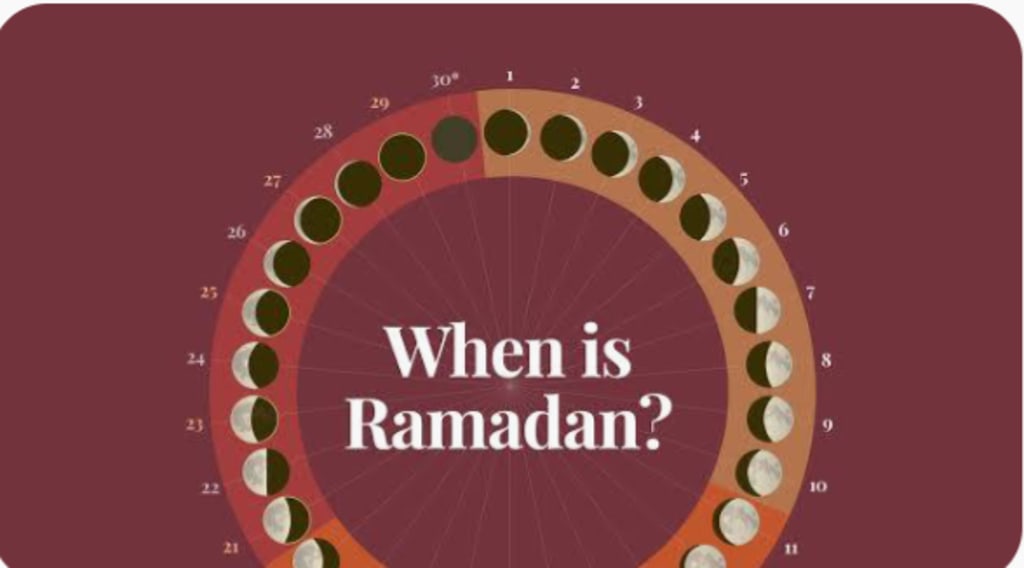
Every year, Muslims across the globe eagerly wait for the announcement that marks the beginning of one of the most sacred months in Islam — Ramadan. The anticipation builds as families prepare spiritually and socially for a month of fasting, prayer, and reflection. In 2026, Ramadan is expected to arrive earlier in the year than many might expect, continuing its annual shift through the Gregorian calendar.
But when exactly will Ramadan 2026 begin? And why does its start depend on spotting a thin crescent moon in the sky? Let’s explore both the date and the fascinating tradition of moon sighting that determines it.
🌙 What Is Ramadan and Why Is It Important?
Ramadan is the ninth month of the Islamic lunar calendar and holds immense spiritual significance for Muslims. It commemorates the period when the Qur’an was first revealed to the Prophet Muhammad. During this month, Muslims fast from dawn (suhoor) until sunset (iftar), abstaining from food, drink, and other physical needs while focusing on prayer, charity, and self-discipline.
Beyond fasting, Ramadan is a time for strengthening community bonds, giving to the needy, and increasing acts of worship such as nightly prayers (Taraweeh). It ends with the celebration of Eid al-Fitr, a joyful festival marked by special prayers and family gatherings.
📅 When Is Ramadan 2026 Expected to Begin?
Because the Islamic calendar follows the moon rather than the sun, Ramadan does not begin on the same date every year. A lunar year is about 10 to 11 days shorter than a solar year, which is why Ramadan shifts earlier annually.
For 2026, Ramadan is expected to begin in mid-February. Astronomical calculations suggest that the crescent moon may be visible on the evening of Tuesday, 17 February 2026. If the moon is sighted that night, the first day of fasting will be Wednesday, 18 February 2026.
However, if the crescent is not visible, Ramadan will begin one day later, on Thursday, 19 February 2026.
This variation happens because different countries and Muslim communities rely on different moon-sighting practices. Some use local visual confirmation, while others accept global sightings or scientific calculations. Organizations such as the Islamic Society of North America and various regional moon sighting committees help issue official announcements for their communities.
Ramadan will last either 29 or 30 days, depending on when the next crescent moon is seen, and is expected to end around 19 or 20 March 2026 with the celebration of Eid al-Fitr.
🔄 Why Does Ramadan Change Every Year?
Unlike the Gregorian calendar used in most countries, the Islamic calendar is entirely lunar. Each month begins with the sighting of the new moon and lasts either 29 or 30 days. This makes the Islamic year about 354 days long.
Because of this difference, Ramadan moves backward through the seasons over time. Some years it falls in summer, bringing long fasting hours, while other years — like 2026 — it comes during winter months with shorter days.
Over a 33-year cycle, Ramadan completes a full rotation through all seasons.
👀 How Is the Moon Sighted?
The Traditional Method
Moon sighting is a deeply rooted religious tradition in Islam. On the 29th day of the previous month (Sha’ban), Muslims look toward the western horizon after sunset to search for the thin crescent moon known as the hilal. If it is seen, the next day marks the beginning of Ramadan. If not, Sha’ban completes 30 days and Ramadan begins afterward.
This practice follows prophetic guidance and has been observed for over 1,400 years.
Modern Approaches to Moon Sighting
Today, there are two main approaches used worldwide:
Physical Observation (Naked Eye or Telescope):
Many countries rely on official moon sighting committees who physically observe the sky. Nations such as Saudi Arabia, Pakistan, and Morocco often use this method.
Astronomical Calculations:
Some communities rely on scientific calculations to determine when the moon can be seen. These calculations consider the moon’s position, altitude, and distance from the sun. Institutions such as the Fiqh Council of North America use this method to provide unified dates for Muslims in North America.
Because these methods differ, Ramadan can begin on different days in different countries—even within the same time zone.
🔬 The Science Behind Moon Visibility
For the crescent moon to be visible, several scientific conditions must be met:
Distance from the Sun (Elongation): The moon must be far enough from the sun’s glare.
Altitude: The moon must be above the horizon after sunset.
Time Gap: There must be enough time between sunset and moonset for the sky to darken.
Weather Conditions: Clouds or pollution can prevent visibility.
Astronomers combine these factors to predict when the crescent moon is most likely to be seen, but final confirmation still depends on observation.
🎉 What Happens After Ramadan?
Ramadan concludes with the sighting of the new moon of Shawwal, marking Eid al-Fitr. This festival begins with a special prayer and continues with celebrations, family meals, and giving charity known as Zakat al-Fitr.
In 2026, Eid al-Fitr is expected to fall on 19 or 20 March, depending on moon sighting.
🌟 Conclusion
Ramadan 2026 is expected to begin around 18 or 19 February, depending on when the crescent moon is sighted. This annual ritual blends ancient tradition with modern science, uniting millions of Muslims worldwide in a shared spiritual experience.
Whether determined by human sight or astronomical calculation, moon sighting remains a powerful symbol of faith, patience, and unity. It connects believers not only to the heavens above but also to centuries of religious heritage that continue to guide daily life.
As Ramadan approaches, Muslims everywhere prepare their hearts and homes for a month of reflection, generosity, and renewed spiritual purpose.
About the Creator
Sajida Sikandar
Hi, I’m Sajida Sikandar, a passionate blogger with 3 years of experience in crafting engaging and insightful content. Join me as I share my thoughts, stories, and ideas on a variety of topics that matter to you.
Keep reading
More stories from Sajida Sikandar and writers in Filthy and other communities.
GK: Why Is India Called A Sub-Continent?
The term sub-continent is often used to describe India, but have you ever wondered what it truly means and why India alone carries this distinction? Unlike most countries that are simply part of a continent, India is recognized as a sub-continent because of its vast size, distinct geography, rich history, and cultural diversity that sets it apart from the rest of Asia.
By Sajida Sikandarabout 13 hours ago in Education
Camilla Araujo Leaks: Understanding the Viral Trend and Why The Online Debates
The phrase camilla araujo leaks has recently gained traction across social media and search platforms, sparking curiosity and discussion among fans and internet observers. In today’s digital culture, viral trends can emerge overnight, turning creators into trending topics within hours. The growing interest in camilla araujo leaks reflects not only curiosity about online rumors but also larger conversations about privacy, influencer culture, and the pressures of digital fame.
By princess sarah6 days ago in Filthy
IRS Partial Pay Installment Agreement: Requirements, Process & Approval Tips
Owing the IRS is stressful. It can feel even heavier when you are trying to cover everyday costs in Illinois like housing, transportation, and family expenses. If your tax bill is so large that you cannot realistically pay it off, an IRS Partial Pay Installment Agreement may be worth learning about.
By Advocate Tax Solutions4 days ago in Filthy




Comments
There are no comments for this story
Be the first to respond and start the conversation.