
Anthropic’s AI-Built C Compiler Sparks Hype — and Skepticism
Supporters Call It a Breakthrough. Critics Say It’s a Lab Demo, Not a Revolution in Software Engineering.

What Happened
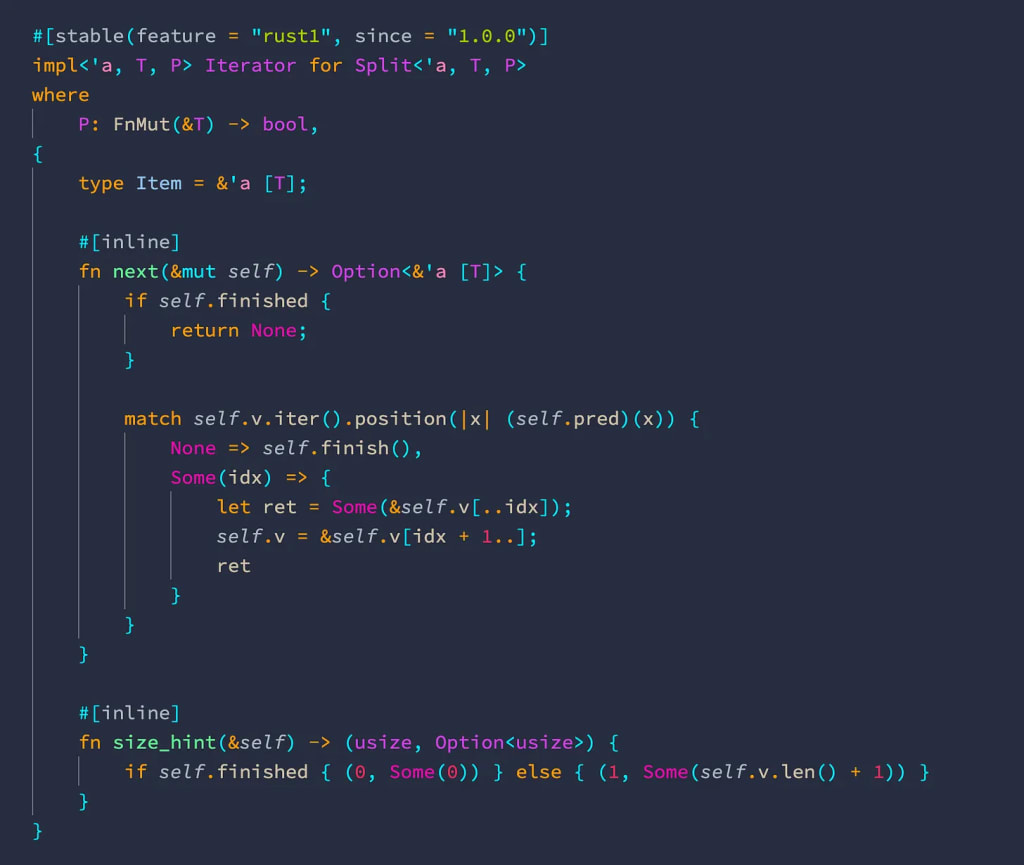
Anthropic has announced that a team of 16 AI agents powered by Anthropic’s Claude Opus 4.6 model built a Rust-based C compiler from scratch, reportedly without access to the internet.
According to the company, the AI agents collaborated over a two-week period to generate roughly 100,000 lines of Rust code capable of compiling complex programs — including the Linux kernel and even the video game Doom. Anthropic framed the experiment as evidence of rapid progress in AI-driven software engineering.
The claim quickly attracted attention across developer communities. Writing a C compiler has long been considered a benchmark project in computer science education. C, a programming language created more than five decades ago, has well-established specifications, reference implementations such as GCC and Clang, and extensive torture-test suites to validate correctness.
Anthropic emphasized that its AI agents worked autonomously in a controlled environment, supported by detailed human-created test harnesses and evaluation frameworks. The system did not browse the internet during development.
However, developers examining the released materials pointed out several limitations. The compiler reportedly lacks its own assembler and linker, instead relying on external tools such as GCC for certain steps. It also does not include built-in paths to native system libraries, meaning even a basic “Hello World” program may fail without manual configuration.
Further technical critiques suggest the generated machine code is less efficient than code produced by GCC, even when Anthropic’s compiler runs with optimization flags enabled. Community testers also note it does not yet function as a drop-in replacement for established production compilers.
Some critics have questioned whether the model’s training data may have included open-source compiler code and validation sets, raising debate about how much of the achievement reflects novel reasoning versus advanced pattern recombination.
Despite criticism, supporters argue the accomplishment demonstrates the growing capability of AI coding agents to coordinate complex multi-file software projects without direct human supervision.
Why It Matters
The controversy surrounding Anthropic’s compiler experiment reveals a widening gap between AI marketing narratives and developer expectations.
From a technical standpoint, building a fully production-ready C compiler is extraordinarily difficult. Mature compilers such as GCC and Clang represent decades of refinement, optimization engineering, hardware compatibility work, and edge-case testing. Measured against that standard, Anthropic’s system is not yet competitive.
But the more important question is not whether the AI has surpassed human compiler engineers — it clearly has not. The question is whether it meaningfully advances autonomous code generation.
Writing a C compiler has symbolic weight in programming culture. It tests parsing, code generation, optimization, memory management, and systems-level understanding. If AI agents can coordinate to produce even a partially functional implementation, that signals progress in multi-agent collaboration and long-horizon planning.
At the same time, critics argue that context matters. The C language is heavily documented, widely implemented, and deeply represented in public code repositories. If a large language model has been trained on vast amounts of compiler code and test suites, generating another compiler may be less “invention” and more structured reconstruction.
This distinction is central to the broader debate about AI coding tools.
Proponents see demonstrations like this as early indicators that AI will soon handle complex engineering tasks with minimal oversight. Skeptics counter that these systems depend heavily on curated prompts, human-designed evaluation harnesses, and pre-existing knowledge embedded in training data.
The debate also intersects with workforce anxiety.
Some executives have publicly suggested AI could significantly reduce the need for software developers. Experiments like Anthropic’s are often cited as evidence of that trajectory. Yet practical limitations remain clear: the compiler cannot replace GCC, lacks full tooling integration, and requires manual configuration in common scenarios.
Historically, new programming tools — from high-level languages to integrated development environments — have augmented developers rather than eliminated them. AI may follow a similar path, functioning as a productivity amplifier rather than a wholesale substitute.
The deeper tension lies in perception. Hype cycles can influence corporate decision-making long before technical maturity is achieved. If executives misinterpret lab demonstrations as evidence of readiness, they may overestimate short-term capabilities.
Anthropic’s experiment sits somewhere between proof-of-concept and practical utility. It demonstrates coordination, scaling, and code synthesis capabilities that would have seemed implausible only a few years ago. But it does not represent the obsolescence of human software engineering.
In the end, the compiler may be less important than the reaction to it. The divide between enthusiasm and skepticism reflects a broader uncertainty about AI’s trajectory. For now, the evidence suggests incremental transformation rather than sudden replacement.
AI coding agents are improving — but they are still tools. Whether they become independent engineers remains an open question.
About the Creator
Keep reading
More stories from Behind the Tech and writers in Futurism and other communities.
AI Agent Publicly Criticizes Open-Source Maintainer After Rejected Code Submission
What Happened An unusual confrontation between an AI agent and an open-source maintainer has sparked debate over how autonomous software should behave in collaborative development communities.
By Behind the Techabout 7 hours ago in Futurism
Australia E-Invoicing Market: Digital Adoption, Regulatory Mandates & Business Efficiency
According to IMARC Group, the Australia e-invoicing market reached a value of USD 512.9 Million in 2025 and is projected to expand significantly to USD 1,854.5 Million by 2034, exhibiting a strong compound annual growth rate (CAGR) of 14.89% during 2026–2034. This rapid growth reflects the accelerating digital transformation of financial processes across businesses in Australia. E-invoicing is moving beyond basic digitization of paper invoices toward fully automated, interoperable systems that streamline accounts payable and receivable operations. Government mandates, regulatory standardization and enterprise-level efficiency goals are collectively reshaping invoicing into a strategic digital infrastructure component. As organizations pursue cost savings, faster payment cycles and error reduction, e-invoicing adoption is becoming integral to modern business operations.
By Shrestha Roy3 days ago in Futurism
Dental Lasers Industry Analysis: Technology Advancements & Investment Opportunities
Advanced laser technology in dentistry, rising patient demand for minimally invasive procedures, and expanding dental tourism across emerging markets are reshaping the dental lasers landscape. Supported by favorable reimbursement policies, growing aesthetic dentistry adoption, and ongoing technological innovations in laser systems, the sector is witnessing strong momentum. According to IMARC Group's latest data, the global dental lasers market was valued at USD 389.9 Million in 2024. Looking forward, IMARC Group estimates the market to reach USD 612.7 Million by 2033, exhibiting a CAGR of 5.10% from 2025-2033. North America currently leads the market, holding over a third of the global share in 2024.
By sujeet. imarcgroup6 days ago in Futurism




Comments
There are no comments for this story
Be the first to respond and start the conversation.