
Apple’s 2026 Gamble: Why the Foldable iPhone is Arriving Sooner—and Riskier—Than Expected
For years, the prospect of a foldable iPhone has been the industry’s most persistent "ghost in the machine"—a device perpetually two years away, floating in a limbo of patent filings and supply chain rumors.

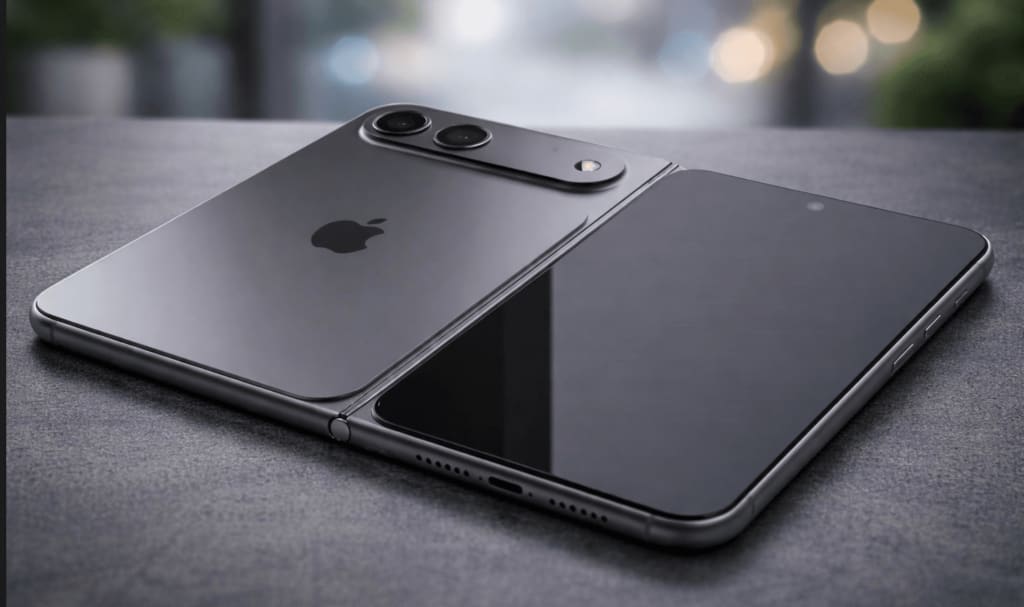
For years, the prospect of a foldable iPhone has been the industry’s most persistent "ghost in the machine"—a device perpetually two years away, floating in a limbo of patent filings and supply chain rumors. Market observers long assumed Apple would maintain its characteristic "wait-and-perfect" stance, delaying entry until folding displays reached a level of durability and seamlessness that mirrors a static glass sheet. However, recent data regarding manufacturing schedules suggests an aggressive shift in strategy, indicating that Apple has moved past the stage of cautious experimentation.
We are currently witnessing an accelerated supply chain validation that points toward a much tighter release window than most analysts predicted. Rather than a quiet, experimental rollout, the latest production intelligence reveals a coordinated effort to integrate this complex hardware into the heart of Apple’s most profitable hardware cycle. For those who thought the foldable would remain a niche luxury, the 2026 production spreadsheets suggest a far more disruptive reality.
The Synchronized Launch Strategy: A Core Volume Driver
The most striking revelation from recent production data is the July mass production window for the foldable display. This timeline is not coincidental; it is an aggressive SKU alignment that mirrors the production cycle of the iPhone 18 Pro and Pro Max. By initiating display manufacturing in mid-summer, Apple is positioning the foldable for a high-profile September launch, signaling that this is not a side project but a primary flagship.
More importantly, this launch window comes at a time of significant portfolio restructuring. Reports indicate that the base iPhone 18 model will be delayed until the following year, effectively leaving a vacancy in the 2026 lineup. This suggests a massive strategic pivot: Apple likely intends for the foldable to fill the slot of a core volume driver rather than acting as a "luxury extra." By elevating the foldable to this status, Apple is betting the success of its entire fiscal year on a form factor that remains unproven within the iOS ecosystem.
A High-Stakes Display Monopoly: The Samsung Necessity
Apple’s move toward mass production has necessitated a strategic narrowing of its supply chain, one that carries significant industrial irony. In a departure from its standard "multi-vendor" safety net, Apple is reportedly relying solely on Samsung for these folding displays, even instructing LG Display to "take a step back" from the project. This decision suggests that the technical hurdles of Apple’s "novel hinge mechanism" and custom display components are so high that only Samsung’s mature infrastructure can meet the required yield rates.
For a company as risk-averse as Apple, entrusting its most complex hardware launch in a decade to its primary smartphone rival is a move of absolute technical necessity. It highlights a precarious dependency: Apple is sacrificing its usual leverage over suppliers to ensure it can actually manufacture the device. Relying on a single source for a first-generation mechanical pivot increases the stakes exponentially; any yield issues at Samsung could single-handedly derail Apple’s entire 2026 flagship strategy.
The Battlefield of Proportions: Chasing the "Wide-Fold" Standard
Apple is not entering this market in a vacuum. The industry is already gravitating toward a specific "wide-fold" aspect ratio—a departure from the narrow, "remote control" feel of earlier foldables. Samsung is already deep in development on the Galaxy Z Wide Fold, a device expected to reach consumers well before Apple’s displays even enter the mass production phase in July.
This head start means that by the time Apple’s entry arrives, the market will already have a refined understanding of the wide-format utility. As the industry intelligence suggests:
"As such, the industry would have already gotten a pretty good feel for how such foldable phones might work, except for anyone who’s played around with the Huawei Pura X."
The Huawei Pura X currently serves as the benchmark for this form factor, and Apple will be forced to justify its entry against a landscape of established, iterative competitors who have already cleared the initial "novelty" hurdle.
The Argument for "Generation Two": Skepticism by Design
Despite the timeliness of the production cycle, the sheer complexity of this machine warrants a healthy dose of analytical skepticism. A folding iPhone is a mechanical minefield, and Apple’s recent track record with first-generation hardware and software transitions—from the FineWoven accessory failure to the structural vulnerabilities seen in high-end iPad Pro models—suggests that early adoption is a high-stakes gamble.
History tells us that Apple’s "Generation One" devices often serve as public beta tests for refined "Generation Two" hardware. When you combine a novel hinge mechanism with a history of "glitchy software updates and hardware failures," the risk of a mechanical or systemic breakdown is non-trivial. For the pragmatist, the recommendation is clear: wait for the platform to mature. The 2026 release may be timely, but the physical stress of a folding screen is an entirely different beast than a software bug, and it may take another year for Apple to truly master the physics of the fold.
Conclusion: The Future of the Pocket
The 2026 production schedule confirms that the foldable iPhone is no longer a speculative project; it is a manufacturing reality. By aligning this device with its Pro lineup and pausing the base iPhone 18, Apple is preparing to force the foldable into the mainstream consciousness. This represents the most significant shift in the smartphone industry since the introduction of the X-series, where the refinement of the iOS ecosystem finally meets the physical flexibility of the screen.
As we approach this milestone, the consumer choice becomes more than just a brand preference. It is a question of philosophy: Do you prioritize Samsung’s established hardware iteration and first-to-market wide-format experience, or do you bet on Apple’s high-stakes ecosystem integration and wait for the "perfected" entry, despite the risks of a first-generation launch?
About the Creator
Mohammad Hamid
Big Dream Work Hard and Achieve 💪
Keep reading
More stories from Mohammad Hamid and writers in Futurism and other communities.
Why Your Dream TV Costs a Fortune: The Surprising Reality of OLED Pricing
It is a ritual performed every November: the hypnotic glow of the showroom floor, the deep, ink-pool blacks of a flagship OLED, and the inevitable wince when you finally glance at the price tag. While standard LCDs are practically falling into shopping carts for under $500, a high-end OLED remains a luxury investment. The math behind this disparity is startling; by 2024, the manufacturing cost of a single 65-inch OLED panel had dropped to roughly $600—a figure that, on its own, exceeds the entire retail price of a 65-inch LCD television.
By Mohammad Hamidabout 8 hours ago in Futurism
Saudi Arabia Soft Facility Management Market: Integrated Services, Commercial Expansion & Growth Outlook
Saudi Arabia's soft facility management sector is experiencing one of the most dramatic growth phases in the region. The country's ambitious diversification push, monumental infrastructure investments, and a fundamental restructuring of its service economy are creating a perfect storm of opportunity for cleaning, security, catering, and landscaping providers. According to IMARC Group's latest data, the Saudi Arabia soft facility management market size reached USD 354.12 Million in 2024. Looking forward, IMARC Group expects the market to reach USD 821.44 Million by 2033, exhibiting a growth rate (CAGR) of 9.10% during 2025-2033.
By Shubham Sharma 4 days ago in Futurism
Australia Insurtech Market: Digital Innovation, Customer Experience & Regulatory Adoption
According to IMARC Group, the Australia insurtech market reached USD 376.7 Million in 2025 and is projected to surge to USD 4,186.9 Million by 2034, exhibiting a remarkable compound annual growth rate (CAGR) of 30.68% during 2026–2034. This exponential growth underscores the accelerating digital transformation of the insurance sector across Australia. Insurtech—where technology-driven startups and digital platforms modernize underwriting, claims processing and customer engagement—is reshaping how insurers operate and interact with policyholders. As customer expectations evolve toward faster, more transparent and personalized services, insurtech firms are becoming critical drivers of innovation within Australia’s financial services ecosystem.
By Kevin Cooper5 days ago in Futurism


Comments
There are no comments for this story
Be the first to respond and start the conversation.