
Before they disappear, scientists are racing to name ocean creatures.
The act of racing extinction

Our oceans are home to millions of species, many of which are still unidentified. Tragically, too, a great number of species are disappearing before we even realise they exist. Some vanish forever without being studied, photographed, or comprehended for their part in the complex web of life on Earth.
The length of time it takes to formally describe and record new species is one of the causes of this. It can take decades for a scientist to discover something new and for the world to learn about it.
When pollution, over fishing, deep-sea mining, and climate change are accelerating extinctions, that kind of postponement is ineffective. The Ocean Species Discoveries project is a new initiative that aims to address this issue by altering the way scientists define and publish new species.
Reimagining the naming of species
Ocean Species Discoveries is more than just a publication; it's a part of a broader effort to discover new marine invertebrates, such as worms, molluscs, and crustaceans, more quickly and cleanly.
The Senckenberg Ocean Species Alliance (SOSA) initiated the project. The platform provides speed and clarity by cutting through years of academic red tape. Species descriptions are clear, comprehensive, and of excellent quality. The objective is to advance swiftly while maintaining the rigour of the science, and it is already succeeding.
More than twenty experts worked together to describe two completely new genera and fourteen new species in their second major collection of study. From tidal zones to more than four miles below the ocean's surface, they comprise amazing life.
The tide meets technology
The Discovery Laboratory, located at the Senckenberg Research Institute, was largely responsible for the advancements. This is not how a lab bench is usually set up.
High-tech instruments including light and electron microscopes, confocal imaging, molecular barcoding, and micro-CT 3D scanning are all available to scientists in the lab. Without damaging the specimens, these instruments enable scientists to view and examine aquatic life.
It's important to preserve these animals for future research, not only to save time. In their report, the team stated, "Our shared vision is making taxonomy faster, more efficient, more accessible, and more visible."
Emerging deep-ocean species
The creatures used in this investigation originated from depths ranging from four feet to 21,200 feet. Most submarines don't dive that deep.
Veleropilina gretchenae, a novel species of mollusc found at 21,210 feet in the Aleutian Trench, is among the deepest species known. One of the first species in its class to have a high-quality genome mapped straight from the original specimen is this one.
The carnivorous bivalve Myonera aleutiana is another significant discovery. This species set a new depth record for its group when scientists discovered it between 16,960 and 17,320 feet below the surface. Even more amazing, no dissection was necessary because the entire study was conducted utilising non-invasive 3D micro-CT scans.
More than 2,000 high-resolution photos from the scan showed its soft tissues and organs in remarkable detail. This is the first time this method has been used to characterise any Myonera species.
Meaningful names
One of the new species was named in honour of Johanna Rebecca Senckenberg, a 1700s advocate for science and medicine. Apotectonia senckenbergae, a small amphipod found at a hydrothermal vent in the Galápagos Rift at a depth of 8,537 feet (2,602 meters), bears her name today.
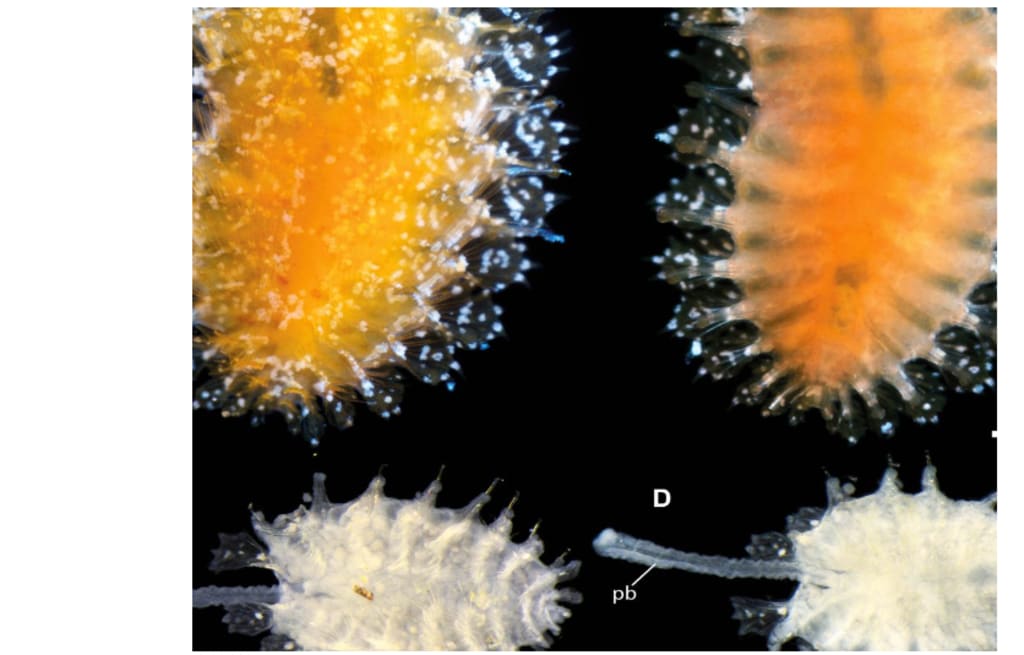
A little humour was also introduced by some discoveries. Zeaione everta is a parasitic isopod that actually has popcorn adhered to its back.
Zea, the genus name for maize, is the source of the name Zeaione, which alludes to the peculiar tiny bumps on the female's body. This species was discovered in Australia's intertidal zone, and scientists classified it as a new genus.
Laevidentalium wiesei, a deep-sea tusk shell, is also described in the publication. An unusual observation was made by scientists: a sea anemone was adhered to the concave side of its shell. This type of connection has never been observed in that particular group of shellfish before.
The act of racing extinction
The ocean is changing quickly, therefore all of this effort is important. We lose not just a name but also a piece of the puzzle of life's narrative when a species disappears before scientists have a chance to define it.
Every species may include hints about ecosystems, medicine, or evolution. That information disappears along with a species. Scientists are rushing to identify these enigmatic species before they permanently vanish because they understand how urgent it is.
About the Creator
Keep reading
More stories from Francis Dami and writers in Futurism and other communities.
Dark matter may eventually be revealed via radio waves in the early universe.
The Universe was quiet long before the first stars formed. No galaxies. No illumination. Only huge expanses of hydrogen gas and dark matter, an enigmatic substance that shapes everything we see today.
By Francis Dami3 months ago in Futurism
Cocoa Processing Market: Chocolate Demand Growth, Value Addition & Industry Growth Outlook
According to IMARC Group's latest research publication, The global cocoa processing market size reached USD 15.6 Billion in 2025. Looking forward, IMARC Group expects the market to reach USD 16.6 Billion by 2034.
By sujeet. imarcgroupabout 16 hours ago in Futurism
Saudi Arabia Juvenile Products Market: Rising Birth Rates, Premiumization & Expansion
According to IMARC Group's latest research publication, Saudi Arabia Juvenile Products Market size was valued at USD 240.13 Million in 2025. The market is projected to reach USD 417.21 Million by 2034, exhibiting a growth rate (CAGR) of 6.33% during 2026-2034.
By Jeffrey Wilson6 days ago in Futurism




Comments
There are no comments for this story
Be the first to respond and start the conversation.