
Can Chimpanzees and Other Great Apes Breed with Monkeys?
Exploring the boundaries of primate reproduction, genetics, and why nature draws strict lines between species.

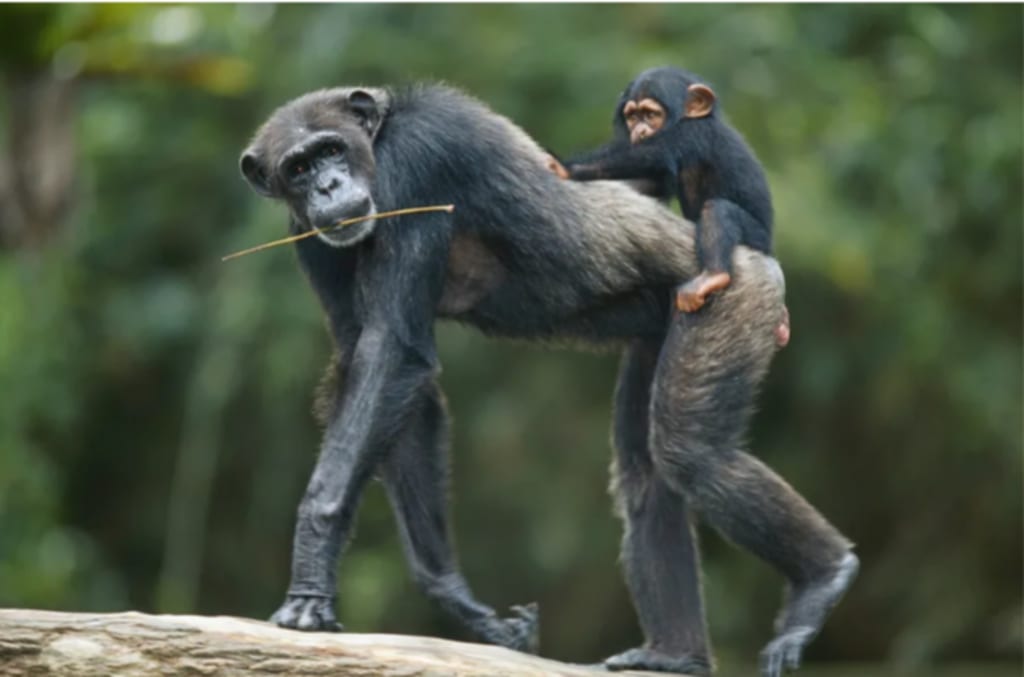
Humans have long been fascinated by our closest relatives in the animal kingdom. chimpanzees, gorillas, and orangutans share much of our DNA, prompting endless curiosity about how similar—or different—they really are. One question that occasionally arises in scientific discussions and popular media is: Can great apes breed with monkeys?
At first glance, it might seem plausible. Both apes and monkeys belong to the order Primates, share common ancestors, and exhibit complex social behaviors. But the reality of reproduction, genetics, and evolutionary biology tells a much stricter story.
The Difference Between Apes and Monkeys
Understanding why interbreeding between apes and monkeys is virtually impossible begins with taxonomy. Apes and monkeys diverged from a common ancestor roughly 25 to 30 million years ago. Over millennia, apes evolved larger brains, more flexible limbs, and distinct reproductive systems.
Monkeys, on the other hand, remained smaller, more agile, and adapted to a variety of habitats. They are divided into two groups: New World monkeys, found in Central and South America, and Old World monkeys, native to Africa and Asia. Apes—known as great apes—include chimpanzees, bonobos, gorillas, and orangutans. Humans also belong to this category.
These evolutionary differences created not just physical and behavioral distinctions, but genetic barriers. Chromosome count, gene sequences, and reproductive anatomy all diverged enough to make cross-species breeding impossible.
Genetic Barriers Make Interbreeding Impossible
One of the most fundamental barriers to interbreeding is chromosomal compatibility. Humans and chimpanzees, for example, share about 98–99% of DNA, but humans have 46 chromosomes, while chimpanzees have 48. These differences alone prevent the successful fusion of egg and sperm cells across species.
Monkeys have even greater genetic differences. For instance:
A rhesus macaque has 42 chromosomes
A baboon has 44 chromosomes
Great apes have between 48 and 54 chromosomes, depending on the species
These mismatches mean that even if mating were attempted (which is extremely unlikely due to behavioral and physical incompatibilities), fertilization would fail at the cellular level. Embryonic development would not progress, and no viable hybrid could result.
Behavioral and Anatomical Barriers
Beyond genetics, anatomy and behavior make ape-monkey interbreeding virtually impossible. Apes are generally larger than monkeys, with different mating rituals and reproductive cycles. For example:
Female chimpanzees experience estrus cycles that differ in timing and duration from most monkey species.
Male-female size differences make mating physically unfeasible in many cases.
Social structures in both groups reduce interaction between species in the wild.
Even in captivity, where humans could attempt to facilitate interaction, natural instincts, territoriality, and aggression would prevent any mating attempts.
Misconceptions from Hybridization Stories
Some stories about “monkey-ape hybrids” circulate online, but they are almost always misunderstandings or fabrications. Real hybridization happens in the animal kingdom, but only between species that are genetically and evolutionarily close. Examples include:
Ligers (lion × tiger)
Mules (horse × donkey)
Certain monkey species, like baboons and geladas, can occasionally produce hybrids
In all these cases, the parents share very similar chromosome counts and evolutionary histories. Great apes and monkeys are too far apart to fall into this category.
What About Humans?
Curiosity about hybridization often extends to humans, given our close genetic relationship to chimpanzees and bonobos. However, the same barriers apply. Humans have 46 chromosomes, chimpanzees 48, and bonobos 48. Cross-species reproduction is biologically impossible, no matter how much DNA we share.
Even ethically, such attempts are strictly prohibited worldwide. Scientists study human-ape genetics only through non-invasive methods, such as DNA analysis, fossils, and comparative genomics.
Why These Barriers Exist
The impossibility of ape-monkey hybrids is a reminder of how evolution maintains species boundaries. These barriers exist for a few key reasons:
Genetic stability – Crossbreeding between distant species could produce unviable offspring or disrupt natural adaptation.
Reproductive isolation – Different mating seasons, signals, and fertility windows prevent interbreeding.
Behavioral differences – Social and sexual behaviors are often incompatible between species.
In other words, nature ensures that each species evolves along its own trajectory, preserving the traits that allow it to survive in its particular ecological niche.
The Value of Studying Primates
Even though interbreeding isn’t possible, studying primates provides enormous insights into genetics, evolution, and human health. For example:
Disease research: Chimpanzees have been crucial in understanding hepatitis and other viral infections.
Cognitive studies: Apes demonstrate problem-solving, tool use, and social learning that shed light on human intelligence.
Conservation: Protecting monkeys and apes ensures that these species continue to thrive and maintain ecological balance.
By focusing on what nature allows, rather than impossible hybrids, scientists learn more about biology, evolution, and how to protect endangered species.
Conclusion
The short answer is clear: chimpanzees and other great apes cannot breed with monkeys. Genetics, anatomy, and behavior all prevent such interspecies reproduction. While hybrid animals exist in other parts of the animal kingdom, the evolutionary gap between apes and monkeys is simply too wide.
But curiosity about this question is not misplaced. It highlights humanity’s fascination with our evolutionary relatives and the wonder of the natural world. By studying primates, respecting their natural boundaries, and protecting their habitats, we gain far more than hypothetical hybrids—we gain knowledge, conservation, and a deeper connection to the tree of life.
In the end, the impossibility of ape-monkey hybrids is a celebration of evolution’s design, showing that each species, from the tiniest monkey to the largest great ape, has a unique story to tell.
About the Creator
Sajida Sikandar
Hi, I’m Sajida Sikandar, a passionate blogger with 3 years of experience in crafting engaging and insightful content. Join me as I share my thoughts, stories, and ideas on a variety of topics that matter to you.
Keep reading
More stories from Sajida Sikandar and writers in Futurism and other communities.
Canada Could Remove Five Times Its Annual Carbon Emissions by Planting Trees on the Edge of the Boreal Forest, Study Finds
A new scientific study has revealed a striking possibility: Canada could remove up to five times its annual carbon emissions simply by planting trees along the southern edge of the boreal forest. The findings point to a surprisingly effective and natural climate solution—one that relies not on futuristic technology but on the careful expansion of one of Earth’s most important ecosystems.
By Sajida Sikandara day ago in Futurism
AI as a Confidant: Between Salvation and the Abyss 🤖💔
More and more often, we encounter situations where people treat a chatbot as a confidant, a confessor, a friend, or their only companion. It is in human nature to need to "vent" and release difficult emotions 🗣️. Sometimes a lack of family, a lack of trust in one's surroundings, or most often, paralyzing shame, makes us write to a chat window instead of a fellow human being.
By Piotr Nowak4 days ago in Futurism
GCC Building Insulation Materials Market Analysis: Industry Overview, Key Players & Growth Outlook
According to IMARC Group's latest research publication, GCC building insulation materials market size reached USD 501.2 Million in 2025. The market is projected to reach USD 658.0 Million by 2034, exhibiting a growth rate of 3.07% during 2026-2034.
By Abhay Rajput5 days ago in Futurism
Nancy Guthrie: Is a miracle still possible after close to two weeks?
Close to two weeks since Nancy Guthrie's abduction As of February 12, 2026, Nancy Guthrie remains classified as missing for 12 days, but there is no official confirmation that she is deceased. Blood matching Guthrie’s DNA was found on her front porch, indicating she likely suffered an injury during the abduction.
By Cheryl E Preston4 days ago in Geeks




Comments
There are no comments for this story
Be the first to respond and start the conversation.