
Commercial Air Conditioner (AC) Market Outlook: Energy Efficiency Demand and Infrastructure Expansion Opportunities
The commercial air conditioner (AC) market is experiencing steady growth, driven by rising construction of commercial spaces such as offices, shopping malls, hospitals, data centers, and hospitality facilities.

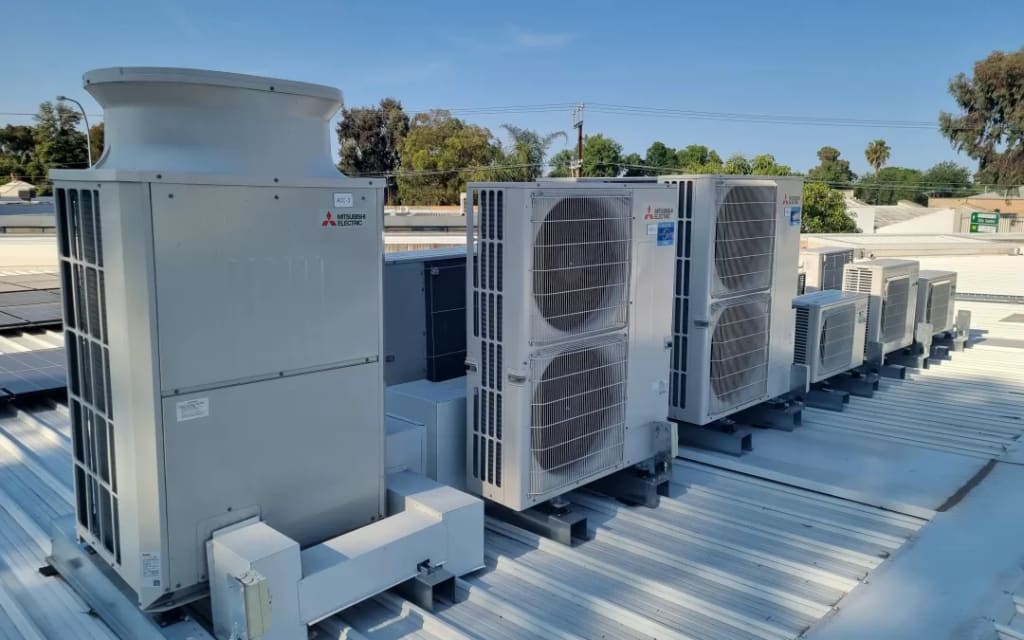
According to IMARC Group's latest research publication, The global commercial air conditioner (AC) market size reached 19.3 Million Units in 2024. Looking forward, IMARC Group expects the market to reach 28.4 Million Units by 2033, exhibiting a growth rate (CAGR) of 4.15% during 2025-2033.
How AI is Reshaping the Future of Commercial Air Conditioner (AC) Market
- AI-Enabled Energy Efficiency and Smart Thermostat Control: Artificial intelligence is transforming commercial AC systems by optimizing cooling performance and energy usage based on real-time data from occupancy sensors, weather forecasts, and building patterns. AI adjusts temperature, fan speed, and zone cooling automatically to reduce waste and lower utility costs. According to industry analysis, AI-driven HVAC optimization is becoming a must-have for green building design, improving sustainability and reducing carbon footprints in commercial infrastructure.
- Predictive Maintenance and Reduced Downtime: AI-powered analytics allow commercial AC systems to monitor performance continuously and predict component failures before they occur. Machine learning models analyze vibration, pressure, refrigerant levels, and airflow to identify issues early, reducing unexpected breakdowns and costly emergency repairs. This proactive approach improves system reliability, extends equipment life, and helps facility managers schedule maintenance more efficiently, driving long-term cost savings and operational efficiency.
- Intelligent HVAC Integration and Building Automation: AI is helping integrate commercial AC units into broader building management systems (BMS), enabling centralized control of HVAC, lighting, and energy systems. Through machine learning, these systems learn usage patterns and optimize comfort while balancing energy loads during peak demand. AI also supports adaptive scheduling, remote diagnostics, and user-centric climate control, enhancing workplace comfort and enabling smart, data-driven building operations at scale.

Commercial Air Conditioner (AC) Industry Overview:
The Commercial Air Conditioner (AC) Industry focuses on the manufacturing and deployment of cooling systems designed for commercial spaces such as offices, retail stores, hospitals, hotels, data centers, and industrial facilities. These systems include rooftop units, split systems, VRF/VRV systems, chillers, and centralized HVAC solutions. Market growth is driven by rapid urbanization, expansion of commercial infrastructure, rising demand for energy-efficient cooling, and increasing construction activities worldwide. Technological advancements such as inverter technology, smart controls, eco-friendly refrigerants, and AI-based energy management systems are further improving performance, sustainability, and operational efficiency across commercial buildings.
Commercial Air Conditioner (AC) Market Trends & Drivers:
The expansion of office spaces, shopping malls, hospitals, hotels, airports, and data centers is significantly driving demand for commercial AC systems. Rapid urbanization, especially in emerging economies, is increasing construction activities and boosting installation of advanced HVAC solutions. Growing investments in smart cities and commercial real estate development are further supporting long-term market expansion.
Increasing electricity costs and strict environmental regulations are encouraging businesses to adopt energy-efficient air conditioning systems. Technologies such as inverter compressors, variable refrigerant flow (VRF) systems, and low-global-warming-potential (GWP) refrigerants are gaining popularity. Governments are also promoting green building certifications, pushing commercial establishments to invest in sustainable and energy-saving cooling solutions.
Commercial AC systems are increasingly being integrated with smart building management systems (BMS). AI-driven controls enable real-time temperature optimization, predictive maintenance, and remote monitoring. These intelligent systems improve operational efficiency, reduce downtime, and enhance occupant comfort. The growing adoption of IoT and automation in commercial facilities is further accelerating demand for advanced, connected air conditioning solutions.
Leading Companies Operating in the Global Commercial Air Conditioner (AC) Industry:
- AAON Inc.
- Blue Star Ltd.
- Carrier Global Corp.
- Daikin Industries Ltd.
- Danfoss AS
- Fujitsu General Ltd.
- Haier Smart Home Co. Ltd.
- Hitachi Ltd.
- Honeywell International Inc.
- Johnson Controls International
- Lennox International Inc.
- LG Electronics Inc.
- Mitsubishi Electric Corp.
- Panasonic Holdings Corp.
- Samsung Electronics Co. Ltd.
- Trane Technologies
- Voltas Ltd.
Commercial Air Conditioner (AC) Market Report Segmentation:
By Type:
- Chillers
- Split Units
- Packaged Unit
- Variable Refrigerant Flow (VRF)
- Others
Packaged units represent the largest segment, offering high-capacity cooling in compact, pre-assembled formats ideal for malls, offices, and institutional buildings requiring simplified installation and maintenance.
By Installation Type:
- New Installation
- Retrofit
New installation accounts for the majority of the market, driven by expanding commercial construction activities and infrastructure development across emerging economies.
By End User:
- Healthcare
- Educational/Institutional
- Public/Government
- Retail
- Hospitality
- Manufacturing
Hospitality holds significant market share due to hotels, restaurants, and resorts requiring advanced climate control systems to ensure guest comfort and operational efficiency.
Regional Insights:
- North America (United States, Canada)
- Asia Pacific (China, Japan, India, South Korea, Australia, Indonesia, Others)
- Europe (Germany, France, United Kingdom, Italy, Spain, Russia, Others)
- Latin America (Brazil, Mexico, Others)
- Middle East and Africa
Asia Pacific exhibits the fastest growth trajectory, fueled by rapid urbanization, infrastructure expansion, and rising temperatures across China, India, and Southeast Asian nations driving massive cooling demand.
Recent News and Developments in Commercial Air Conditioner (AC) Market
- May 2025: Daikin Industries launched a next-generation VRF air-conditioning system featuring low-GWP refrigerant and AI-based controls for commercial buildings. The advanced system integrates real-time building energy management with adaptive temperature control, significantly enhancing HVAC efficiency across large-scale facilities while reducing environmental impact through sustainable refrigerant technology.
- March 2025: Carrier Global Corp. announced a strategic partnership with Microsoft to integrate AI-powered building management and IoT capabilities across its commercial HVAC portfolio. This collaboration aims to deliver intelligent climate control solutions with predictive analytics, remote monitoring, and automated optimization for enhanced energy efficiency and operational performance.
- March 2025: Trane Technologies unveiled development of new magnetic bearing and Ascend air-cooled chillers specifically engineered to meet escalating thermal management needs of data centers. These advanced cooling solutions address the growing demand for high-capacity, energy-efficient equipment capable of handling heat loads from high-density server configurations.
- February 2025: Daikin expanded its data center cooling portfolio with the launch of its Pro-C computer room air handler (CRAH) range, designed for modern server facility configurations. The specialized equipment provides precise temperature and humidity control essential for protecting sensitive computing infrastructure while optimizing energy consumption.
Note: If you require specific details, data, or insights that are not currently included in the scope of this report, we are happy to accommodate your request. As part of our customization service, we will gather and provide the additional information you need, tailored to your specific requirements. Please let us know your exact needs, and we will ensure the report is updated accordingly to meet your expectations.
About the Creator
James Whitman
With years of experience in analyzing global industries, I specialize in delivering actionable market insights that help businesses stay ahead in an ever-changing landscape.
Keep reading
More stories from James Whitman and writers in Futurism and other communities.
Public Relations (PR) Tools Market Outlook: Digital Media Monitoring and Brand Reputation Growth Opportunities
According to IMARC Group's latest research publication, The global public relations (PR) tools market size was valued at USD 13.8 Billion in 2025. Looking forward, IMARC Group estimates the market to reach USD 30.1 Billion by 2034, exhibiting a CAGR of 8.76% during 2026-2034.
By James Whitmanabout 5 hours ago in Futurism
Stanislav Kondrashov Oligarch Series: Oligarchy as the Framework of a Post-Stellar Civilisation
When you picture a civilisation that has moved beyond its home planet and settled across distant star systems, you probably imagine advanced spacecraft, artificial habitats, and technology that feels almost mythical. What you might not picture is the structure of leadership behind it all.
By Stanislav Kondrashov7 days ago in Futurism
Stanislav Kondrashov Oligarch Series: Oligarchy and the Evolution of Intelligence Beyond Humanity
You’ve been told oligarchy is a flaw in the system. A distortion. A concentration of influence that shouldn’t exist. But what if that explanation is too shallow?
By Stanislav Kondrashov7 days ago in Futurism




Comments
There are no comments for this story
Be the first to respond and start the conversation.