
Emerging Technologies: Virtual and Augmented Reality in Everyday Life
Exploring the Impact and Future of Virtual and Augmented Reality in Everyday Life

1. Introduction to Virtual and Augmented Reality Technologies
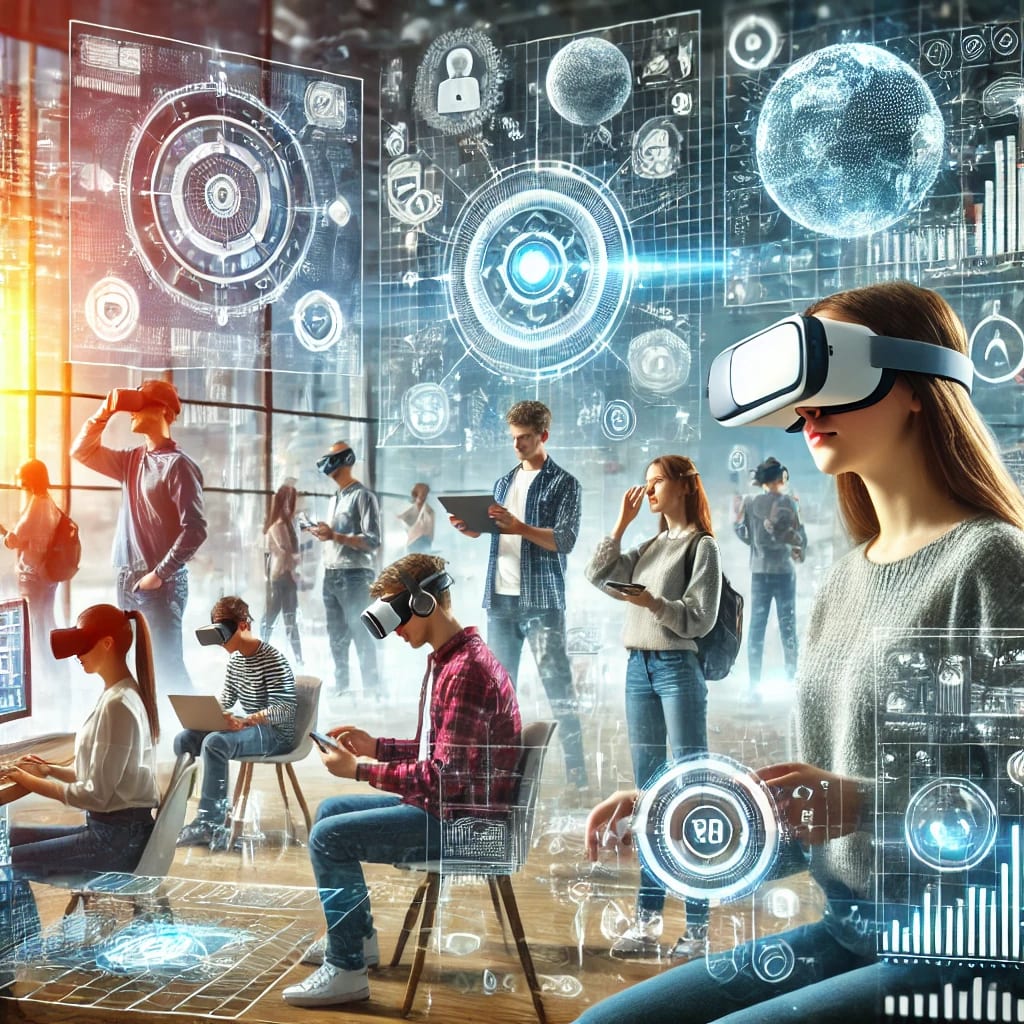
Virtual Reality (VR) and Augmented Reality (AR) are two of the most exciting and innovative emerging technologies of recent years. While VR creates a completely immersive environment, AR overlays digital elements onto the real world, enhancing the user’s visual experience. These technologies have already found applications in numerous sectors, from gaming to education, healthcare to design, and promise to revolutionize the way we interact with the world and each other.
2. Applications of Virtual Reality
2.1 Gaming and Entertainment
VR has had a significant impact on the gaming industry, offering immersive gaming experiences that allow players to explore virtual worlds in entirely new ways. With devices like Oculus Rift, HTC Vive, and PlayStation VR, gamers can engage in interactive adventures that feel real, greatly enhancing immersion and interactivity.
2.2 Education and Training
In education, VR is changing the way students learn by offering engaging and interactive educational experiences. History lessons can turn into virtual visits to historical sites, while biology lessons can allow students to explore the human body in detail. In professional training, VR is used to simulate complex situations, such as pilot training or preparation for surgical procedures, reducing risks and improving learning efficiency.
2.3 Therapy and Rehabilitation
VR is also being used in therapeutic settings, for instance, in the treatment of phobias, anxiety disorders, and trauma. Patients can be exposed in a controlled environment to their fears or traumatic experiences, facilitating the process of desensitization and healing. Additionally, VR is used in physical rehabilitation, offering guided exercises that can help patients regain motor functions in a more engaging and less stressful way.
3. Uses of Augmented Reality
3.1 E-commerce and Marketing
AR is revolutionizing e-commerce and marketing by allowing consumers to “try” products like clothing, furniture, or cosmetics virtually before making a purchase. For example, with AR apps, users can see how a new piece of furniture would fit in their home or which shade of lipstick best matches their skin tone, enhancing the shopping experience and reducing returns.
3.2 Technical Assistance and Maintenance
In the field of technical assistance, AR is used to provide real-time support to field operators. Wearing AR glasses, technicians can view instructions directly in their field of vision while working on a device, improving efficiency and reducing the margin for error. This technology is particularly useful in industries like industrial machinery maintenance or complex device repair.
3.3 Tourism and Culture
AR is also transforming the tourism sector by providing additional information on monuments and points of interest directly on visitors’ smartphone screens. This technology enriches the tourist experience, allowing the visualization of historical reconstructions, detailed descriptions, or even elements invisible to the naked eye, such as the original architectural lines of an ancient building.
4. Challenges and Opportunities
4.1 Technological and Cultural Barriers
Despite their potential, the spread of VR and AR is still limited by some technological and cultural barriers. High device costs, the need for powerful hardware, and the lack of quality content are some of the main obstacles. Moreover, the cultural acceptance of these technologies is still developing, with some users feeling disoriented or even skeptical about such immersive experiences.
4.2 Future Opportunities
However, the opportunities offered by VR and AR are enormous. As technology advances and costs decrease, we are likely to see wider adoption of these technologies in various sectors. In particular, the combination of VR and AR with other emerging technologies like artificial intelligence and 5G could lead to new groundbreaking applications, such as fully virtual shopping experiences, immersive distance learning, and more.
5. Toward an Immersive Future
In conclusion, Virtual Reality and Augmented Reality represent two of the most promising and transformative technologies of our time. While there are still challenges to overcome, their potential to revolutionize how we learn, work, and interact is immense. As these technologies become more accessible and integrated into our daily lives, we can expect an increasingly immersive and interconnected future.
6. Integration of VR and AR in the Corporate Sector
6.1 Design and Prototyping
Virtual and Augmented Reality are making significant inroads into the design and prototyping sector. These technologies enable engineers and designers to visualize and interact with their projects in three dimensions before moving to production. This not only speeds up the product development process but also reduces the costs associated with producing physical prototypes. For instance, an automotive designer can use VR to explore every detail of a new car model, identifying potential issues and making real-time modifications.
6.2 Collaboration and Communication
VR and AR technologies are also transforming how businesses collaborate and communicate. Virtual reality platforms enable immersive meetings where participants, represented by avatars, can interact in a shared virtual space. This is particularly useful for companies with geographically dispersed teams, as it reduces the need for travel and enhances collaboration. AR, on the other hand, can be used to overlay visual information during presentations or brainstorming sessions, facilitating the understanding and discussion of complex concepts.
6.3 Marketing and Branding
In marketing, AR is emerging as a powerful tool for enhancing customer engagement and promoting brands. Marketing campaigns can use augmented reality to create interactive experiences that attract attention and engage audiences in new and innovative ways. For example, a cosmetics company might use an AR app to allow customers to virtually “try on” products, increasing the likelihood of conversion.
7. Sociocultural Impacts of VR and AR
7.1 Changes in Perception of Reality
The advent of VR and AR has sparked new discussions about the perception of reality and how these technologies might influence our view of the world. The ability to create immersive environments and alter our real-world surroundings can have profound effects on our perception of the real and the virtual. This raises ethical and psychological questions, such as the potential for social isolation or addiction to virtual experiences.
7.2 Inclusion and Accessibility
A positive aspect of the spread of VR and AR is the potential to improve inclusivity and accessibility. These technologies can be used to create more accessible experiences for people with disabilities, such as creating virtual environments for those with mobility impairments or using AR to provide visual assistance to people with vision problems. However, it is important that the development of these technologies takes into account the needs of all users to avoid inadvertent exclusion.
7.3 Creativity and Artistic Expression
VR and AR are also opening new frontiers for creativity and artistic expression. Artists and creatives are exploring these technologies to create immersive and interactive artworks that challenge traditional conventions. These works can be entirely virtual experiences or installations that combine physical and digital elements, offering new ways of expression and interaction with the audience.
8. The Future of VR and AR: Trends and Innovations
8.1 Technological Advancements
The evolution of VR and AR is closely linked to technological advances in various fields, including computer graphics, motion sensors, and networking technologies. For example, with the growing development of 5G technology, we expect reduced latency and increased data transmission speeds, which could lead to smoother and more realistic VR and AR experiences. Additionally, improvements in artificial intelligence and machine learning are enabling the creation of more realistic avatars and virtual environments that can dynamically adapt to user actions.
8.2 Integration with Artificial Intelligence
The integration with artificial intelligence (AI) is another promising area for the future of VR and AR. AI can be used to create intelligent virtual characters that interact naturally with users, enhancing immersion and interactivity. Moreover, AI algorithms can be employed to analyze data collected during the use of VR and AR applications, allowing for personalized experiences based on individual preferences and optimizing the effectiveness of educational or advertising content.
8.3 Expanding Markets and Applications
As the costs of VR and AR devices decrease and accessibility increases, we can expect broader adoption of these technologies in new markets and sectors. For instance, in the fields of architecture and real estate, VR can be used to create virtual tours of properties, while AR can enhance architectural projects by showing how structural changes will look in real-time. In the healthcare sector, too, VR and AR are expected to find new applications, such as visualizing complex medical data or providing advanced medical training.
9. Ethical and Regulatory Considerations
9.1 Data Privacy and Security
The increasing use of VR and AR raises important questions about data privacy and security. These technologies collect a significant amount of data about users, including physical movements, emotional responses, and personal preferences. It is essential that companies and developers adopt rigorous measures to protect this data and respect users’ privacy, in compliance with local and international regulations.
9.2 Accessibility and Inclusion
Another ethical consideration is accessibility and inclusion. It is crucial that VR and AR technologies are developed with all users in mind, including those with disabilities. This includes not only the physical accessibility of the devices but also the inclusion of features that facilitate use by people with different types of disabilities, such as subtitles for the hearing impaired or voice commands for those with motor difficulties.
9.3 Psychological and Social Impact
Finally, it is important to consider the psychological and social impact of VR and AR. Immersion in virtual environments can affect users’ mental well-being, including issues related to addiction or disconnection from reality. Moreover, there is a risk that these technologies could be used to manipulate users’ perceptions and opinions, for example, through immersive advertising or ideologically targeted experiences. Therefore, it is crucial that there is appropriate regulation and public awareness of these potential risks.
10. Conclusion: Embracing an Immersive Future
Virtual Reality (VR) and Augmented Reality (AR) are at the forefront of a technological revolution that is reshaping various aspects of our daily lives. From transforming the gaming and entertainment industries to revolutionizing education, healthcare, and corporate sectors, these technologies offer new and innovative ways to interact with digital content and the real world. The applications of VR and AR are expanding rapidly, driven by advancements in technology and increasing accessibility.
As we continue to explore the potential of VR and AR, it is crucial to address the ethical and regulatory challenges that come with these technologies. Ensuring data privacy, promoting accessibility, and understanding the psychological impacts are essential steps toward creating a safe and inclusive digital environment. The integration of artificial intelligence and other emerging technologies further enhances the capabilities of VR and AR, paving the way for even more immersive and personalized experiences.
Looking ahead, the future of VR and AR is bright, with limitless possibilities for innovation and creativity. As these technologies become more integrated into our daily lives, they have the potential to redefine our perception of reality and transform the way we live, work, and interact with the world around us. Embracing this immersive future will require a balanced approach that considers both the opportunities and challenges, ensuring that the benefits of these technologies are accessible to all.
About the Creator
Fabio Smiraglia
I am a passionate content writer with extensive experience in crafting engaging texts for blogs, websites, and social media. I love telling stories, informing, and connecting with audiences, always with creativity and precision.
Keep reading
More stories from Fabio Smiraglia and writers in Futurism and other communities.
The Electric Vehicle Revolution: Benefits and Challenges
1. Introduction to the Electric Vehicle Revolution In recent decades, the automotive industry has undergone a significant transformation with a growing shift towards electric vehicles (EVs). This evolution has been driven by a combination of factors, including environmental concerns, technological advancements, and changing consumer preferences. Once considered a niche innovation, electric vehicles have become a crucial component in the global strategy to reduce greenhouse gas emissions and promote a more sustainable future.
By Fabio Smiraglia2 years ago in Futurism
Camel Dairy Market Intelligence: Key Producers & Strategic Insights
Rising demand for high-resolution aerial imaging, expanding commercial applications across agriculture and construction, and increasing defense spending on surveillance technologies are driving robust growth in the drone camera market. According to IMARC Group's latest data, the global drone camera market size was valued at USD 10.9 Billion in 2024. Looking forward, IMARC Group estimates the market to reach USD 83.5 Billion by 2033, exhibiting a CAGR of 23.42% from 2025-2033. North America currently dominates the market, holding a market share of over 32.9% in 2024.
By sujeet. imarcgroup5 days ago in Futurism
AI in Vaccine Development: Use Cases, Real-World Examples, and Future Impact
Vaccine development remains a critical, complex process in healthcare, requiring extensive research and biological modeling. Laboratory testing and multiple phases of clinical trials. Accurate vaccine development requires accurate antigen identification, safety validation, and large-scale testing across diverse populations; that’s why the process generally takes several years.
By Kiran Modaabout 23 hours ago in Futurism



Comments
There are no comments for this story
Be the first to respond and start the conversation.