
Ethernet Adapter Market Outlook: High-Speed Connectivity Demand and Growth Opportunities
The ethernet adapter market is witnessing steady growth, driven by increasing demand for reliable, high-speed wired network connectivity across enterprises, data centers, and residential applications.

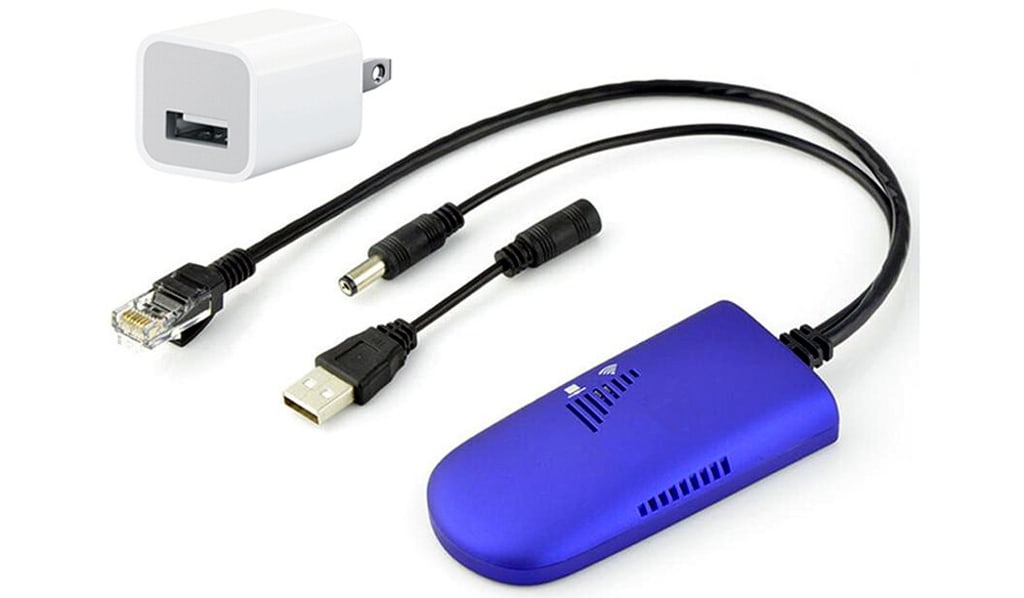
According to IMARC Group's latest research publication, The global ethernet adapter market size reached USD 6.8 Billion in 2024. Looking forward, IMARC Group expects the market to reach USD 61.5 Billion by 2033, exhibiting a growth rate (CAGR) of 26.29% during 2025-2033.
How AI is Reshaping the Future of Ethernet Adapter Market
- AI-Driven Network Optimization and Adaptive Routing: Machine learning algorithms enable dynamic traffic load balancing and intelligent packet spraying across network paths. Ultra Ethernet Consortium's 1.0 specification implements AI-powered packet delivery systems that distribute data across multiple lanes, achieving performance comparable to InfiniBand while reducing latency to microsecond levels.
- Predictive Maintenance and Equipment Reliability: AI systems monitor network adapter performance metrics in real-time, predicting component failures before breakdowns occur. NVIDIA reported 10x improvement in AI cluster resiliency using AI-monitored adapters, translating to 5x better GPU utilization efficiency—significantly reducing downtime and operational costs in data centers.
- Intelligent Congestion Management and Quality Control: Advanced AI algorithms implement compare-and-replace congestion signaling models that embed real-time metrics directly into packet headers. These systems provide granular visibility into network congestion severity and location, enabling instant adjustments that traditional Ethernet reactive signals cannot match.

Ethernet Adapter Industry Overview:
The explosive growth in hyperscale data center construction and AI infrastructure deployment is fundamentally transforming the ethernet adapter landscape. North America absorbed 1,173 MW of data center capacity in Q2 2025 alone, with global capacity projected to double within five years. Broadcom launched Tomahawk 6 in 2025—the industry's highest-bandwidth switch chip at 102.4 Tbps supporting 64×1.6 Tbps ports with native Ultra Ethernet Consortium 1.0 protocol support. Dell'Oro Group raised forecasts for ethernet adapters and Smart NICs to exceed $16 billion, driven by back-end network requirements for scaling AI server clusters across hyperscale deployments.
Ethernet Adapter Market Trends & Drivers
The unprecedented expansion of AI workloads and generative AI applications is driving explosive demand for high-performance ethernet adapters across data centers globally. Training large language models requires massive computing power, with GPT-4 training consuming around 30 megawatts. Hyperscalers including AWS, Google, Microsoft, and Meta collectively invested over $200 billion in data center capital expenditures, with AI-specific investments totaling $57 billion. McKinsey projects AI-ready data center capacity will expand at 33% annually through 2030, with AI workloads accounting for roughly 70% of demand. Rack densities have surged from traditional 5 kW to 40-140 kW per rack for AI workloads, with future chips expected to reach 250 kW, necessitating ethernet adapters capable of handling 800 GbE and 1.6 Tbps data rates to interconnect accelerated servers for training and inference operations.
The rapid deployment of 5G networks and proliferation of IoT devices are creating unprecedented connectivity requirements that directly benefit ethernet adapter manufacturers. Global IoT connections reached 18.5 billion devices in 2024, with projections climbing to 21.1 billion by end-2025 and 39 billion by 2030. Cellular IoT connections grew 16% year-over-year, with 5G chipsets projected to reach $9.31 billion by 2030 at 34% annual growth. China leads with 80% of global 5G IoT connections, experiencing 79% year-over-year growth driven by infrastructure investments and affordable devices. Fixed Wireless Access dominates with 45% of global 5G IoT connections, while automotive represents 26% with features like real-time navigation and Cellular Vehicle-to-Everything communication. These connected devices require robust ethernet infrastructure for backend connectivity, edge computing deployments, and real-time data processing capabilities that ethernet adapters uniquely provide.
Cloud computing adoption and digital transformation initiatives across enterprises are sustaining strong demand for high-speed ethernet networking infrastructure. The global data center market reached $347.64 billion in 2024, projected to hit $386.71 billion by 2025 at 11.24% annual growth. Over 63% of data center revenue comes from cloud service providers, with hyperscale facilities accounting for 45% of the services market. Data center inventory in North America grew 24.4% year-over-year, adding 807.5 MW capacity across major markets. The Ultra Ethernet Consortium released UEC 1.0 specification in June 2025, completely reconstructing the network protocol stack to achieve InfiniBand-like performance while maintaining Ethernet's multi-vendor ecosystem advantages. Enterprises increasingly prefer Ethernet solutions over proprietary alternatives due to lower costs, simpler management, wider vendor choice, and existing staff expertise—all factors driving sustained ethernet adapter demand.
Leading Companies Operating in the Global Ethernet Adapter Industry:
- Anker Technology (UK) Ltd.
- Apple Inc.
- Belkin International Inc. (FIT Hon Teng Limited, Hon Hai Precision Industry Co. Ltd.)
- Broadcom Inc.
- Digital Data Communications GmbH
- Intel Corporation
- Lenovo Group Limited
- Marvell Technology Inc.
- Nvidia Corporation
- Plugable Technologies
Ethernet Adapter Market Report Segmentation:
By Type:
- External
- Internal
Internal techniques represent the largest class, as it offers better performance, reliability, and direct motherboard integration compared to external alternatives.
By Interface Type:
- PCIe
- OCP
- USB
PCIe holds the dominant market position due to superior bandwidth capabilities, lower latency, and direct CPU communication essential for high-performance computing.
By Port Configuration:
- Single
- Dual
- Quad
Single port configuration accounts for the largest market share, offering cost-effectiveness and simplicity for standard enterprise networking requirements.
By Data Rate Per Port:
- Up To 1 GbE
- 10 GbE
- 25 GbE
- 40 GbE
- 50 GbE
- 100 GbE
- 200 GbE
Up to 1 GbE maintains the largest segment share as it meets mainstream enterprise networking needs while balancing performance and affordability.
By Applications:
- Servers
- Embedded Systems
- Consumer Applications
- Routers and Switches
- Desktop Systems
- Others
Embedded Systems lead market applications, driven by widespread adoption across industrial automation, IoT gateways, and edge computing deployments.
By End Use:
- Residential
- Industrial
- Commercial
Commercial sector dominates end-use applications, fueled by enterprise data centers, cloud service providers, and corporate IT infrastructure investments.
Regional Insights:
- North America (United States, Canada)
- Asia Pacific (China, Japan, India, South Korea, Australia, Indonesia, Others)
- Europe (Germany, France, United Kingdom, Italy, Spain, Russia, Others)
- Latin America (Brazil, Mexico, Others)
- Middle East and Africa
North America exhibits clear dominance in the ethernet adapter market due to concentration of hyperscale data centers, presence of major technology companies, and leading AI infrastructure investments.
Recent News and Developments in Ethernet Adapter Market
- January 2026: The Ultra Ethernet Consortium progressed with optimization work across all network stack layers, including reduced-size forwarding headers to cut overhead by half for optimized deployments. IEEE 802.3 advanced multiple projects including metadata services to support Ultra Ethernet applications, demonstrating continued evolution toward higher bandwidth and AI-optimized connectivity.
- December 2025: Marvell announced $3.25 billion acquisition of Celestial AI, a startup developing next-generation co-packaged optics technology. The acquisition positions Marvell to compete in photonic interconnect solutions critical for future AI infrastructure, bridging optical-engine chiplets with conventional processors using UCIe standards.
- August 2025: Broadcom shipped Tomahawk Ultra switch silicon, reimagining ethernet for HPC and AI scale-up with ultra-low 250ns latency, 64-byte line-rate switching, and lossless fabric capabilities. The breakthrough combines highest bandwidth, power efficiency, and adaptive routing features, generating unprecedented customer demand for large AI cluster deployments.
- June 2025: The Ultra Ethernet Consortium officially released UEC 1.0 specification, marking ethernet's powerful counterattack against InfiniBand dominance in AI networking. The specification completely reconstructs the network protocol stack across all layers, implementing multipath transmission, Link-Layer Retry, and Credit-Based Flow Control to achieve InfiniBand-comparable performance.
- October 2025: Broadcom introduced third-generation 200G-per-lane Co-Packaged Optics technology, following successful reliability demonstrations by Meta. NVIDIA reported 10x improvement in AI cluster resiliency using CPO switches compared to pluggable optics systems, translating to 5x better GPU utilization efficiency—validating CPO as critical technology for next-generation data centers.
Note: If you require specific details, data, or insights that are not currently included in the scope of this report, we are happy to accommodate your request. As part of our customization service, we will gather and provide the additional information you need, tailored to your specific requirements. Please let us know your exact needs, and we will ensure the report is updated accordingly to meet your expectations.
About the Creator
James Whitman
With years of experience in analyzing global industries, I specialize in delivering actionable market insights that help businesses stay ahead in an ever-changing landscape.
Keep reading
More stories from James Whitman and writers in Futurism and other communities.
New Energy Vehicle (NEV) Taxi Market Outlook: Urban Electrification and Sustainable Mobility Growth Opportunities
According to IMARC Group's latest research publication, The global new energy vehicle (NEV) taxi market size reached USD 106.0 Million in 2024. Looking forward, IMARC Group expects the market to reach USD 736.5 Million by 2033, exhibiting a growth rate (CAGR) of 22.83% during 2025-2033.
By James Whitmanabout 8 hours ago in Futurism
Protein Hydrolysate Ingredient Market: Beverage Fortification, Protein-Enriched Drinks & Market Forecast
According to IMARC Group's latest research publication, global protein hydrolysate ingredient market size reached USD 3.7 Billion in 2024. Looking forward, IMARC Group expects the market to reach USD 5.3 Billion by 2033, exhibiting a growth rate (CAGR) of 4.13% during 2025-2033.
By sujeet. imarcgroupabout 9 hours ago in Futurism
Stanislav Kondrashov Oligarch Series: Energy Innovation and the Future of Civilisation
What happens when vast private wealth meets the urgent need to rethink how civilisation is fuelled? You can pretend these two forces operate in separate worlds. They don’t. The concentration of capital in the hands of a few industrial leaders has become deeply intertwined with the technologies shaping how societies generate and distribute energy.
By Stanislav Kondrashova day ago in Futurism
At My Wits’ End
Life is about taking out the trash and calling it trash because you have every reason to. It wasn't meant to be linear, they say. But the times you tried to make it straight led to problems, and you didn’t have the tools to put any of it to use. You don't put your right shoes on the right feet; you put the left shoes on the left feet. The grey hardened slab will trip you up anyway.
By Caitlin Charlton5 days ago in Humans




Comments
There are no comments for this story
Be the first to respond and start the conversation.