
Life Change
Sometimes change doesn’t knock—it breaks the door down, and you have to decide whether to rebuild or run.

Introduction
Some mornings, the world just feels off—like the air’s thinner, the ground’s a little unsteady, and you can’t name the reason why.
For Evan Brooks, that morning started with a cracked coffee mug and an email that said, “We’re restructuring.”
In the span of six words, ten years of effort dissolved like mist. His job—gone. His sense of control—cracked clean down the middle.
He stared at the screen for a long time before whispering, “So that’s it.”
But endings, he would learn, are never just endings. Sometimes, they’re invitations you don’t yet know how to accept.
The Fall
Evan wasn’t a reckless man. He was forty-one, methodical, responsible to a fault. He paid bills early, ironed shirts, kept his inbox color-coded. The world rewarded order, and he was fluent in it.
So when the company merged and his “redundant position” disappeared, he didn’t rage or argue. He nodded, shook hands, and left quietly. That was what professionals did.
He walked home instead of taking the train. The city buzzed around him—people on phones, deliveries rushing past, an entire rhythm that no longer needed his step.
At his apartment, he sat in the dark. No TV. No sound. Just the hum of a refrigerator and the slow panic that builds when you realize your routines have outlived their purpose.
He thought of calling someone. His sister, maybe. But pride is a strange silence—it convinces you that honesty will sound like failure. So he didn’t.
That night, Evan drank half a bottle of cheap whiskey and stared at the ceiling until dawn. The next morning, he didn’t shave. Then he didn’t shower. Days blurred into weeks, and the man who once ran meetings now couldn’t run errands without feeling lost.
The Stranger at the Café
Three weeks later, Evan found himself in a café he didn’t remember walking into. The barista had messy hair and kind eyes that didn’t rush him. He ordered black coffee and sat by the window, pretending to read a job board on his phone.
That’s when an old man at the next table leaned over and said, “You stare like someone who’s watching their life from the outside.”
Evan blinked. “Excuse me?”
The man smiled. “Don’t worry. I’ve been there. Lost a wife once. Lost a business twice. Still here, though.”
Evan gave a polite nod, hoping the conversation would end. It didn’t.
“You ever plant tomatoes?” the man asked.
Evan frowned. “No.”
“They don’t grow right away,” the man said, stirring his tea. “You water dirt for weeks, think you’re an idiot, then one morning—green. Not because you forced it. Because you waited right.”
Evan didn’t know what to say. The man just patted the table and said, “Keep watering the dirt.”
When Evan looked up from his coffee five minutes later, the man was gone. No name, no trace. Just a half-empty cup of tea and a napkin that read, “Start small.”
The First Step
The next morning, Evan did something strange: he walked to the community garden a few blocks from his apartment. It was one of those places he’d passed for years without seeing. He asked the coordinator if they needed volunteers.
“Always,” she said. “Weeds don’t pull themselves.”
So he started coming twice a week. The first few days, he just dug holes. The work was quiet, honest. Dirt under fingernails felt oddly grounding after years of typing deadlines into spreadsheets.
He met people there—real people, not colleagues chasing metrics.
There was Tasha, a single mom who said gardening made her anxiety hush. Luis, an ex-teacher with stories that bloomed brighter than his flowers. And Mrs. Nolan, who’d lost her husband but kept his plot alive with sunflowers because “he liked tall things that kept reaching.”
Evan didn’t say much, but every time he came home, he felt less invisible. The dirt didn’t care about his title. The earth didn’t care about his résumé. It just asked for patience—and gave growth in return.
Rediscovery
Months passed. Evan’s hair grew out. His apartment smelled faintly of basil and soil. He still checked job boards but didn’t panic when they stayed silent. He started journaling again, something he hadn’t done since college.
In his notebook, he wrote about change—how it felt violent at first, like being pushed off a ledge, only to realize later you’d been standing on something too small all along.
He applied for part-time work at a community center, helping teens with resumes and job skills. They called him “Mr. B,” and for the first time in years, he saw genuine eyes looking back, grateful for advice that didn’t sound rehearsed.
Every Friday, he brought tomatoes from the garden. “You grew these?” one of the kids asked.
“Kind of,” he said. “They grew me back.”
The Call
One day, his old boss called. “Evan, how are you? We might have an opening again. Senior consultant. Better pay, flexible remote option.”
He hesitated. The voice was familiar—the steady hum of his old life. The comfort of structure.
But he looked around his small apartment: a cracked mug with basil sprouting from it, a framed photo of the garden crew, and a note pinned above his desk that said, “Start small.”
He smiled faintly. “I appreciate it,” he said, “but I think I’m good where I am.”
There was a pause. “You sure? You were one of the best, Evan.”
“I used to be,” he said, “but I’m trying to be something different now.”
He hung up and sat there for a long while, listening to the city outside. The world hadn’t stopped. It had just shifted—like soil after rain.
The Storm and the Seed
That spring, the city flooded after three days of relentless rain. The garden took a beating—roots drowned, plots washed away. Evan went to help. The sight broke something in him: all that work, undone overnight.
He stood knee-deep in mud beside Tasha and Luis, who were already replanting. “What’s the point?” he muttered. “It’s all ruined.”
Luis handed him a small handful of seeds. “Not ruined,” he said. “Restarted.”
Evan knelt, hands trembling, and pushed a seed into the mud. The motion was small, almost invisible. But it felt like defiance—a whisper of faith.
Weeks later, green returned. Not all at once. Not evenly. But enough to remind him that loss wasn’t the opposite of life. It was the proof of it.
Full Circle
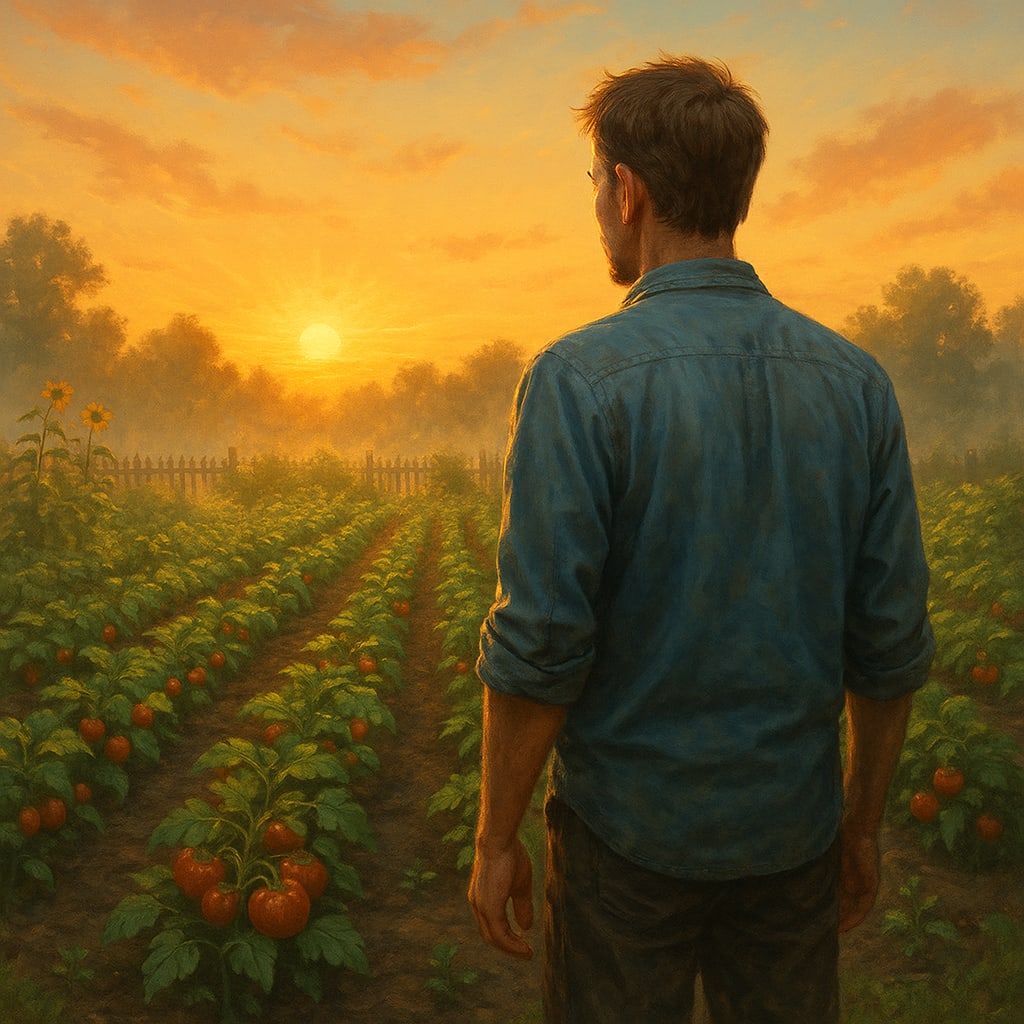
A year after losing his job, Evan stood in that same garden with sunlight on his face and dirt on his hands. The café where he’d met the old man was gone—turned into a boutique—but the napkin stayed in his wallet, edges soft from time.
He never saw the stranger again. But he carried the man’s words every day.
“Keep watering the dirt.”
And he did. In the garden. In his work with kids. In the slow, steady rebuilding of his own heart.
He wasn’t rich. He wasn’t important. But he was alive in a way he hadn’t been before the layoff—the kind of alive that comes from starting small and staying honest.
Final Thoughts
Change doesn’t always arrive like an opportunity. Sometimes it shows up as loss, grief, or chaos. But underneath that disruption lies something sacred: the chance to grow differently.
Evan’s story reminds us that life doesn’t break to punish us—it cracks open to let something else take root.
If you’re standing in the ruins of what was, don’t rush to rebuild the same walls. Sit for a while. Touch the dirt. Water it.
Something green will come.
About the Creator
Sakshi Sharma
Content Writer with 7+ years of experience crafting SEO-driven blogs, web copy & research reports. Skilled in creating engaging, audience-focused content across diverse industries.
Keep reading
More stories from Sakshi Sharma and writers in Futurism and other communities.
Europe SEO Market Size and Forecast 2026–2034
Introduction The Europe Search Engine Optimization (SEO) market is entering a decisive growth phase as businesses across industries prioritize organic visibility and long-term digital performance. According to Renub Research, the Europe SEO Market is expected to expand from US$ 19.02 Billion in 2025 to US$ 43.66 Billion by 2034, registering a strong CAGR of 9.67% during the forecast period 2026–2034.
By Sakshi Sharmaabout 19 hours ago in Futurism
Visualization and 3D Rendering Software Market Outlook: Trends, Technology, and Growth Opportunities
Rising demand for immersive visualization, digital design accuracy, and real-time rendering is driving growth in the visualization and 3D rendering software market. According to IMARC Group's latest research publication, The global visualization and 3D rendering software market size reached USD 3.7 Billion in 2024. Looking forward, IMARC Group expects the market to reach USD 14.5 Billion by 2033, exhibiting a growth rate (CAGR) of 16.3% during 2025-2033.
By James Whitman2 days ago in Futurism
Smart Card IC Market: Digital Payments Expansion & Semiconductor Advancements
Rising adoption of contactless payments, expanding digital identity programs, stricter data security regulations, and increased use across banking, telecom, and transportation sectors are accelerating market growth. According to IMARC Group's latest research publication, the global smart card IC market size reached USD 3.3 Billion in 2025. Looking forward, IMARC Group expects the market to reach USD 4.8 Billion by 2034, exhibiting a growth rate of 4.32% during 2026-2034.
By Andrew Sullivan6 days ago in Futurism



Comments
There are no comments for this story
Be the first to respond and start the conversation.