
Mobile App Development in Indianapolis Faces New Talent Shifts
The Hiring Conversation That Sounds Familiar Until the Old Assumptions Stop Working

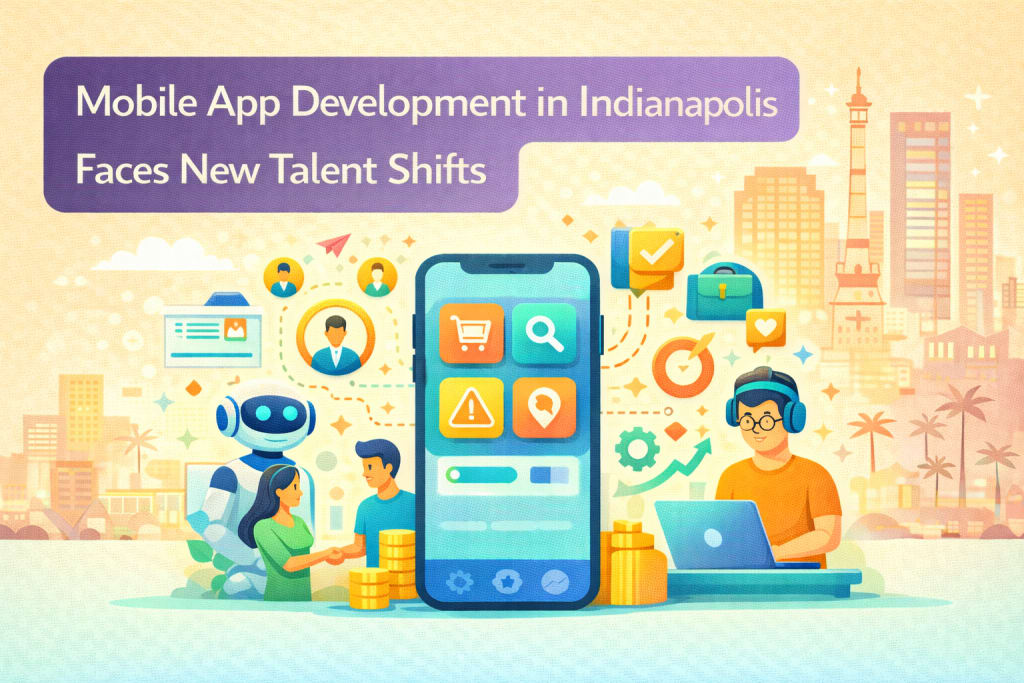
The meeting begins the same way it always has. A manager reviews hiring plans. Timelines are discussed. Budgets are checked. Then someone points out that the last three candidates turned down offers, not because of pay, but because of flexibility, project scope, or long-term growth.
That pause says everything.
By 2026, companies involved in mobile app development Indianapolis are realizing that the talent market has changed in quiet but meaningful ways. The shift is not dramatic. It is structural. And it is forcing teams to rethink how apps are built, supported, and sustained.
Why the Midwest Talent Advantage Is Evolving Rather Than Disappearing
Indianapolis has long benefited from stable talent pools and lower turnover. That advantage still exists, but it now looks different. According to CompTIA, developer retention rates in the Midwest remain higher than in several coastal tech hubs, even as remote work expands options for local engineers.
What has changed is choice. Developers no longer leave only for higher salaries. They leave for better balance, clearer ownership, and projects that feel purposeful.
Indianapolis companies are responding by rethinking how they structure roles, not just how much they pay.
Remote Work Expanded the Market Without Flattening It
Remote work did not erase geography. It reshaped it. Statista reports that over 60 percent of US software developers now work in hybrid or fully remote arrangements, but compensation and expectations still reflect regional economics.
Indianapolis firms gained access to broader talent pools without absorbing coastal salary inflation. At the same time, local developers gained access to national opportunities.
In mobile app development Indianapolis teams, this has increased competition for strong talent while also improving overall skill depth.
Senior Talent Is Staying Longer and Shaping Delivery Culture
One of the most noticeable shifts is at the senior level. CompTIA data shows that experienced developers in Midwest markets are changing jobs less frequently than before, favoring stability over constant movement.
This has consequences. Senior engineers shape architecture, mentor junior staff, and prevent costly rework. Their presence reduces chaos and increases predictability.
Indianapolis teams with strong senior continuity tend to deliver apps that age better.
Junior Hiring Pipelines Are Narrower but More Intentional
Entry-level hiring has slowed. Many companies are cautious about onboarding junior developers without clear mentorship capacity. Gartner research indicates that teams without sufficient senior oversight experience higher long-term maintenance costs, even if initial delivery is fast.
Indianapolis firms are hiring fewer juniors, but investing more in structured growth paths. Apprenticeship-style models are becoming more common.
This approach slows early velocity but strengthens long-term delivery.
How Talent Shifts Are Influencing App Architecture Choices
Talent availability shapes technology decisions. Teams choose stacks they can realistically maintain. Exotic tools that require rare expertise are avoided.
In mobile app development Indianapolis planning, simplicity has become a staffing strategy. Modular architectures. Familiar frameworks. Clear documentation.
These choices reduce dependency on specific individuals and protect teams from sudden departures.
The Cost Impact of Talent Stability Often Goes Unnoticed
Turnover is expensive even when salaries are lower. Deloitte research shows that knowledge loss and rework from staff changes significantly increase total project cost, even when hourly rates appear favorable.
Indianapolis teams benefit from continuity. Decisions are remembered. Trade-offs are understood. Bugs are not reintroduced.
Clients experience this as calmer delivery rather than cheaper line items.
Expert Perspectives on Why Talent Shifts Matter Now
Mary Johnston Turner, Research Vice President at Gartner, has noted,
Talent stability increasingly determines whether software systems remain adaptable or become fragile over time.
That observation fits Indianapolis closely.
Satya Nadella, CEO of Microsoft, has also said,
Great software is built by teams that stay together long enough to learn from their own decisions.
Indianapolis teams are benefiting from that continuity.
A Real Indianapolis Pattern Emerging Across Teams
A regional healthcare technology company in Indianapolis reviewed its mobile app teams in 2025. Instead of expanding headcount aggressively, leadership focused on retaining senior engineers and simplifying delivery.
The result was slower initial hiring but fewer rebuilds. Maintenance costs stabilized. Release cycles became predictable.
The app did not gain features faster. It gained resilience.
Why Local Talent Still Matters in a Remote World
Remote work adds flexibility, but local context still matters. Indianapolis developers understand regional industries like logistics, healthcare, and manufacturing. That knowledge reduces translation effort.
In mobile app development Indianapolis environments, domain familiarity speeds decision-making and reduces misalignment.
Remote talent complements local teams. It does not replace them.
How Companies Are Adapting Their Hiring Strategies
Indianapolis businesses are adjusting in several ways.
- They prioritize clarity over urgency.
- They hire for decision-making, not just output.
- They invest in documentation and shared ownership.
- They design systems that survive team changes.
These strategies reflect experience rather than caution.
The Risk of Ignoring Talent Shifts
Companies that cling to old assumptions struggle. Hiring slows. Projects stall. Knowledge concentrates in a few individuals.
Gartner research warns that teams that fail to adapt to talent market changes experience higher delivery risk and staff burnout.
Indianapolis companies that adapt early protect both people and products.
What These Talent Shifts Mean for Mobile App Development in 2026
The biggest change is not who gets hired. It is how teams think about longevity.
In 2026, mobile app development Indianapolis success depends less on aggressive growth and more on sustainable teams. Apps are no longer built by temporary groups assembled for delivery. They are built by teams expected to live with their decisions.
That expectation changes everything.
The Quiet Advantage Indianapolis Is Building
Indianapolis is not becoming louder in the tech conversation. It is becoming steadier.
Talent stays longer. Teams learn from their own history. Apps evolve without constant reinvention.
In a market where many teams chase speed, Indianapolis is refining endurance. And for mobile apps that must survive years of updates, users, and platform changes, that endurance may be the most valuable talent shift of all.
About the Creator
Keep reading
More stories from Samantha Blake and writers in Futurism and other communities.
Key Costs to Expect for Mobile App Development in Atlanta
The first cost estimate for a mobile app usually looks manageable. A number. A timeline. A feature list. The real expense, however, rarely lives entirely in that first proposal. In Atlanta, where mobile apps increasingly support revenue, operations, and customer experience, the true cost emerges over time — shaped by decisions made early and responsibilities that surface later.
By Samantha Blake18 days ago in Futurism
Why Are Patient Engagement Solutions Reshaping the Future of Healthcare?
Healthcare systems around the world are undergoing a major transformation. The traditional model, where patients played a passive role in their own care, is gradually being replaced by a more patient-centered approach. Today, patients expect greater involvement, transparency, and control over their health journeys. This shift has brought patient engagement solutions into the spotlight as a critical component of modern healthcare delivery.
By Rohit Shahabout 2 hours ago in Futurism
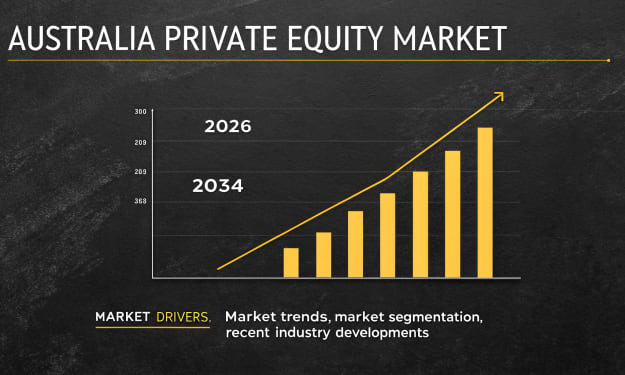
Australia Private Equity Market: Strategic Capital, Business Transformation & Long-Term Value
According to IMARC Group, the Australia private equity market reached a size of USD 23.9 Billion in 2025 and is projected to expand to USD 48.5 Billion by 2034, growing at a compound annual growth rate (CAGR) of 8.21% during 2026–2034. This robust growth outlook reflects the rising importance of private equity as a strategic source of long-term capital for business expansion, restructuring and value creation across Australia. As public markets become more volatile and capital efficiency takes center stage, private equity firms are increasingly viewed as active partners rather than passive financiers. The Australian private equity landscape is evolving through higher buyout activity, expanding venture capital participation and increasing exposure to infrastructure, real estate and technology assets. Supported by improving investor confidence and a maturing deal ecosystem, the market is transitioning into a critical pillar of Australia’s broader investment and corporate transformation framework.
By Shrestha Roya day ago in Futurism


Comments
There are no comments for this story
Be the first to respond and start the conversation.