
Why Apple’s Best Days Are Behind It
The Subtle Fall of a Tech Giant Hiding in Plain Sight
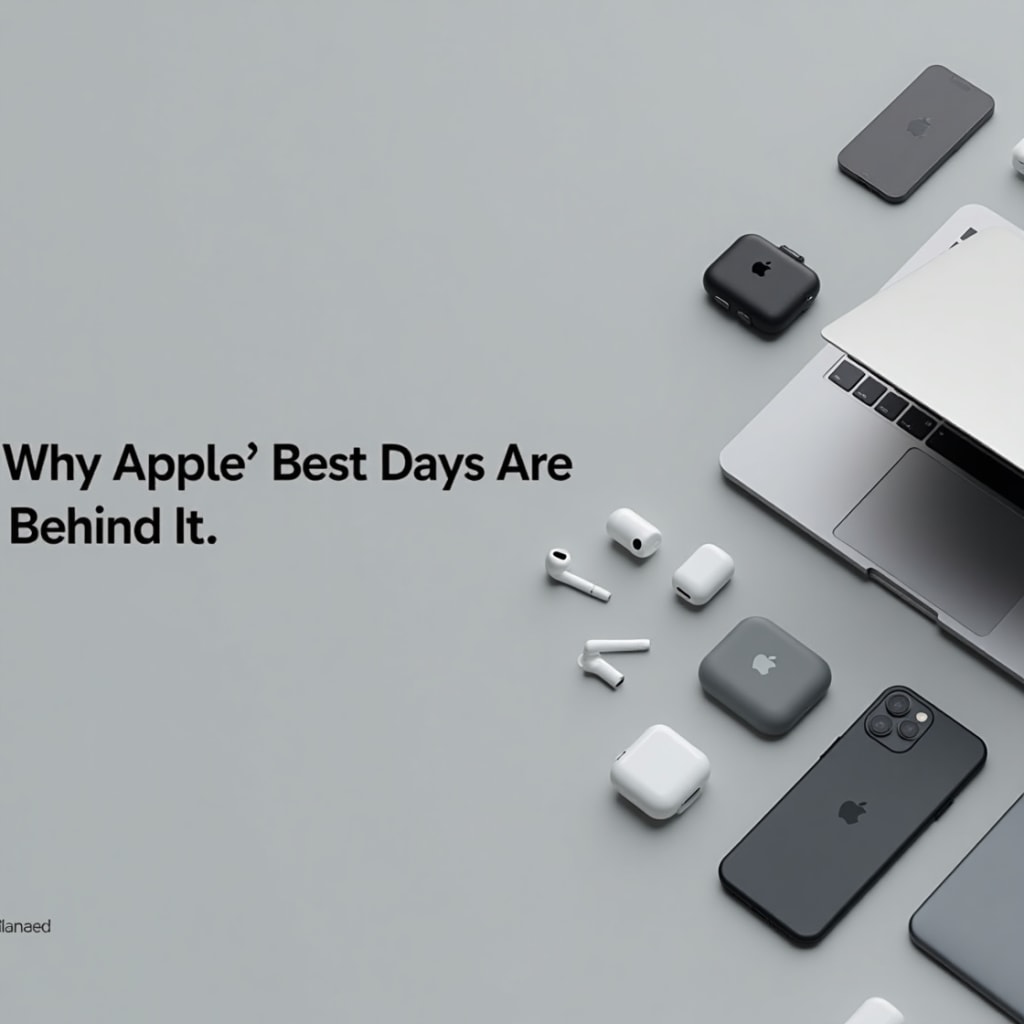
For over two decades, Apple Inc. has been the crown jewel of Silicon Valley. From revolutionizing personal computing to reshaping the mobile phone industry, Apple didn’t just follow trends—it created them. But here’s a controversial take: Apple’s best days are behind it.
While the company remains a financial powerhouse, cracks are forming under the surface. Loyalty is slipping. Innovation is stalling. And rivals are catching up—fast.
1. Innovation Has Slowed to a Crawl
Let’s be honest—when was the last time Apple truly blew our minds?
The iPhone was groundbreaking in 2007. The iPad in 2010 was impressive. AirPods reshaped wearable tech. But recently? Apple has leaned heavily on incremental updates. The iPhone 13, 14, 15… they look eerily similar. The design tweaks are minor. The software improvements are nice, but not revolutionary.
Compare that to the energy of the Steve Jobs era, when each keynote was a cultural moment. Today, Apple’s product launches feel predictable. There’s a sense that they’re playing it safe—optimizing profit over pushing boundaries.
2. Apple Is No Longer the Cool Brand
Apple once represented rebellion, creativity, and sleek modernity. Today, it represents… the status quo.
Teenagers and Gen Z aren’t as infatuated with Apple as Millennials were. In fact, platforms like TikTok are filled with creators who mock the lack of customization on iPhones compared to Android. Tech-savvy users are turning to Samsung, Google Pixel, and even Chinese brands like Xiaomi and OnePlus for cutting-edge features and flexibility.
The cult-like devotion Apple once enjoyed is fading. People no longer line up around the block for the latest iPhone. Apple has become “just another phone brand”—with a premium price tag.
3. The Apple Ecosystem Is a Walled Garden—and It’s Backfiring
Apple’s ecosystem used to be its greatest strength: Mac, iPhone, iPad, AirPods, Watch—everything just works together.
But in 2025, that strength is turning into a cage.
People want choice. They want compatibility. Apple’s refusal to adopt universal standards like USB-C (until forced by regulation) and their tight control over the App Store has frustrated users and developers alike.
In regions like Europe, Apple is facing legal heat over monopolistic practices. Developers are increasingly questioning why Apple takes a 30% cut of their earnings just to appear on the App Store. These battles are chipping away at Apple’s pristine image.
4. China Is a Growing Threat
A decade ago, Apple owned the premium smartphone market in China. But now, Chinese brands like Huawei, Oppo, and Xiaomi are taking over—offering better hardware at lower prices.
Add to that growing geopolitical tensions, government restrictions, and a movement to “buy local,” and Apple’s dominance in one of its largest markets is being seriously challenged.
In 2023 and 2024, Apple saw declining sales in China. If this trend continues, it could mark the beginning of a long-term decline in global market share.
5. AI Is the Future—and Apple Is Behind
While Microsoft integrates ChatGPT into everything from Word to Windows, and Google pushes AI into Search and Android, Apple has been oddly silent on the AI front.
Sure, they’ve made moves—like enhancing Siri or making quiet acquisitions—but compared to the AI arms race happening right now, Apple feels like it’s standing still.
In a world where people expect intelligent assistants, creative tools, and smart automation, Apple’s reluctance to lead in AI could prove costly.
If Apple doesn’t catch up fast, its devices could feel outdated—not because of hardware, but because of what they can’t do compared to competitors.
6. Tim Cook Is Not a Visionary—He’s a Manager
Steve Jobs was an innovator. He saw the future and built it.
Tim Cook is a master of operations. He made Apple a $3 trillion company by optimizing supply chains, maximizing margins, and pleasing shareholders.
But you can’t spreadsheet your way to the next iPhone moment.
Under Cook’s leadership, Apple has become more cautious, more corporate. The magic, the mystery, the bold risks—many feel they died with Jobs. And unless someone new steps up with radical vision, Apple may slowly drift into irrelevance—just like Nokia or BlackBerry once did.
So, Is Apple Doomed? Not Yet…
Let’s be clear: Apple isn’t going to vanish tomorrow. It still sits on mountains of cash, controls a massive user base, and dominates multiple product categories.
But here’s the warning: giants fall slowly—until they fall all at once.
If Apple doesn’t reignite its culture of innovation, embrace open ecosystems, and lead in AI, it risks becoming the next case study in corporate complacency.
It won’t happen overnight. But it will happen—if they don’t change course.
Final Thoughts: The Clock Is Ticking
Apple's legacy is secure. But legacies don’t sell phones. Vision does. Innovation does. Risk does.
Right now, Apple looks more like IBM in the '90s than Apple in the 2000s—powerful, respected, but slowly becoming irrelevant to the next generation.
If that doesn’t change, we might one day say, “Remember when Apple ruled the world?”
About the Creator
Keep reading
More stories from GadgetGround and writers in Futurism and other communities.
This Is How Tesla Will Die
Introduction Tesla is often seen as untouchable in the electric vehicle (EV) world—an innovation juggernaut led by the audacious Elon Musk. It revolutionized the auto industry, turned battery technology into a global obsession, and made electric sexy. But in the world of tech and business, giants can and do fall. Blockbuster, Nokia, and Kodak once ruled their sectors before vanishing from relevance. Could Tesla share the same fate?
By GadgetGround9 months ago in Futurism




Comments
There are no comments for this story
Be the first to respond and start the conversation.