
Why Flexible Displays Are Shaping the Future of Visual Technology
The Move Toward Lightweight, Durable, and Adaptable Screens


Flexible Displays and Their Growing Importance
Display technology is advancing rapidly as consumers and industries seek devices that are more portable, versatile, and immersive. Among the most transformative innovations is the development of flexible displays. These screens can bend, curve, or fold without losing functionality, opening entirely new possibilities for product design and user interaction.
Flexible displays are redefining how visual information is delivered across smartphones, wearables, automotive panels, and advertising systems. Their adoption reflects a broader trend toward mobility, durability, and creative engineering. Instead of rigid surfaces, manufacturers are increasingly embracing adaptable materials that enhance convenience and performance.
Understanding What Flexible Displays Really Involve
Flexible displays are built using advanced substrates such as plastic or thin metal foils rather than traditional glass. This structure allows the screen to withstand bending while maintaining image quality.
They may incorporate technologies like OLED or micro-LED to deliver vibrant colors, energy efficiency, and slim profiles. The result is a lightweight design suitable for compact or unconventional form factors.
Key Factors Driving Interest in Flexible Displays
One of the strongest drivers is demand for innovative consumer electronics. Foldable smartphones and rollable devices offer portability while preserving large viewing areas.
Durability is another important factor. Flexible materials can be more resistant to breakage, making products longer lasting.
Manufacturers are also motivated by the desire to differentiate their offerings through unique aesthetics and enhanced usability.
Click here if you want to know more about Flexible Display Market
The Role of Innovation and Engineering
Continuous research is improving the performance of flexible screens. Advances in material science allow for thinner layers, higher resolution, and better resistance to environmental stress.
Engineers are developing hinges, coatings, and protective films that maintain clarity while supporting repeated movement. Production techniques are becoming more refined, enabling consistent output at high quality.
Integration with touch sensitivity and advanced sensors further expands functionality.
Changing Consumer and Industry Expectations
Users increasingly expect devices that adapt to their lifestyles. Screens that fold or wrap around surfaces offer new ways to interact with information.
Industries beyond consumer electronics are also adopting flexible displays. Automotive manufacturers use curved panels for dashboards, while retailers experiment with dynamic signage that fits diverse environments.
As familiarity grows, demand for versatile form factors continues to rise.
Benefits and Strategic Advantages
Flexible displays offer several important benefits:
• Design Freedom: Enables creative product development.
• Portability: Combines large screens with compact storage.
• Enhanced Durability: Less prone to shattering.
• Energy Efficiency: Advanced technologies reduce power use.
• Broad Applications: Suitable for many industries.
These strengths position flexible displays as key components of next-generation devices.
Regional Expansion and Industrial Integration
Technology hubs around the world are investing in research and manufacturing capabilities for flexible displays. Partnerships between electronics companies and material suppliers accelerate commercialization.
Adoption is spreading into sectors such as healthcare, transportation, and entertainment, demonstrating wide applicability.
Challenges Facing Flexible Displays
Despite impressive progress, challenges remain. Manufacturing complexity can increase production costs. Maintaining long-term durability while preserving visual performance requires ongoing refinement.
Design integration with existing hardware may also demand new engineering solutions. Additionally, consumers must adapt to unfamiliar product formats.
Continued innovation will be necessary to address these concerns.
Future Outlook of Flexible Displays
The future of flexible displays is expected to include thinner, more resilient materials and expanded interactive capabilities. Rollable televisions, wearable screens, and adaptive surfaces may become more common.
As ecosystems evolve, flexible displays could integrate seamlessly with augmented reality and smart environments. Their ability to transform device architecture ensures lasting influence.
Conclusion
Flexible displays are revolutionizing visual technology by enabling adaptable, durable, and innovative screen designs. Driven by engineering breakthroughs and changing expectations, they are reshaping multiple industries.
With ongoing research and broader adoption, flexible displays are poised to remain central to the evolution of digital experiences in the years ahead.
About the Creator
deepanshu Thakur
A dedicated Market Research Professional specializing in in-depth analysis, industry forecasting, and strategic insights. Known for precision, reliability, and delivering research that adds real business value.
Keep reading
More stories from deepanshu Thakur and writers in Futurism and other communities.
Why Cinnamon Remains Essential in Global Food and Wellness
Cinnamon and Its Growing Importance Cinnamon has been valued for centuries for its warm flavor, aromatic qualities, and versatile applications. Today, it continues to hold a prominent place in kitchens, food production, and wellness traditions around the world. What was once traded along ancient routes as a prized spice is now widely integrated into daily consumption across cultures.
By deepanshu Thakurabout 19 hours ago in Futurism
How AI Became My Personal Teacher🤖📚
Today, I want to share a practical example of using AI in learning and work, based on my own experience. Recently, I took a qualification exam to apply for a job. The material was extensive, complex, and entirely in English. Although English itself isn’t a problem for me, the sheer volume of information was overwhelming. After reading the entire course, I felt like I was “hearing bells but not knowing in which church they are ringing.” I recognized terms and concepts, but I struggled to connect them into one coherent picture. There were definitions, frameworks, processes, and detailed explanations — all important, yet difficult to organize in my head.
By Piotr Nowak6 days ago in Futurism
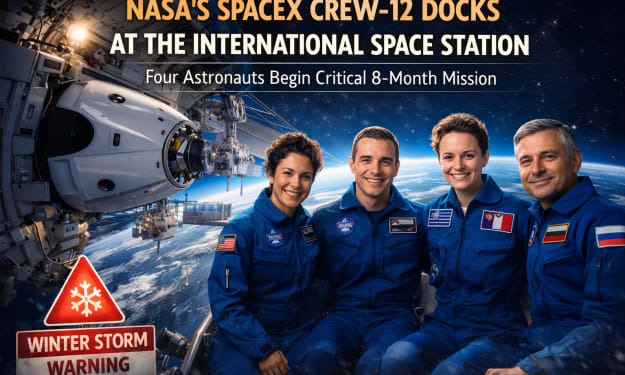
NASA’s SpaceX Crew-12 Docks at the International Space Station: Four Astronauts Begin Critical 8-Month Mission
The crew members of NASA’s SpaceX Crew-12 mission successfully docked Saturday afternoon after launching before dawn Friday from Cape Canaveral. Their arrival restores the space station’s staffing levels and begins an ambitious eight-month research mission focused on deep-space exploration and advancing food production technologies in orbit.
By Adil Ali Khan2 days ago in Futurism



Comments
There are no comments for this story
Be the first to respond and start the conversation.