
February the Fiery Month
Certainly down under

I have been trying not to get totally consumed by the Winter Olympic Games from Italy. They seem to be televised almost 24 hours a day. If it is not live, then it is a replay.
I'm always amused by the weather differences. It can be freezing in Europe and North America, but Australia often sees temperatures over 30°C.
I hate the heat of summer, and February is one of the hottest, if not the hottest, months of the year. In Western Australia, it is my worst time of the year.
In some bizarre way, watching the winter Olympics makes me feel a bit cooler. This year has been unusually hot. A couple of weeks ago, much of the country was over 40 °C (103°F). Some parts hit 49 °C (121°F). We regularly get weeks of 30 °C, one after another.
Some of you are probably thinking, " Why don’t you just move and why did you go to WA if you don’t like it hot?
Good question. I didn’t come here by choice, and as for moving, I have the old hound dog attitude. You know the one that sat on a thorn but was just too darn lazy to get up.
Of course, weigh all that heat and hot, dry winds. February is also a fire month. Many of the worst fires have occurred in February.
• In 2009, the Black Saturday fires in Victoria took 173 lives. They also destroyed more than 2,000 homes and burned a million acres of land.
• In 1983, the Victorian Ash Wednesday fires claimed 75 lives, 2,400 homes, and over one million acres of land.
• In 1967, the Black Tuesday fires in Tasmania claimed 64 lives, 1,293 homes, and 650,000 acres of land.
I particularly remember the Ash Wednesday bushfires in 1983. On February 16, 1983, a series of bushfires swept across southeastern Australia. In just twelve hours, over 180 fires spread rapidly. Hot winds reached up to 110 km/h (68 mph), causing severe damage in Victoria and South Australia.
Why do I remember these?
On that day, I was at an agricultural research station, drawing blood from sheep. I was studying the causes of flystrike in sheep and, at the time, taking blood samples from them. I remember it coming over very brown and smoky. I didn’t think much of it at the time; I was too concerned with how to induce flystrike.
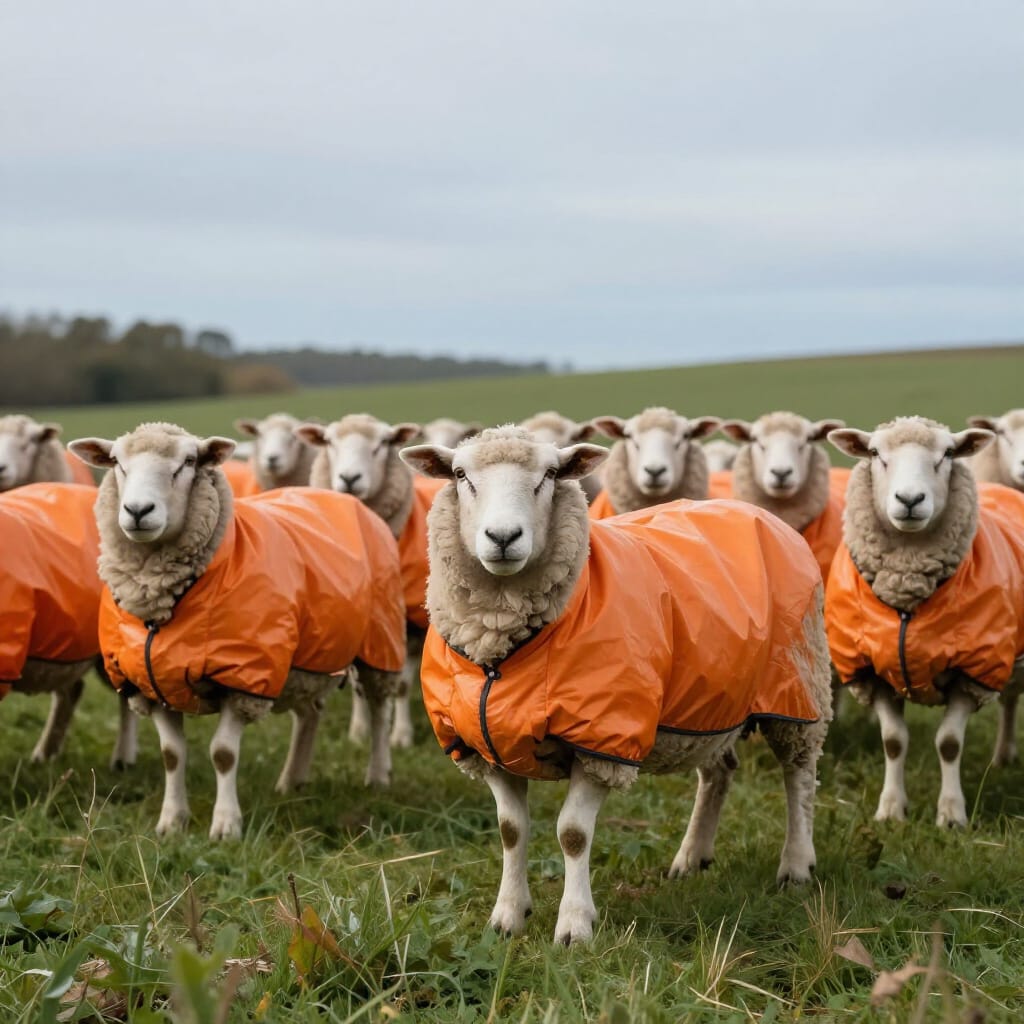
I had to soak the sheep in a dip, then put orange coats on half of them to build up the humidity. I always chuckle to myself every time I think about it. The first time the coats were put on, the sheep went crazy. They could not work out what these orange members of their flock were. It was hilarious.
Little did we know at the time that several bushfires were out of control and headed straight for us. By the time we left the drive back to the university, the road was barely visible. Luckily, the wind changed direction. My orange sheep were safe.
It is also hard to comprehend that these fires are thought to have killed about 3 billion animals.
During a fire, embers can travel as far as 40 kilometres ahead. Fire speeds can exceed 25 kilometres per hour. For every 10 degrees of slope, they can double their speed. Wildlife has no chance against these odds. Even if they do survive, they are left with no home and no food.
February is also the hottest month for lovers. February 14, Valentine’s Day, is the day set aside for lovers to confess their undying love. I have never understood why there must be a special day for this.
If you love someone, shouldn’t you tell them every day?
Rather, it is a day when roses double in price, and chocolates also get more expensive.
If you’re reading this from outside Australia and feeling a chilly February, you are welcome to some of our hot weather! The bushfires, I wouldn’t wish them on anyone.
Author's note: Submitted for Mikeydred's unofficial February challenge:
Till next time,
Calvin
About the Creator
Calvin London
I write fiction, non-fiction and poetry about all things weird and wonderful, past and present. Life is full of different things to spark your imagination. All you have to do is embrace it - join me on my journey.
Reader insights
Outstanding
Excellent work. Looking forward to reading more!
Top insights
Compelling and original writing
Creative use of language & vocab
Easy to read and follow
Well-structured & engaging content
Expert insights and opinions
Arguments were carefully researched and presented
Heartfelt and relatable
The story invoked strong personal emotions
Masterful proofreading
Zero grammar & spelling mistakes
On-point and relevant
Writing reflected the title & theme
Keep reading
More stories from Calvin London and writers in FYI and other communities.
The Pulse of a Nation: Bangladesh Votes Today in a Post-Revolutionary Landmark
Today, February 12, 2026, the streets of Dhaka are quieter than usual, but the atmosphere is heavy with anticipation. At 7:30 AM local time, polling stations across Bangladesh opened for the first general election since the "Monsoon Revolution" of 2024 toppled the 15-year regime of Sheikh Hasina.
By Shazzed Hossain Shajala day ago in FYI




Comments (3)
❤️❤️I felt like I was flung across the sun, only stopping for a second each time I read your use of polysyndeton [repetition of conjunctions]. "A couple of weeks ago, much of the country...". I felt a slight difference, even in my cold room. The men aren't loving us, so the chocolate and the roses get more expensive.
I had no idea it was hot there in February. Here in Texas, our weather has been back n forth. One day is nice and tolerable, next day, freezing. I hate the wildfire risks! I used to live in Yosemite California and we got a really bad fire up in the mountains. Started from a strike of lightning. I was truly worried and saddened for all the animals. I'm glad your sheep were safe!
Wow what a story fabulous as always I think my ideal place to live would be Iceland I hate the heat ❤️🐦⬛❤️