
Retinal Detachment Treatment Explained: How Timing Can Save Your Vision
Retinal Detachment Treatment: Why Timing Matters for Vision

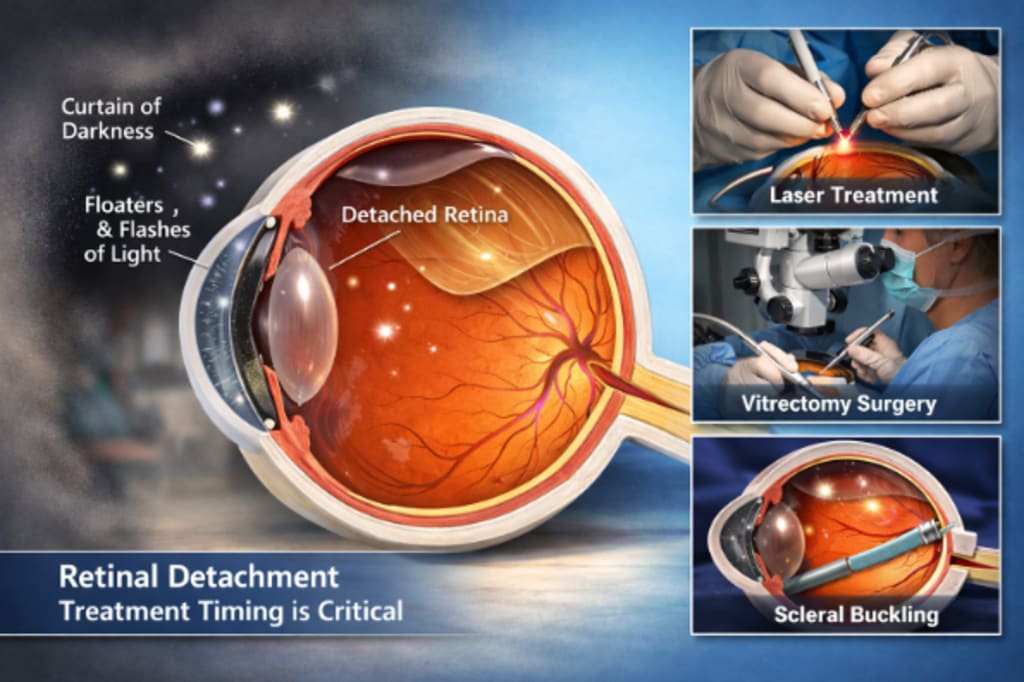
Retinal detachment is a medical emergency that can lead to permanent vision loss if not treated promptly. The retina, located at the back of the eye, plays a crucial role in transmitting visual information to the brain. When the retina detaches from its normal position, it can no longer function properly, leading to blurred vision, flashes of light, or even complete vision loss. However, with timely intervention and the right retinal detachment treatment, it’s possible to prevent long-term damage and restore vision.
What is Retinal Detachment?
Retinal detachment occurs when the retina, the light-sensitive layer of tissue at the back of the eye, separates from its underlying supportive tissue. This condition can happen suddenly and is often accompanied by symptoms such as:
- Flashes of light
- A sudden increase in floaters
- A shadow or curtain-like effect in the field of vision
If you notice any of these symptoms, it’s crucial to seek medical attention immediately. Delaying treatment can result in permanent vision loss, making timely retinal detachment surgery essential for a successful recovery.
How Quickly Does Retinal Detachment Need Treatment?
The key to saving your vision is how quickly you seek treatment. Retinal detachment treatment timing is critical. In general, the sooner retinal detachment is addressed, the better the outcome. If treated early, there is a higher chance of restoring vision and preventing further damage.
When to Seek Immediate Treatment
If you experience any signs of retinal detachment, such as sudden flashes of light or a curtain-like shadow over your vision, you should seek help from an eye specialist right away. Early intervention can help prevent complications and reduce the risk of irreversible damage.
Quick Facts:
- Early treatment can save vision in up to 90% of cases.
- Delayed treatment increases the risk of permanent blindness.
How Timing Affects Vision Loss in Retinal Detachment
The timing of retinal treatment plays a significant role in the outcome of the surgery. Vision loss typically occurs because the retina cannot transmit signals to the brain once it detaches. The longer the retina remains detached, the greater the chance that the retina will suffer irreversible damage. Here’s why timing is crucial:
- Damage to retinal cells: The longer the retina is detached, the more likely retinal cells are to die. If these cells are damaged beyond repair, restoring vision becomes impossible.
- Increased difficulty of surgery: When retinal detachment is left untreated for too long, it can become more challenging to reattach the retina, requiring more complex surgery and a longer recovery period.
- Higher risk of complications: Delayed treatment can increase the chances of complications, including infections, retinal scarring, and increased pressure in the eye.
Pro Tip: If you have a family history of retinal problems or if you’ve had previous eye surgeries, schedule regular eye exams with an ophthalmologist to detect any potential issues early.
What Are the Different Types of Retinal Detachment Treatment?
There are several treatment options for retinal detachment, and the choice of treatment depends on the type and severity of the detachment. Common methods include:
1. Laser Surgery (Laser Photocoagulation)
Laser surgery is often used for minor retinal tears or detachment. The procedure involves using a laser to create a barrier around the tear, which prevents further detachment. It’s usually a quick outpatient procedure and has a high success rate when done early.
2. Pneumatic Retinopexy
This procedure is often used for smaller detachment areas. A gas bubble is injected into the eye to press the retina back into place. The patient may need to maintain a specific head position for several days to keep the gas bubble in place.
3. Scleral Buckling Surgery
This is a more invasive procedure where a silicone band is placed around the eye to hold the retina in place. It’s often used when the detachment is more severe or involves a larger portion of the retina.
4. Vitrectomy
In cases of severe detachment, a vitrectomy may be necessary. This surgery involves removing the vitreous gel from inside the eye to relieve tension on the retina. It’s followed by the injection of a gas bubble or oil to hold the retina in place.
When Should You Get Surgery for Retinal Detachment?
If you experience symptoms of retinal detachment, seek medical attention immediately. If a retinal detachment surgery is necessary, the timing of the procedure is crucial. Delaying surgery can lead to further damage to the retina and make it more difficult to restore vision.
It’s important to note that not all cases of retinal detachment require surgery. Some people may only need laser treatment or pneumatic retinopexy, while others may require more complex procedures. A retina specialist will assess your condition and determine the best course of action.
Note: Surgery may be required within 24 to 48 hours after the symptoms appear to ensure the best chances of success.
How to Prevent Retinal Detachment
While retinal detachment can’t always be prevented, there are steps you can take to lower your risk. These include:
- Regular eye exams: Early detection of eye diseases like diabetic retinopathy or high myopia can help prevent detachment.
- Managing underlying health conditions: Controlling blood sugar, managing hypertension, and taking care of your general health can reduce your risk.
- Protecting your eyes from trauma: Wear protective eyewear during high-risk activities like sports, work in hazardous environments, or any situation where you could be at risk of eye injury.
Final Words
Retinal detachment is a medical emergency that can result in permanent vision loss if left untreated. The success of the retinal detachment procedure depends heavily on how quickly the condition is diagnosed and treated. Early intervention is key to preventing further damage and restoring vision. If you experience symptoms of retinal detachment, don’t wait—seek professional help immediately to get the treatment you need.
For more information on retinal health, check out the National Eye Institute for a more detailed guide.
Key Takeaways:
Retinal detachment is a serious condition that requires immediate attention. The sooner you seek treatment, the better the chances of saving your vision.
Retinal detachment surgery is essential for restoring vision, but the timing of the surgery plays a significant role in the outcome.
Early detection and treatment can significantly improve the success rate of surgery and reduce the risk of permanent vision loss.
FAQs:
1. How long can retinal detachment go untreated?
Retinal detachment requires immediate treatment. Delaying treatment can lead to permanent vision loss, and the longer it’s untreated, the more difficult it becomes to restore vision.
2. Can laser surgery fix retinal detachment?
Laser surgery can effectively treat minor retinal tears and detachments. However, if the detachment is more severe, other surgical options, such as scleral buckling or vitrectomy, may be necessary.
3. What are the risks of delayed retinal detachment surgery?
Delaying surgery for retinal detachment can lead to further damage to the retina, making the detachment harder to repair. It also increases the risk of complications, including permanent vision loss.
About the Creator
Franklin Norton
Franklin Norton is a dedicated health writer specializing in eye care. With a passion for vision health, he educates readers on eye conditions, treatments, and preventive care for optimal eye wellness.
Keep reading
More stories from Franklin Norton and writers in FYI and other communities.
Vitrectomy Surgery Explained: When It’s Recommended and What Patients Should Expect
Vitrectomy surgery is a type of eye surgery that involves the removal of the vitreous gel from the eye. The vitreous is the clear, gel-like substance that fills the center of the eye and helps it maintain its shape. This surgery is primarily recommended to treat a variety of retinal problems, and it plays a vital role in restoring vision for patients with specific eye conditions.
By Franklin Norton30 days ago in FYI
Craft Over Catharsis Challenge Winners
Craft Over Catharsis? What the hell does that even mean? The phrase came out of a curation meeting as a genuine question. We had been noticing that many challenge entries, across prompts, naturally gravitate toward trauma, grief, and personal reckoning. That makes sense. Writing is often cathartic. It's one of the ways we process what we've lived through.
By Vocal Curation Team2 days ago in Resources




Comments
There are no comments for this story
Be the first to respond and start the conversation.