
Russian-speaking Countries Outside the Former USSR
Which countries outside the former Soviet Union speak Russian

The Russian language, with its rich history and cultural significance, is not confined to the borders of Russia or the countries of the former Soviet Union. Its influence extends far beyond, reaching various parts of the world where Russian-speaking communities have settled and thrived. This article explores the countries outside the former USSR where Russian is spoken, examining the historical context, demographic trends, and the cultural and societal impact of these communities.
Historical Context
The spread of the Russian language outside the former USSR can be attributed to several historical factors, including migration, political alliances, and economic opportunities. During the Soviet era, Russian was promoted as the lingua franca across the Soviet republics, and its influence extended to countries that had close ties with the USSR. Additionally, political upheavals, economic challenges, and the search for better living conditions have led to significant Russian-speaking diasporas in various parts of the world.
Israel
One of the most prominent Russian-speaking communities outside the former USSR is in Israel. Following the dissolution of the Soviet Union in the early 1990s, a significant wave of Jewish immigration from the former Soviet republics, particularly Russia and Ukraine, brought hundreds of thousands of Russian speakers to Israel. This migration was driven by the opportunity for a new life in a country with strong historical and cultural ties to the Jewish people.
Today, Russian speakers in Israel constitute a substantial portion of the population. They have established vibrant communities, preserving their language and cultural traditions while integrating into Israeli society. Russian-language media, schools, and cultural organizations are prevalent, reflecting the community's influence and contribution to the country's diversity.
Germany
Germany is another country with a significant Russian-speaking population, primarily due to historical migration patterns. In the aftermath of World War II, many ethnic Germans from the Soviet Union and Eastern Europe migrated to Germany. Additionally, the dissolution of the USSR prompted a wave of immigration from former Soviet republics, further increasing the number of Russian speakers.
The Russian-speaking community in Germany is diverse, comprising ethnic Germans, Jews, and other individuals from various backgrounds. This community has made notable contributions to German society, particularly in the fields of business, science, and culture. Russian-language newspapers, television channels, and cultural events are common, catering to the needs and interests of the Russian-speaking population.
United States
The United States has long been a destination for immigrants from around the world, including those from the former Soviet Union. The Russian-speaking community in the US began to grow significantly during the late 19th and early 20th centuries, with waves of Jewish immigration from Eastern Europe. The trend continued during the Soviet era, with political dissidents and refugees seeking freedom and opportunities in America.
New York City, particularly the neighborhood of Brighton Beach in Brooklyn, is known for its vibrant Russian-speaking community. Often referred to as "Little Odessa," Brighton Beach is home to numerous Russian-language businesses, schools, and cultural institutions. Other cities with notable Russian-speaking populations include Los Angeles, San Francisco, and Chicago. The community is well-integrated into American society while maintaining strong ties to its linguistic and cultural heritage.
Canada
Canada, known for its multiculturalism and welcoming attitude towards immigrants, also hosts a significant Russian-speaking population. Major cities such as Toronto, Vancouver, and Montreal have seen an influx of Russian-speaking immigrants, particularly after the collapse of the Soviet Union.
The Russian-speaking community in Canada is diverse, including individuals from various former Soviet republics. They have established cultural organizations, language schools, and media outlets that serve to preserve their heritage and facilitate integration into Canadian society. The community's contributions to Canada's cultural, academic, and economic landscape are notable, reflecting the talent and resilience of its members.
Australia
Australia's Russian-speaking community, although smaller than those in other countries, is still significant and vibrant. The community began to grow in the post-World War II era, with immigrants from the Soviet Union seeking new opportunities in Australia. The trend continued in the 1990s, following the dissolution of the USSR.
Sydney and Melbourne are home to the largest concentrations of Russian speakers in Australia. These cities boast Russian-language cultural centers, schools, and religious institutions that support the community's linguistic and cultural needs. The Russian-speaking community in Australia has successfully integrated into the broader society while maintaining a strong sense of identity and heritage.
The Middle East
Beyond Israel, several other countries in the Middle East have Russian-speaking communities, primarily due to labor migration and economic opportunities. For instance, the United Arab Emirates, particularly Dubai, has attracted a substantial number of Russian-speaking expatriates working in various sectors such as real estate, hospitality, and finance.
Russian-speaking communities in the Middle East often establish social networks and cultural organizations that provide support and maintain connections to their language and traditions. These communities contribute to the diverse and dynamic landscape of the region.
Conclusion
The presence of Russian-speaking communities outside the former USSR is a testament to the global influence and reach of the Russian language. From Israel and Germany to the United States, Canada, Australia, and the Middle East, these communities have established vibrant enclaves that preserve their linguistic and cultural heritage while contributing to the societies they inhabit.
For those interested in exploring more about the history and culture of Russian-speaking communities and other fascinating historical topics, the Balkan History & Culture (@BalkanHistoryAndCulture) YouTube channel offers a wealth of informative and engaging content. Engaging with such resources can provide valuable insights into the rich tapestry of human migration and the enduring impact of linguistic and cultural exchange.
As we continue to explore the diverse ways in which languages and cultures intersect across the globe, the story of the Russian-speaking diaspora serves as a powerful reminder of the resilience and adaptability of human communities. These communities, through their unique experiences and contributions, enrich the cultural mosaic of the world and highlight the dynamic nature of linguistic and cultural identity.
About the Creator
M. R.
Just a random guy with a lot of interests, including writing and experimenting with AI.
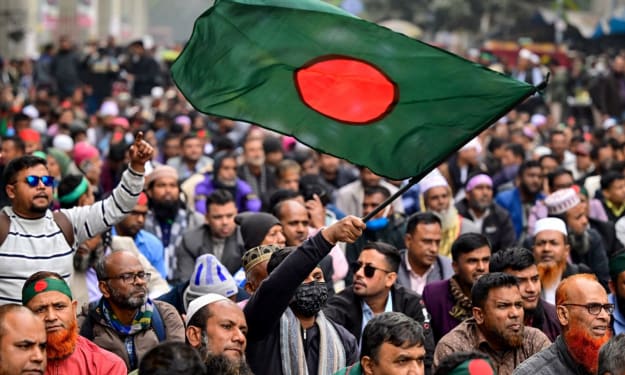
The Pulse of a Nation: Bangladesh Votes Today in a Post-Revolutionary Landmark
Today, February 12, 2026, the streets of Dhaka are quieter than usual, but the atmosphere is heavy with anticipation. At 7:30 AM local time, polling stations across Bangladesh opened for the first general election since the "Monsoon Revolution" of 2024 toppled the 15-year regime of Sheikh Hasina.
By Shazzed Hossain Shajala day ago in FYI



Comments
There are no comments for this story
Be the first to respond and start the conversation.