
How to Develop a Card Game App for Android in 2025: A Complete Guide
Key Steps to Card Game App Development for Android in 2025

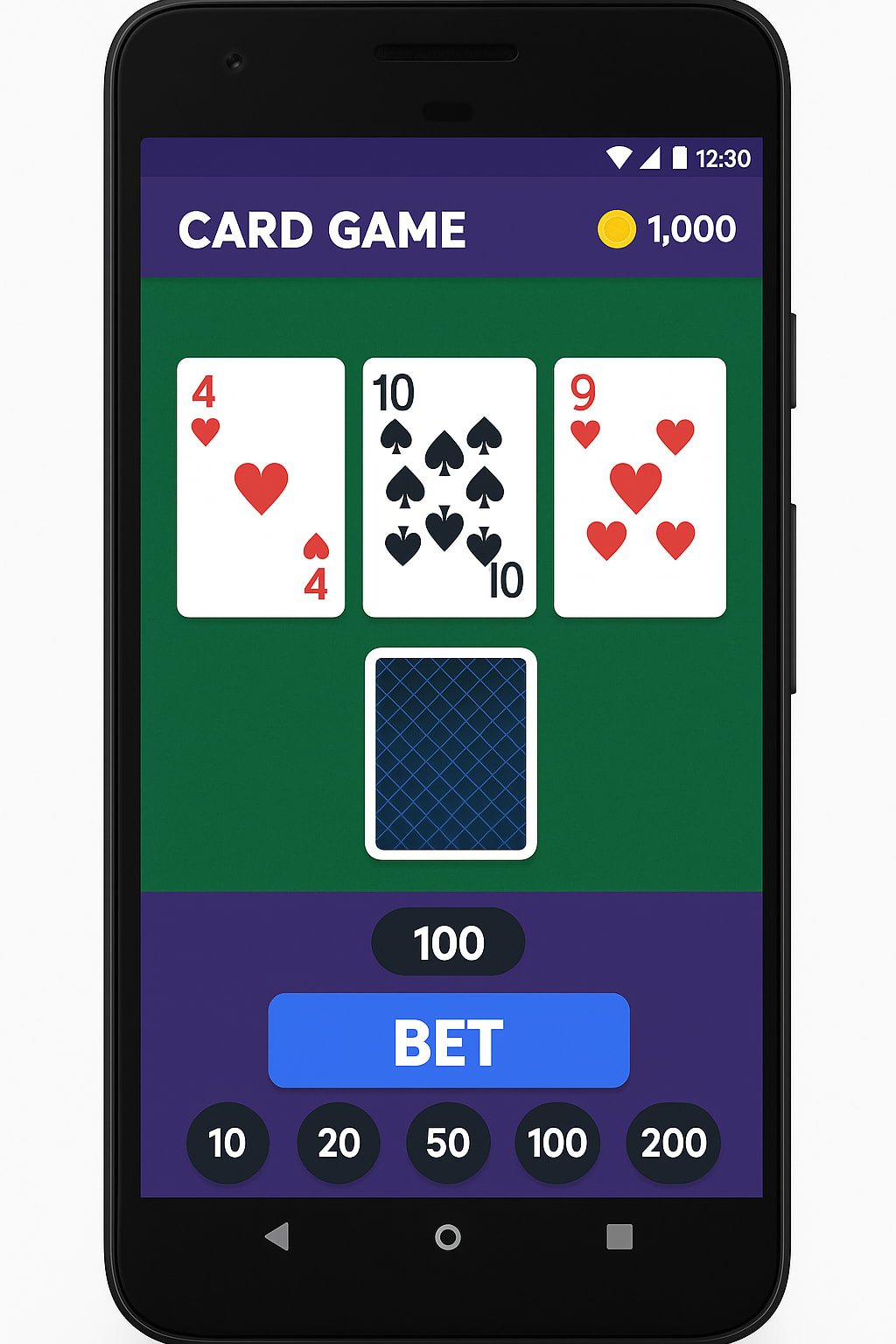
From timeless classics like Poker and Solitare to modern multiplayer card battles, card games continue to dominate the mobile gaming scene. With Android users making up the lion’s share of global smartphone gamers, it’s no surprise that developers worldwide are eager to tap into this evergreen niche.
But how do you develop a card game that is addictive, scalable, and monetizable? Whether you are a startup game studio or a solo developer, this guide breaks down every key step to develop a card game app for Android in 2025.
Let’s get started.
Why Card Games are Still Relevant in 2025?
Card games have evolved beyond casual entertainment. Today’s successful card apps are rich in strategy, social play, and monetization strategies. The genre’s low barrier to entry, lightweight assets, and massive replay value make it ideal for mobile platforms.
The rise of hyper-casual formats, cross-platform sync, and AI-powered bots in single-player modes has only strengthened their appeal. From real money card games like Texas Hold’em to collectible-card games (CCGs), the space is ripe with potential.
How to Develop a Card Game for Android? Step-by-Step Guide
Let’s break down the step-by-step process of developing a card game in 2025.
Step 1: Choose the Right Game Type
Before you can dive into the development process, you must define the type of card game you want to develop. There are a variety of card game genres that are popular in the market. Some of the most common ones are:
Classic card games (Poker, Rummy, Baccarat)
CCGs/TCGs (Hearthstone, Magic: The Gathering)
Multiplayer party games (UNO, bluffing card games)
Custom mechanics card games (Gwent, hybrid games with RPG elements)
Clarity of the type of game you want to develop helps in shaping the game logic, UI/UX, and monetization strategies.
Step 2: Market Research and Competitor Analysis
Market analysis is a crucial step in every development process. It helps you identify your competitors and target audience. Study existing card games in the Google Play Store and focus on elements like:
Gameplay mechanics: What type of gameplay mechanics the audience prefers?
Design patterns: Is there a specific art style or design pattern the audience likes?
User reviews: Spot common pain points and features that users love.
Monetization Models: Ads, in-app purchases, subscription plans, etc.
Step 3: Designing Game Mechanics and Rules
Card games rely heavily on rules and game mechanics like probabilities and player flow. The game mechanics are the core gameplay of the card game. You can use tools like Trello, Figma, or Whimsical to map out game flows and card interactions visually. Outline elements like:
Deck structure and card types
Turn logic and win conditions
Multiplayer rules (if applicable)
AI behavior (for single-player modes)
Step 4: Select the Tech Stack
The tech stack will serve as the heart and soul of your card game. To develop a card game app for Android, your tech decisions matter the most. Here is a commonly used tech-stack to develop games for Android:
Game Engine: Unity (C#) or Godot (GDScript)
Backend: Firebase, Node.js, or Photon Engine
Database: Firestore or MongoDB
Authentication: Google Sign-in, Facebook Login, Guest Mode
Android SDK: Ensure full compliance with the latest Android 14/15 versions
If you are building a hybrid version of your card game, you can also work with Flutter with Reach Native or Flame Engine. However, native engines are still better for advanced animations and player sync.
Step 5: UI/UX Design for Card Games
Players expect intuitive and visually satisfying gameplay. Your UI should include elements like:
Touch-friendly card drag-and-drop
Clean layouts with minimal clutter
Visual feedback (animations for card tally, shuffles, dealing, etc.)
Easy navigation for menus, leaderboards, and settings
Sound elements
Step 6: Multiplayer Setup
If you are planning a real-time or asynchronous multiplayer card game, you must include various real-time multiplayer features that facilitate social gaming. Integrate features like:
Matchmaking systems (random or friend invites)
Chat and emotes
Latency-optimized gameplay logic
Server-side anti-cheat mechanics
Step 7: Monetization Strategies
The primary object of any card game app is to generate revenue. Most card games on the Google Play Store leverage monetization strategies like:
Ad-based Monetization: Rewarded video ads, interstitial ads, playable ads
In-app purchases: Extra chips, exclusive card designs, power-ups, etc.
Subscription Plans: VIP access, ad-free experiences, tournaments
NFT Card Games or Web3 Integration: Still experimental in 2025 but can be a trendsetter.
However, make sure to balance monetization with the gaming experience and ensure that none of the monetization models hamper the gameplay experience in any sense.
Step 8: Testing & Quality Assurance
The next step is to test your game app and ensure that the gameplay mechanics and logic are working as intended. Conduct various types of testing to make sure every component of the Android card game is working as intended. Use:
Unit testing for game mechanics
UI testing across devices
Load testing for multiplayer backend
Beta testing via closed groups or platforms like Firebase App Distribution or Google Play Beta.
Step 9: Publishing on the Google Play Store
After the testing phase is completed, you can publish your game on the Google Play Store and go Live. However, there are a few things, you must check before publishing. Here are some points to consider:
Ensure APK complies with Android policies (target API level)
Create detailed descriptions, screenshots, trailers, and app descriptions
Optimize for keywords like “card game”, “poker”, or specific game names
Localize the game (use languages like Spanish, French, German, Russian, and Japanese besides English)
Card Game Development Trends in 2025
Here are some card game trends to watch out for in 2025. These trends can be a game-changer in the card game industry:
AI Opponents: Generative AI is improving card-bot intelligence dramatically
AR Cards: Augmented Reality allows users to play card games in real-world spaces
Voice Control: Voice-based commands are becoming accessible for visually impaired gamers
Crossplay: Seamless gameplay between Android, iOS, and the web is now a major plus.
Final Words
Learning how to develop a card game app for Android in 2025 is not just about mastering code—it’s about mastering card game development from a holistic perspective. This includes understanding game psychology, player behavior, monetization models, and scalable architecture. With the right tools, user-centric design thinking, and strategic planning, you can build a card game app that doesn’t just sit idle on the Play Store—it engages users, evolves with trends, and generates revenue. If you're serious about developing a card game that stands out in the crowded Android market, start small, stay focused, and keep shuffling the deck of innovation at every turn.
About the Creator
Mythspire Studios
Mythspire is a highly skilled Digital Marketing Specialist at SkillWaala with over 5 years of hands-on experience in the ever-evolving world of digital marketing.
Keep reading
More stories from Mythspire Studios and writers in Gamers and other communities.
Best AI Strategies for Online Poker Game Development in 2025
Online poker has come a long way in recent years, and the rise of artificial intelligence has completely transformed how these games are designed and played. From personalized experiences to unbeatable bots, AI poker game development is unlocking exciting new possibilities for players and developers alike.
By Mythspire Studios8 months ago in Gamers
ARC Raiders Blueprint Farming Guide 2026
Blueprint farming in ARC Raiders is not about luck alone. It is mostly about understanding spawn logic, knowing where players rotate, and managing risk correctly. In 2026, the overall drop structure is more stable than early testing phases, but efficient farming still depends on planning your runs.
By Snow maner3 days ago in Gamers
Artists & Game Devs: Brand Your Work Early!
When you’re first getting into art or game development, branding usually feels like something you can “figure out later.” You’re focused on learning the tools, like a game engine, or different art mediums. Writing code that finally works. Making art that doesn’t look terrible. Branding feels… premature.
By D. E. King7 days ago in Gamers



Comments
There are no comments for this story
Be the first to respond and start the conversation.