
I Need to Tell You All About "Poppy Playtime"
If you are a fan of horror and/or video game play throughs like me, you'll love this mascot horror game triumph. This is seriously one of the most twisted, terrifying horror stories out there, told through a video game. Let me know what you think in the comments!

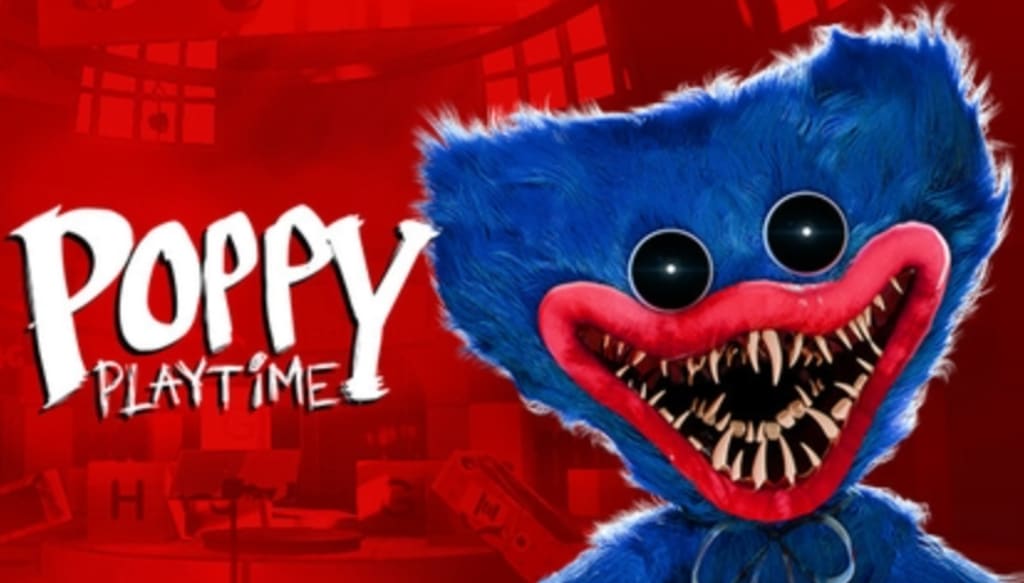
Warning: Spoilers ahead!
I have been a fan of video game play throughs, specifically horror game play throughs, since I was 16 years old. From the original Five Nights at Freddy's game to Emily Wants to Play to Resident Evil, I was intrigued by the lore of each game's unique story and it was thrilling to watch the stories unfold through a YouTuber's perspective. I've never really been a video-gamer myself, so I chose to live vicariously through those brave and experienced enough to play and beat the games.
I started following YouTubers like Markiplier, Jacksepticeye, CrankGameplays, KingWoolz and many others, usually watching each of their play through videos for each new game I discovered to compare the decisions and actions they made as the player. Did they take the time to search all the areas in the game thoroughly to find Easter Eggs or hidden clues? Which of them won boss battles the fastest? Which of them had the most priceless reactions to jump scares? Did their individual style of gameplay affect the overall outcome of the game itself?
All very important questions for an avid horror game enthusiast like me.
Over the years, I have found certain horror games I never get tired of learning more about. I experienced this with Resident Evil 7 (2017) and Resident Evil Village (8, 2021) in particular. Both are widely considered modern horror game masterpieces due to their high-quality graphics, complex and horrifying stories and immersive first-person approaches.
These days however, I find myself on the edge of my seat when it comes to watching play throughs of a more recent horror game: An episodic, survival-based, mascot horror game know as "Poppy Playtime."
What Is Poppy Playtime?
This might be a hot take to other nerds out there, but I find the lore surrounding Poppy Playtime far more interesting and far more terrifying compared to the more popular mascot horror game Five Nights at Freddy's. Sorry, had to get that off my chest.
Poppy Playtime was first released in 2021 by indie video game developer Mob Entertainment. Specifically, the first chapter of the game was released in 2021, giving everyone just an hour and a half long taste of the game series to come.
Set in an abandoned toy factory owned by the fictional toy-making company, "Playtime Co.," you play as an unknown former employee of the factory. After receiving a mysterious letter in the mail from Playtime Co. in the year 2005, the player returns to the factory 10 years after all of the staff within disappeared without a trace. Told to "find the flower," the twisted journey begins.
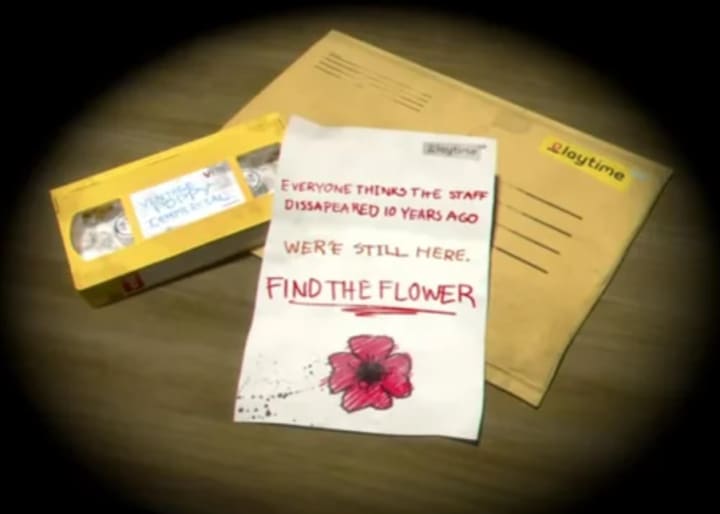
Chapter One: A Tight Squeeze is pretty short and straight forward. As the player, you explore the factory and unlock new areas by solving puzzles. To solve these puzzles and progress further, the game features a cool gadget called the "GrabPack," a backpack equipped with two extendable hands. Depending on which hands the player has found and attached to the GrabPack, these hands can be used to pick up objects, pull and reach objects from a distance, push buttons, conduct electricity, launch flares, unlock doors, or access high security areas. In the first chapter, the GrabPack's abilities are pretty limited.
By the end of the first chapter, the player is forced to flee from and defeat "Huggy Wuggy," the face of the entire Poppy Playtime game. Huggy Wuggy is a giant, blue creature covered in fur, with long limbs and a big smile. He somewhat resembles a Sock Monkey toy, popular from the 1930s to the 1970s. Interestingly enough, the game reveals that Playtime Co. was founded in 1930 by a man named Elliot Ludwig and quickly became a premier toy manufacturer, bringing joy to children worldwide up until the staff's disappearance in 1995. I mention this detail as I find it quite captivating how the game incorporates ideas and designs for toys that make sense for the time period during which it takes place.
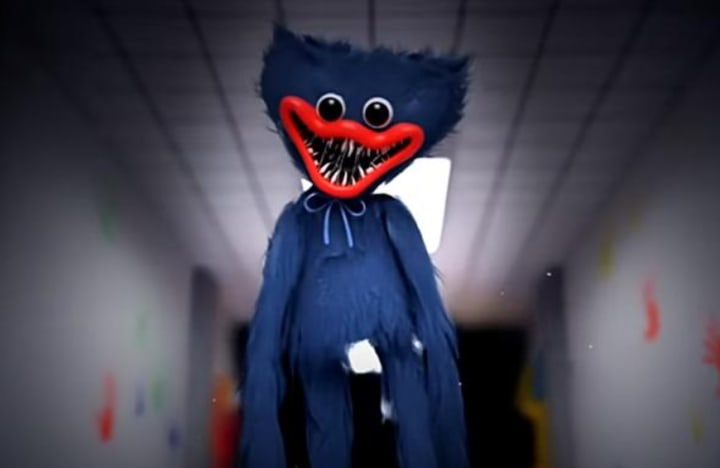
Unlike Sock Monkey toys however, Huggy is about 18 feet tall, exceedingly fast-moving and has rows of razor-sharp teeth hidden behind his friendly smile. We are not sure why he exists or what his purpose is in the factory. All we know as the player is that he wants to kill and eat us. However, once you successfully complete the chase sequence at the end of the chapter, you are able to send Huggy careening down into the depths of the factory, seemingly for dead.
We then find a video tape and have the option to the play the recording, which shows us video footage too staticky to see. But the audio reveals it is a scientist's final log, talking about an Experiment 1006, also known as "The Prototype," the game's primary antagonist throughout each of the chapters. The scientist explains that The Prototype is intelligent, capable of coordination and manipulation. The scientist also explains The Prototype is currently nowhere to be found. We can hear the sounds of screaming and equipment being thrown around grow louder in the background of the video, and toward the end, the scientist is suddenly interrupted and killed by an unknown creature.
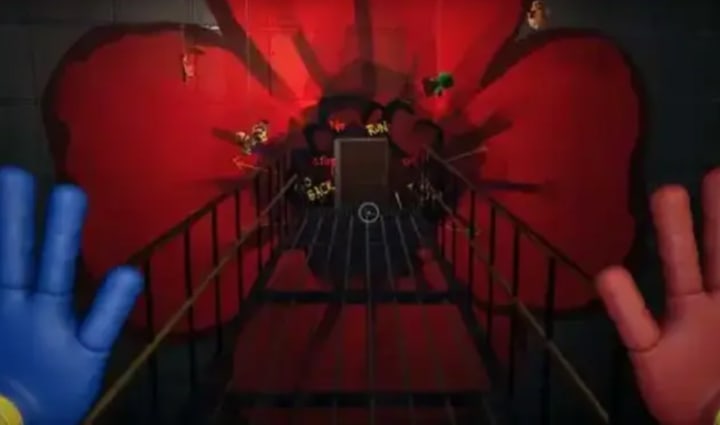
The chapter concludes as we find the flower, a massive poppy flower painted on the wall, framing a doorway. Inside, the player finds a glass display case with a doll sitting inside named "Poppy," a tiny doll in a blue dress with red hair she wears in pigtails. When Playtime Co. was in its prime, Poppy was considered one of its most successful toys. As the player opens the case, the lights flicker and we see Poppy's eyes flit open just as the lights go out. In the dark, using a tone that could either be considered inquisitive or accusatory, she whispers: "You opened my case."
As you can imagine, after the release of such an anxiety-inducing and mysterious first chapter, video-gamers and video game streamers wanted more. Since the release of Chapter One: A Tight Squeeze, there have been four more chapters, each longer than the next and filled with new lore and monstrous antagonists for the player to encounter and fight. There was Chapter Two: Fly in a Web, Chapter Three: Deep Sleep (which is my personal favorite), Chapter Four: Safe Haven and just recently, Chapter Five: Broken Things.
With each new chapter, we are able to put more pieces of the Poppy Playtime puzzle together and finally get some answers as to why all the Playtime Co. staff vanished in 1995, leading to the factory's untimely closing. While there are still more chapters expected to be released in the future, many of the questions we had after the release of the first couple of chapters have been answered.
After watching countless play throughs and doing some digging of my own, here is my version of the fascinating Poppy Playtime story.
The Story
As I stated earlier, Playtime Co. was founded in 1930 by Elliot Ludwig. An eccentric entrepreneur with a passion for bringing joy to children, Elliot sought to revolutionize the toy-making industry. And for several decades, he did just that.
In 1950, Playtime Co. released its most popular toy, the lifelike Poppy doll, with brushable hair and rosy cheeks, beloved by little girls all over the world. Following that success, the company reached peak popularity in the 1960s, even becoming a household name. Chief Marketing Officer Jimmy Roth and Head of Research Eddie M.N. Ritterman were hired during this time, the company's popularity in the 60s largely attributed to their efforts.
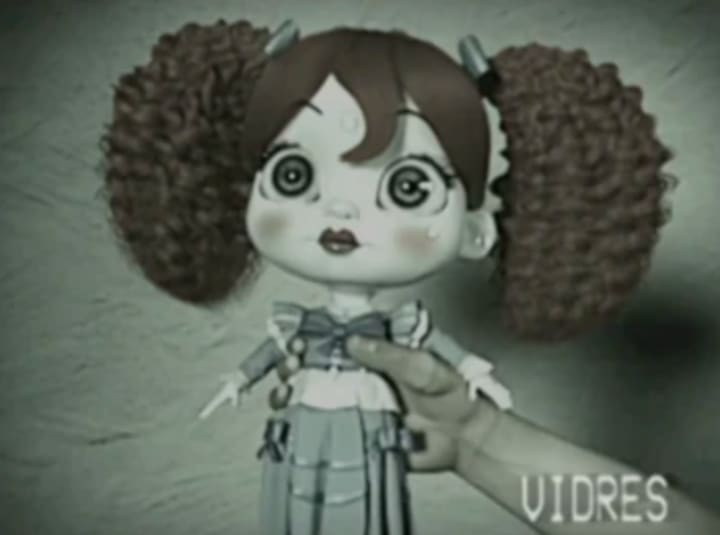
There quickly rose a need for the company to expand its operations to meet the growing demand, thus in 1972, Playtime Co. signed an 18-year-long contract with a company called, "Warren Bark Construction," to expand the Playtime Co. factory.
Apart from expanding facilities related to the production of toys, the expansion also included the creation of an underground orphanage, called "Playcare." Opened in 1976, Playcare was an on-site orphanage located beneath the Playtime Co. factory, home to (it is guessed) hundreds of children looking for loving homes. Playcare included five main buildings: the counselor's office, overlooking the entire area, a toy store, "Home Sweet Home," which was where the orphans lived and slept, a school, run by eight identical human-sized toys dressed like teachers named "Miss Delight," and a playhouse. Overseeing Playcare was Stella Greyber.
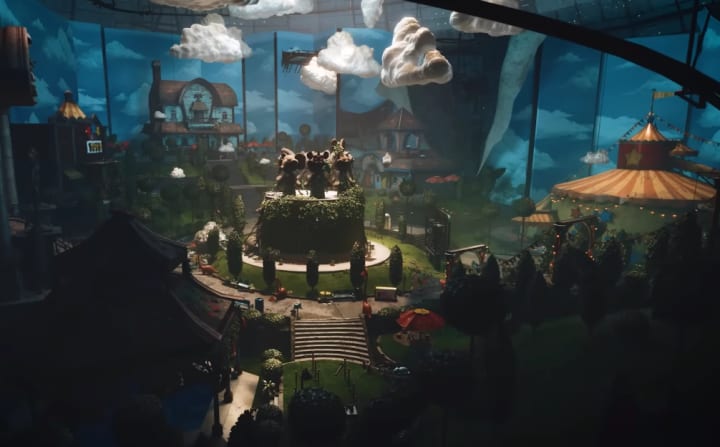
Now, before proceeding, it is worth mentioning that sometime in the 1960s, Elliot Ludwig experienced a family tragedy. It is inferred his child, believed to be his daughter, tragically passed away. Obsessed with finding a distraction from the grief and drunk on the success his company experienced in the 60s, Elliot poured everything he had into his work, neglecting both himself and his family. Many fans of the game believe Elliot designed the original Poppy doll to look like his daughter and that Elliot's creation of Playcare helped fill the void of losing a child. Disturbed and obsessed as he might have been, it seems like Elliot's actions did come from a good place, at least during this period. He wanted to create toys his daughter would have loved, and he wanted to provide children with a safe, loving home.
However, given what me and other fans of the game now know, little did Elliot know Playcare would set the stage for far more sinister things to come.
The expansion of factory facilities, overseen by Head of Research Eddie M.N. Ritterman, allowed Playtime Co. production to increase, bringing in more revenue. The increase in funding allowed new staff to be hired, leading to breakthroughs in toy design and innovation.
Somewhere around this time, Leith Pierre was hired. Known as the head of production and innovation, Leith quickly proved his worth to the company, even rising to become a top executive for Playtime Co. Around the time Leith was hired, in 1984, the official Huggy Wuggy toy was released, followed shortly after by his female counterpart, "Kissy Missy," in 1985.
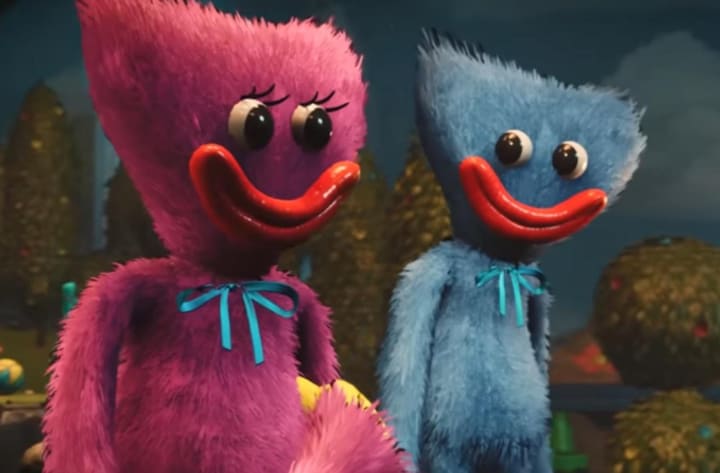
Despite the success of these two toys, for the first time since its inception, Playtime Co. began experiencing true hardship. Not only were sales and people's interest declining, but to make matters worse, Elliot Ludwig passed away (allegedly) sometime between 1984 and 1990. The company needed a miracle. Something had to change to save its reputation and put it back on the map.
So, Playtime Co. started exploring alternative, more questionable routes to success.
The Turning Point
In 1986, Rowan Stoll was hired and began working as the head of information technology, creating NDA agreements and ensuring staff kept company secrets. And then in 1990, just five years before the factory closed, Leith Pierre hired Dr. Harley Sawyer as a neurosurgeon, who would later become the head of "special projects."
Dr. Harley Sawyer proposed a disturbing means of saving Playtime Co. To save the company money and keep outsiders from getting too close, he proposed the "Bigger Bodies Initiative." Basically, instead of spending more and more money on new employees and machinery to revive the company, this initiative would include creating biological, human-sized experiments that resemble Playtime Co. toys to operate the factory and manage security.
Just imagine: Sentient, giant toys, that are now merely husks of their former selves, charged with operating a toy-making factory, fiercely guarding company secrets and disposing of anyone who questions Playtime Co.'s methods.
Yes, that's correct. These creatures are, or were, people. Some of them staff members, but most of them orphans, conveniently supplied through Playcare.
While some of the orphans living in Playcare were eventually adopted by loving parents, others were not so lucky. When the Bigger Bodies Initiative was implemented, there became a clear and present need to find good candidates for the transition from human to toy. Dr. Harley Sawyer and other Playtime Co. scientists realized it would be necessary to not only brainwash the orphans into believing it wouldn't be so bad to become a toy and never grow up, but also test for intelligent, able-bodied children. Only the smartest, most physically capable and least suspecting children would be turned into bigger body toys. So, Playtime Co. began brainwashing and testing on the orphans.
The brainwashing began in Playcare with Stella Greyber and the eight Miss Delight teachers. It is revealed in Chapter Three: Deep Sleep that the orphans would each have routine counseling appointments with Stella or other counselors in Playcare so Playtime Co. could keep track of their individual behavior, personality traits, trauma and state of mind. In the school, the Miss Delight teachers would teach the orphans questionable subjects, like toy-making, in addition to more school-related subjects like biology, chemistry and anatomy. Basically, in between periods of scheduled carefree fun, the orphans were subtly being fed information from Playtime Co. scientists about human anatomy, how the human brain works and how useless an aging, weak human body is compared to a toy. In truth, Playtime Co. was consistently reminding the orphans how much fun it would be to remain a child forever and convincing them that maybe life would be better, even easier, as a toy.
Once the brainwashing was underway, Head of Research Eddie M.N. Ritterman and Dr. Harley Sawyer began working together to create "The Game Station." Disguised as a fun-filled activity center for the orphans to enjoy, it was actually a testing facility the orphans would be forced into by the Playtime Co. scientists. Alone and afraid, each orphan's memory, reflexes and endurance would be put to the ultimate test. Those who stood out to Eddie and the rest of the research team would be taken from Playcare in the night, and then their consciousness would be transferred into a bigger body toy.
The bigger body toys include such creatures as Huggy Wuggy, Kissy Missy, Mommy Long Legs, Bonzo Bunny, PJ Pug-a-Pillar, Boxy Boo, CatNap, Pianosaurus, Yarnaby, Doey, Lily Lovebraids and others. And each of these bigger bodies served different factory needs.
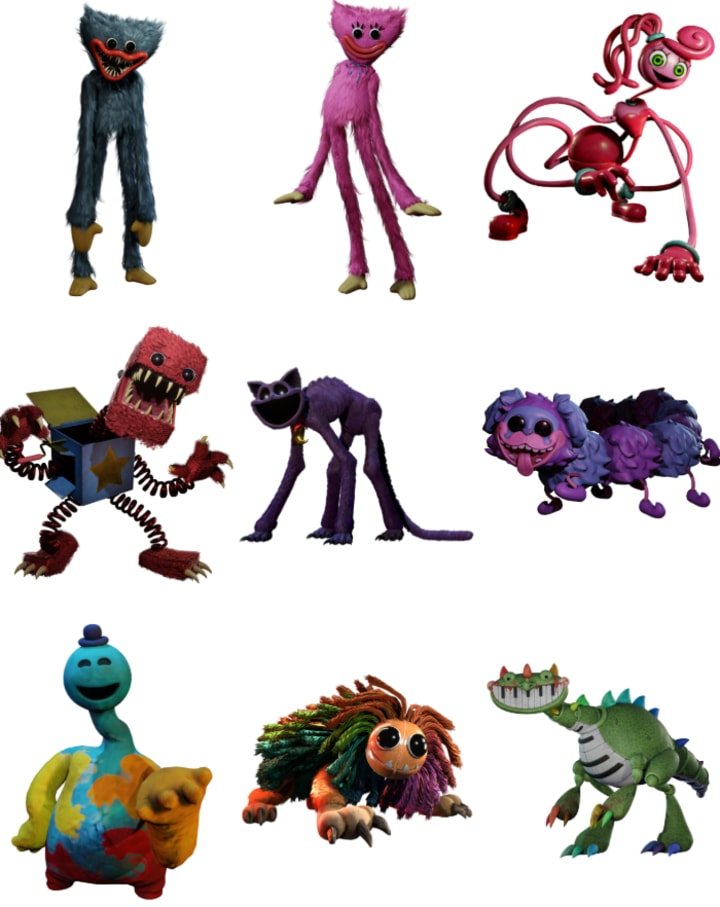
Huggy Wuggy for example, was used for security purposes. During daylight hours, he would stand stone still, posing as a statue near the factory's main lobby. Nanny cams were installed in his eyes to surveil the area and he would attack any intruders.
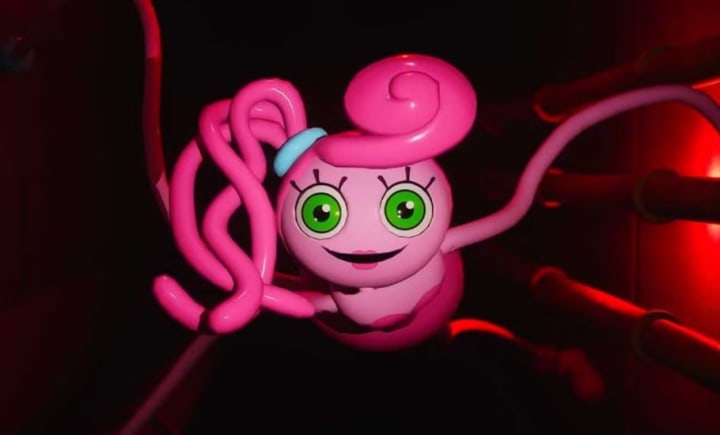
Revealed in Chater Two: Fly in a Web, Mommy Long Legs is a 20 feet tall stretchy spider-like creature based on Betty Spaghetti dolls. She would monitor the orphans when they were being tested in The Game Station. Her cheery, mother-like demeanor made the orphans comfortable around her, and her stretchy arms allowed her to wrangle them if needed.
The role each of the bigger bodies played in the factory had a lot to do with the personality and trauma of the human being whose mind had been transferred. If the chosen test subject was more combative, but obedient, they were used for security purposes. If they were more docile and maybe not as smart, they were used to operate simple machines. Many of the bigger bodies had little to no memory of their prior selves, some even reduced to animal-like states like Yarnaby, PJ Pug-a-Pillar, Pianosaurus and Boxy Boo, focused solely on satiating their hunger and guarding their territory. However, some of the bigger bodies were a whole lot smarter and craftier than they let on, including those like CatNap, Poppy, Kissy Missy and The Prototype.
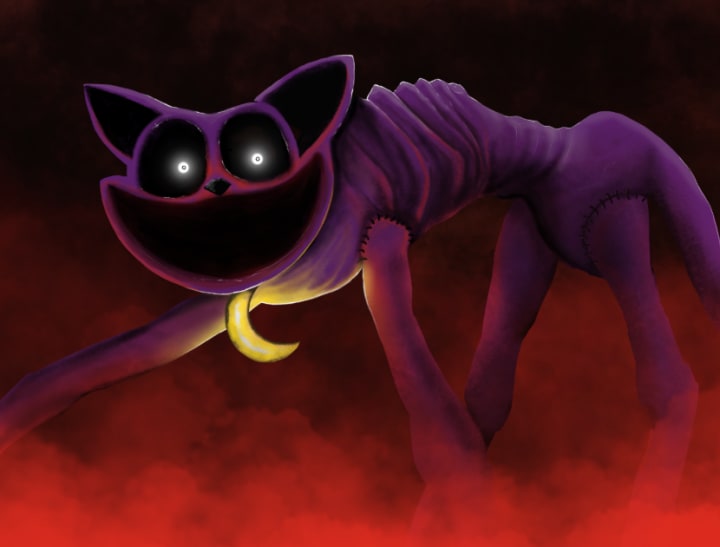
CatNap was a 12 feet tall purple cat monstrosity revealed in Chapter Three: Deep Sleep, used to put the orphans to sleep in Playcare when the scientists chose subjects to be transferred into bigger bodies. Similar to the actual toy version, CatNap could spray what was supposed to be a calming, lavendar-scented mist from his mouth to help children sleep. However, in the bigger body version, CatNap could spray Red Smoke, a poppy-based, semi-hallucinogenic created by Playtime Co. that would put the orphans into a deep, unwakeable sleep, often triggering violent nightmares. CatNap was quiet, sneaky and ruled over Playcare.
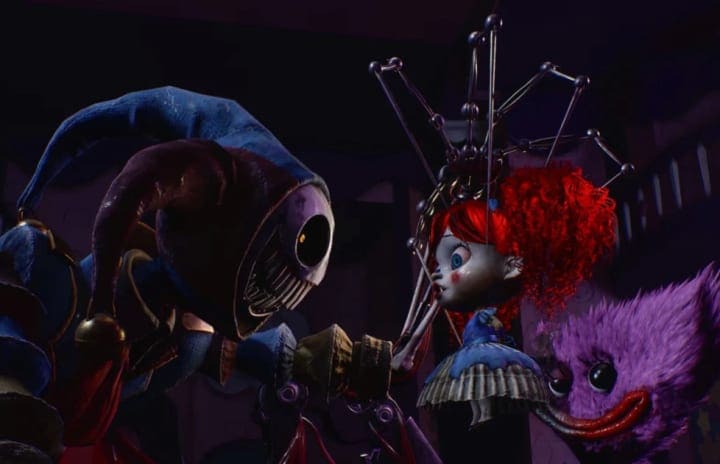
Fully revealed in Chapter Five: Broken Things, The Prototype is perhaps the smartest and scariest of all of the bigger body creations. A cyborg-like entity with the head and torso of a jester, constructed from toy parts, organic remains and Poppy Gel, not only is The Prototype terrifying to look at, but he is also terrifying to fight back against. His manipulative, merciless nature and ability to mimic other people's voices make him quite the adversary, always one step ahead of the player.
Now, here is where the story gets a little murky.
The Prototype was created sometime around 1989. Elliot Ludwig may or may not have been dead at this point, but since we know the Bigger Bodies Initiative was officially launched in 1990, The Prototype had to have been the first of the bigger body toys, whether or not he was considered a success. That said, fans of the Poppy Playtime series have debated for years about who The Prototype actually is, with two main theories ruling over YouTube channels and subreddits: The Prototype is either Playtime Co. founder Elliot Ludwig himself, or he is actually Elliot's adopted son, Oliver "Ollie" Ludwig.
We know Elliot Ludwig designed the Poppy doll to look like his daughter, so the bigger body version of Poppy is more than likely occupied by the soul of his daughter (as many fans of the series have guessed). Poppy would be considered Experiment 1007, while The Prototype, created just before her, is Experiment 1006. So, who was the very first test subject of the Bigger Bodies Initiative? Who was first chosen and created into The Prototype to prove the procedure could work so Elliot Ludwig could create a toy vessel for his daughter? The theory is that Ollie was an orphan living in the Playcare facility before being adopted by Elliot Ludwig. Elliot thought he had found the perfect test subject to pave the way for his daughter to become a bigger body toy: Ollie was kind, smart and trusting. Thus, The Prototype was created, setting the stage for Poppy's creation and the creation of the other bigger body toys.
Playtime Co.'s Downfall
From the late 1980s to 1995, several significant events took place, leading to Playtime Co.'s inevitable downfall and the disappearance of nearly every staff member.
The beginning of the end was Elliot Ludwig's alleged death, mentioned earlier, occurring sometime between 1984 and 1990. Then, in 1989, there was a last ditch effort to make Playtime Co. toys popular again with the release of the Smiling Critters line and accompanying cartoon. They were designed as a line of stuffed animals, each with a unique scent to help children sleep. There were eight of them total: CatNap (Lavender), DogDay (Vanilla), Bobby BearHug (Rose), Bubba Bubbaphant (Lemongrass), CraftyCorn (Jasmine), Hoppy Hopscotch (Peppermint), KickinChicken (Ylang-ylang) and PickyPiggy (Citrus).
However, the Smiling Critters ling did nothing but hammer another nail in Playtime Co.'s coffin. Not only were children disturbed by the look of the critters and the cartoon, but parents were concerned about one critter in particular: CatNap. Due to a factory error, rather than emitting a lavendar scent like it was supposed to, numerous CatNap critters were released with the ability to emit Red Smoke instead, causing many children to hallucinate and experience violent nightmares, like the orphans in Playcare. Despite the fact that Playtime Co. pulled the CatNap critter from the line and cartoon immediately, the damage was done. Parents did not trust the company anymore. Thus, after the creation of The Prototype, the Bigger Bodies Initiative was in full swing to save the company.
Since The Prototype and Poppy, many bigger body toys were created, but were considered unsuccessful. Some were unable to move, some were completely unaware of their surroundings and some had little to no active brain function. Bron for instance, created from one of the scientists who had been diagnosed with cancer, was a plush dinosaur bigger body who was completely mute and immobile after the procedure. He was also nearly killed when put in an enclosure alongside other experiments. The scientists guessed the other bigger body toys, most of which were orphans, could sense that Bron used to be one of the people who tortured and experimented on them and so they attacked him out of revenge.
The first bigger body toy actually considered a success was Experiment 1160, or "Boxy Boo," created in 1990, charged with disposing of (eating) any staff who asked too many questions about the unethical experimentation happening in the factory. Boxy Boo was followed by Experiments 1163 (Pianosaurus), 1166 (Yarnaby), 1170 (Huggy Wuggy), 1172 (Kissy Missy), 1174 (PJ Pug-a-Pillar), 1176 (Bunzo Bunny), 1186 (Bobby Bearhug), 1188 (CatNap), 1222 (Mommy Long Legs), 1322 (Doey the Doughman) and 1468 (Lily Lovebraids).
A few things to note: While most of these bigger body toys were orphans, some of them were staff members, or even multiple people. Lily Lovebraids for instance used to be a woman named Miss Gracie, one of the counselors who helped brainwash the children, before and after they were turned into bigger body toys. Miss Gracie was turned into a toy by The Prototype, who believed she deserved a fate worse than death for everything she had done. Doey the Doughman on the other hand, revealed in Chapter Four: Safe Haven, was not just one orphan, but three. Doey was in fact a hybrid creature made from a substance similar to Play-Doh as well as the consciousnesses of three children: Kevin Barnes and Matthew Hallard who were both orphans from Playcare, as well as a boy named Jack Ayers, who fell into a vat of dough while he and his parents were visiting the factory. To save Jack's life, his consciousness was combined with that of the other two boys, and the three of them became Doey, an extremely emotionally unstable bigger body toy, with each of the three boys constantly fighting for control.
Despite the fact that all of the successful bigger body toys were given duties to fulfill within the factory, all of them experienced severe emotional and physical trauma during the transition from human to toy, many of them emerging on the other side with deep-rooted mental health issues, some even psychosis. The Prototype displays calculated, sociopathic traits. Huggy Wuggy shows signs of extreme aggression, even sadism, toying with prey before consuming them. Despite being put in charge of the orphans at The Game Station, Mommy Long Legs often exhibits severe narcissistic and possessive traits, viewing the factory as her kingdom, the scientists as threats and the orphans as her children, or "playthings."
Naturally, as time went on, the bigger body toys eventually reached a breaking point. They wouldn't bow down to the Playtime Co. staff anymore.
The Hour of Joy
Perhaps as infamous as "The Bite of 87," The Hour of Joy is the most significant point in time in the entire Poppy Playtime series.
In 1995, The Prototype masterminded a factory-wide massacre, nicknamed "The Hour of Joy." On that seemingly normal but fateful day, every bigger body toy turned on the Playtime Co. staff, killing them mercilessly. Not only did they attack the staff, but they also went after anyone who happened to be inside the factory that day, including children and families just visiting or passing through.
Prior to the massacre, to keep the orphans safe, The Prototype ordered CatNap to put them all to sleep and hide them deeper in the factory, away from the other toys who would not hesitate to kill them. The Prototype also kept his distance, watching the mayhem unfold from afar.
I've included the tape from Chapter Three: Deep Sleep below if you wish to view the carnage for yourself.
After the vengeful slaughter of nearly every Playtime Co. staff member, The Prototype sheltered himself down in the underground labs, away from the other bigger body toys. The factory doors closed for good, and any human beings or toys left alive and still trapped inside either hid, or fought and ate each other to survive.
Ten long years passed, leading up to the player arriving at the factory in 2005. During that time, rebel groups fighting back against The Prototype, desperate to escape the factory, emerged, led by protagonists like Poppy and Doey. When the player finally arrives, a new ray of hope shines on the factory doors. But given the fact that the player is known to be an unknown ex-employee of Playtime Co. themselves, are they truly the savior the toys are looking for, or is the player just another monster who contributed to the horrors the toys experienced?
I'll let you be the judge.
If you do end up playing the game, please let me know what you think! Also, if you are a die-hard Poppy Playtime fan like me, please let me know if I missed anything or something I said is inaccurate, I will definitely adjust as needed. More chapters are coming out in the future afterall, so some of what is written here could change once we find out more secrets!
About the Creator
Madison "Maddy" Newton
I'm a Stony Brook University graduate and production services manager for the NYS Assembly. Writing is one of my passions, and Vocal has been a great creative outlet for me.
Follow me on Instagram! https://www.instagram.com/madleenewt120/
Keep reading
More stories from Madison "Maddy" Newton and writers in Gamers and other communities.
PS Plus Extra & Premium Update - February 17
It’s a little later than usual, but it’s finally that time again: PlayStation Plus Extra and Premium update day. The mid-month refresh is here, bringing a solid batch of new games into the catalog… while quietly escorting a few others out the back door.
By Info Post Gate6 days ago in Gamers
There's A Hole in My Bucket
It’s a well-known fact that Liza Dufresne was always the brains in the family. She was the one who always came up with the brilliant schemes the Dufresne kids carried out when they were younger. Like when they tricked Mrs. Claybourn into paying for a trip to Disney World. Liza convinced her that their parents had been kidnapped and were being held for ransom for the total price of three tickets. In reality, they were away on a weekend getaway for their anniversary. When they returned, Liza told the Claybourns that they did not like to talk about the ordeal. Their parents never found out how they got the money. Mrs. Claybourn never found out that the Dufresne parents were never really in any danger.
By David E. Perry6 days ago in Fiction



Comments
There are no comments for this story
Be the first to respond and start the conversation.