
Anatomically Correct Pokemon (no, not like THAT)
Today in the cute and sort of creepy side of fandom excellence, Pokemon anatomy!


Today in the cute and sort of creepy side of fandom excellence, Pokemon anatomy! You've probably seen that series of hyper-realistic Pokemon drawings going around the interwebs, but now we're taking a look... inside.
First found on a blog dedicated to awesome digital art and for sale on shirts at bustedtees.com, this series blends the adorable and nostalgic with anatomical designs and just a hint of morbidity. The series reminds me of the ridiculously adorable "anatomy of a pug" pictures and the like, with labels like "flippy wiggler" and "snifferoo" - except that these diagrams actually seem pretty accurate and plausible. Check them out!
Charmander

Aww, look at the widdle fire glands!
Bulbasaur

That is a very small brain. I'm sorry, Bulbasaur.
Pikachu

I didn't expect to see a Pikachu's ribcage today
About the Creator
RoAnna Sylver
Writes weird books about marginalized people surviving/rocking out (CHAMELEON MOON, STAKE SAUCE), amazing puns, and geeky articles. Lives with chronic pain/genetic weirdness. An actual mutant. Open Your Eyes, Look Up To The Skies And See!
Keep reading
More stories from RoAnna Sylver and writers in Geeks and other communities.
Epic Pokemon Fusion Art
If you haven't been on the interwebs for a while, you might have missed the "Pokemon Fusion Generator" and resulting trend of posting your randomized (or intentionally spawned) creatures. It's usually a fun way to pass a few minutes (I just got a Nidogong, a mix between a Nidoran and Dewgong!) and see what early pokemon pixel sprites look like when mixed together - but some fanartists have taken it to an entirely new level, using the fused pokemon as art prompts for some glorious creations.
By RoAnna Sylver8 years ago in Geeks
Not Just For Clean Up: A History Of The MCU's Department of Damage Control
Initially an organisation that seemed to exist to help the heroes of the Marvel Cinematic Universe, from Phase Four onwards, the Department of Damage Control has shifted into a more antagonistic role. Most recently seen in the Wonder Man series, the current incarnation of Damage Control seems to target superpowered individuals, regardless of whether that person poses an active or intentional threat.
By Kristy Anderson3 days ago in Geeks
Copper Price Today
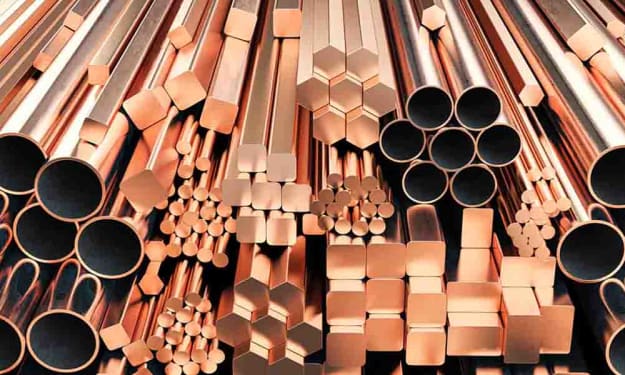
Copper, often referred to as the backbone of modern infrastructure, has once again captured global attention as prices surge to historic levels. The metal plays a critical role in construction, power grids, renewable energy systems, electronics, and transportation. Because of its widespread industrial use, copper prices are widely considered a barometer of economic health. Today’s price movements suggest not only short-term volatility but also deeper structural changes shaping the future of commodities. Current Copper Price Snapshot As of late January 2026, copper prices have climbed to record highs across major global exchanges. The London Metal Exchange (LME) three-month copper contract recently rose about 6.6% to roughly $13,953.50 per metric ton, after briefly touching nearly $13,967. Meanwhile, the most-traded contract on the Shanghai Futures Exchange jumped over 6% to 108,740 yuan (about $15,652 per metric ton), also reaching an all-time high. The rally reflects a strong shift in investor sentiment toward physical assets, fueled by geopolitical tensions and a weakening U.S. dollar that has made dollar-denominated commodities more attractive internationally. Analysts have responded by raising their expectations for the year ahead. A recent poll indicates the average copper price forecast for 2026 has moved above $11,000 per ton for the first time, with estimates near $11,975 amid supply disruptions and speculative trading. What Is Driving Copper Higher? 1. Supply Disruptions and Market Deficits One of the most significant drivers behind the price surge is constrained supply. Mine disruptions and operational setbacks have tightened availability, prompting analysts to increase projections for a global market deficit to more than 238,000 tons. Longer-term research echoes this concern. J.P. Morgan projects a refined copper deficit of roughly 330,000 metric tons in 2026, suggesting the imbalance between supply and demand could persist. 2. Structural Demand From Technology and Energy Copper is essential for electric infrastructure, smart grids, data centers, and electric vehicles—sectors expanding rapidly as economies modernize. Each electric vehicle requires significantly more copper than traditional combustion models, reinforcing long-term demand growth. Additionally, investments in artificial intelligence infrastructure and renewable energy projects are strengthening consumption trends, creating a durable foundation for higher prices. 3. Macro Forces and Investor Behavior Commodity markets rarely move in isolation. The Federal Reserve’s decision to keep interest rates unchanged has contributed to a weaker dollar, which typically supports metals prices by making them cheaper for overseas buyers. At the same time, geopolitical uncertainty has encouraged investors to diversify into hard assets, aligning copper with other metals that have recently set records. Recent Price Momentum Market data shows that copper has been steadily climbing since early 2025, rallying more than 20% amid tightening supply conditions. On India’s Multi Commodity Exchange, futures recently traded near Rs 1,330 per kilogram, approaching lifetime highs after rising sharply from earlier lows around Rs 913. Such upward momentum suggests the current rally is not merely speculative but tied to the metal’s growing industrial relevance. Forecasts: Will Prices Stay Elevated? Forecast opinions vary, but most institutions agree that copper will remain historically strong. J.P. Morgan expects prices to reach about $12,500 per ton in the second quarter of 2026, averaging near $12,075 for the year. Bank of America estimates an annual average near $11,313 per ton, citing supply squeezes and steady demand. Goldman Sachs anticipates prices largely staying within $10,000–$11,000, arguing that a modest surplus could prevent sustained spikes beyond that Taken together, third-party forecasts generally span $9,800 to $12,500 per ton, highlighting both opportunity and uncertainty in the copper market. Risks That Could Slow the Rally Despite bullish sentiment, analysts remain cautious. Weak industrial demand—particularly from major manufacturing economies—could limit further gains if economic growth slows. Goldman Sachs also notes that although long-term demand from power infrastructure is strong, the market may remain balanced rather than deeply undersupplied, reducing the likelihood of runaway prices. Another risk is substitution. As copper becomes more expensive, manufacturers may gradually shift toward alternative materials such as aluminum, though this process typically unfolds over longer timelines. Why Copper Matters Beyond Commodities Copper’s influence extends far beyond trading floors. Because it is used in nearly every form of electrical transmission, the metal is central to the global energy transition. Expanding grids, renewable power installations, and electrified transportation systems all rely heavily on copper wiring and components. This connection has transformed copper from a cyclical industrial metal into a strategic resource tied to technological progress. Analysts increasingly view it as a cornerstone commodity for the 21st-century economy. Trading Activity and Market Signals Recent futures trading data underscores the market’s heightened activity. Estimated daily volume on COMEX reached over 81,000 contracts, with open interest near 282,690, reflecting substantial participation from institutional and retail traders alike. Such engagement often signals strong conviction about future price direction, though it can also amplify short-term volatility. The Bigger Picture Today’s copper price surge is more than a headline—it reflects a convergence of supply constraints, technological transformation, and macroeconomic uncertainty. While short-term corrections are always possible, the long-term narrative points toward sustained relevance for the red metal. Whether prices ultimately stabilize near current levels or retreat slightly, copper’s strategic importance appears unlikely to fade. As the world electrifies and digital infrastructure expands, demand is poised to remain resilient. Conclusion Copper prices today illustrate a market in transition. Record highs highlight the growing value of materials that support modern life, from renewable energy systems to advanced computing networks. Yet the outlook remains balanced between optimism and caution, shaped by both structural demand and unpredictable global conditions. For investors, manufacturers, and policymakers alike, copper is no longer just another industrial commodity—it is a signal of where the global economy is heading. Monitoring its price movements offers insight into broader trends, including technological adoption, infrastructure investment, and geopolitical stability.
By Saboor Brohi 6 days ago in Geeks
Killing him slowly
There’s an intruder in my house again. He stumbles through the door, wet carrier bags in hand. He’s bought me offerings. I show my appreciation, letting him caress my beautiful body. He wants to touch me. I rub myself against his legs. He sighs, dropping the bags. He can’t resist touching me. Running his hand slowly down my spine, I arch my back towards his caress, let out a low purr. It’s what we both need.
By N J Delmas7 days ago in Horror



Comments
There are no comments for this story
Be the first to respond and start the conversation.