
Book Review: "How We Love" by Clementine Ford
3/5 - funny, relatable and yet, there was just something bugging me throughout...

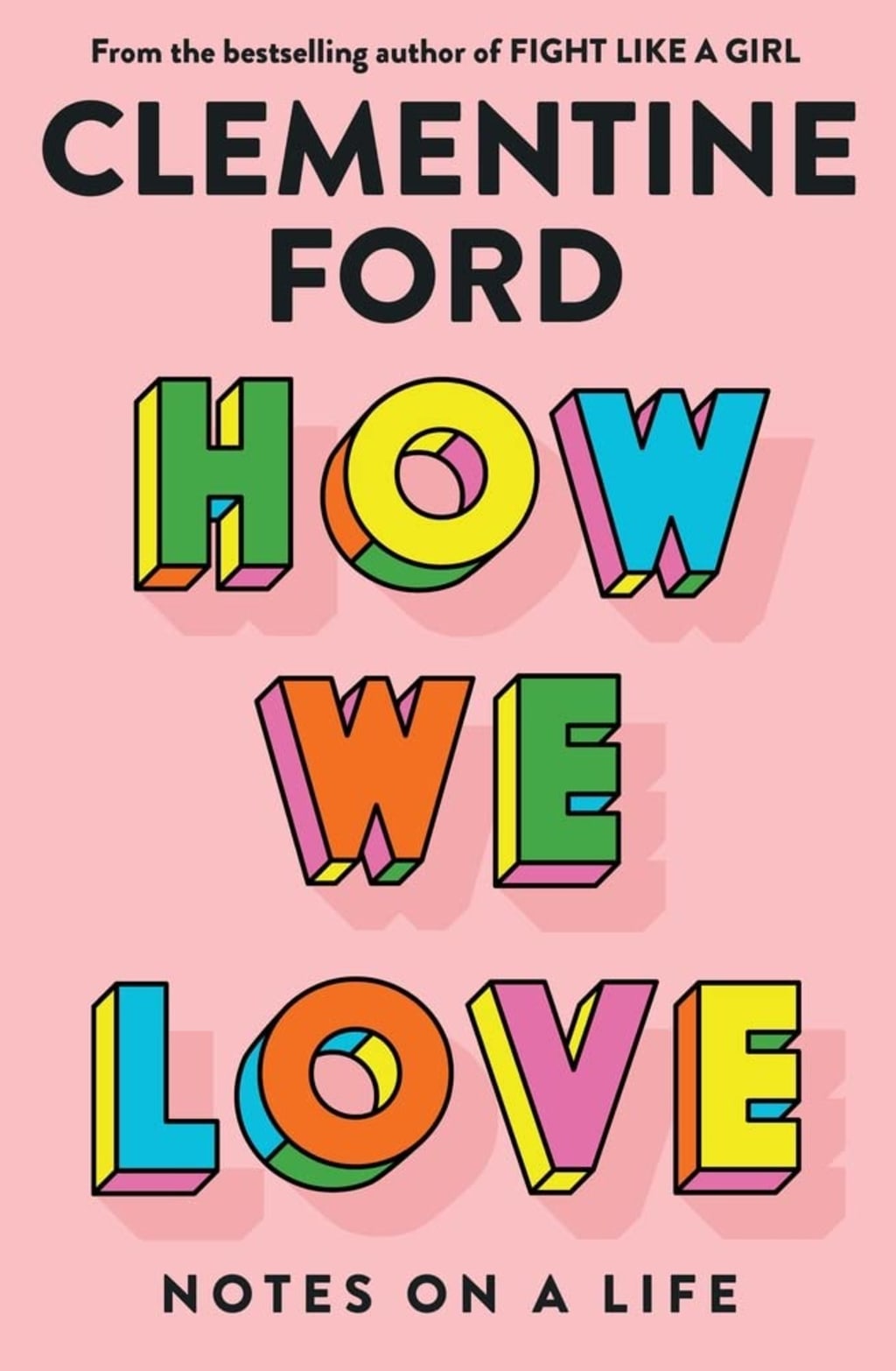
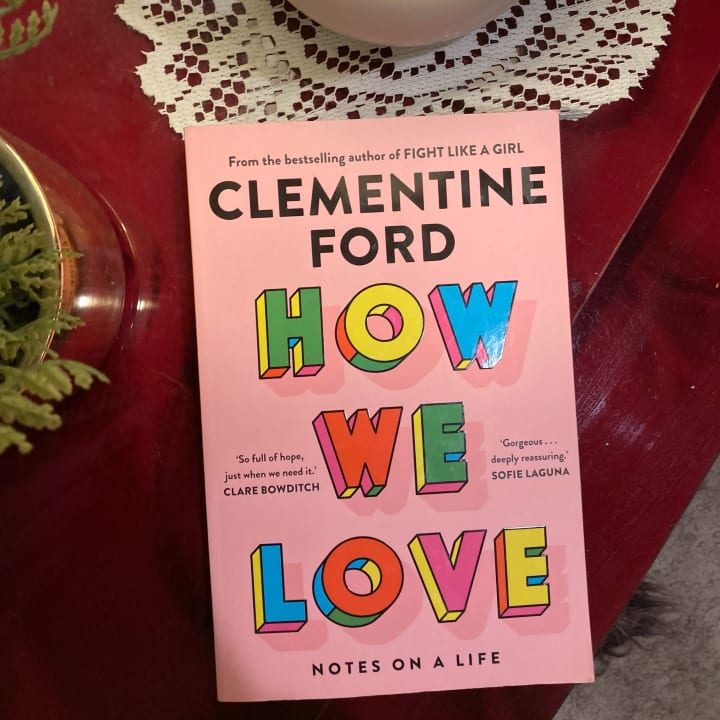
How We Love isn't a book about teaching you how to love, it isn't even a book about the correct way to love. It is a book that tells us the different ways in which love can impact our relationships with ourselves. Now, I may think romantic love is a representation of stupidity, but the way in which the writer describes the ideas of selflessness that is required for all types of love shows us that they possibly aren't all that different within us. She admits that she has made her own mistakes and she doesn't shy away from the difficult topics, and after a lengthy introduction in which we are introduced to the way in which the writer realised that loving boys wasn't worth the returns (and swiftly moved on to women instead) - we are met with the opening in which she talks of her mother's cancer and death.
The author tells us of her mother's cancer diagnosis and how it made her feel. She very clearly had to learn to love her mother properly and understand that her mother had, like many women had, given up on hopes and dreams in order to get married and have kids. She accepts that her mother once had dreams that didn't include her, but once the cancer diagnosis comes through, she also feels ashamed of having gone on holiday with her boyfriend whilst her mother was back and forth from hospital.
I have to say that if my mother was in that state, I'm getting rid of the whole man and focusing just on my mum. I literally would not care. However, the language that the author uses such as the realisation that she made her mother's death all about herself for some time is somewhat universal. When someone we know dies, we can go through a moment of asking ourselves why they died. The real question we should be asking is how we would like to remember them. I will move on from this point eventually but for now, I'm quite surprised at how much I have enjoyed this book so far.
As the chapters go on, we get a glimpse into the author's teen years. I can say she definitely overestimates how often people fall in love and her emotional state towards mediocre men seems to guide her getting into relationships. This is true because when she gets involved with a woman, the woman very clearly is not mediocre, in fact she is vibrant with tons of personality. The boys and men however, are kind of just there and forgettable. There is a big distinction here. But, before we get into the storyline featuring the jazz singer, we must go through the author's teen years where she encounters getting ED behaviours and preyed upon by a man who was very clearly a pedophile.
As we read about it, we run into her dealing with being the 'ugly girl' even though she is very normal looking and the fact that she is both states of always having a friend to talk to and having no friends at the same time. I find the author to be a bit egregious here - she is trying to pass herself off as someone to have sympathy with but there are so many contradictions that it is difficult to. All you end up thinking is 'man this is difficult to follow because I don't actually know who this person is'. She is simultaneously the 'androgynous book nerd' whilst also being 'ED suffering popular sleeepover girl' in her teens. These two things don't not only crossover but it makes the writer look like she's lying.
However, I agree on her opinions of how useless men are in relationships and how they definitely make the lives of the women around them more difficult than they have to be. If there was ever any evidence for the fact that sexuality isn't a choice, it would be that there are still women out there that want to be around men. It would make me chuckle on how she would view these boys and men she was around, seeing them as bystanders of a life she did not want. I would say that if she had been more consistent in her personality, I probably would've liked her a bit more. She's probably more proof that women aren't blameless either.
About the Creator
Annie Kapur
I am:
🙋🏽♀️ Annie
📚 Avid Reader
📝 Reviewer and Commentator
🎓 Post-Grad Millennial (M.A)
***
I have:
📖 300K+ reads on Vocal
🫶🏼 Love for reading & research
🦋/X @AnnieWithBooks
***
🏡 UK
Keep reading
More stories from Annie Kapur and writers in Geeks and other communities.
Book Review: "I Feel Bad About My Neck" by Nora Ephron
Back when I read The Most of Nora Ephron I complained about the fact that the ricotta omelette was absolutely terrible (it was, it was so disgusting I cannot believe she would eat that). But the book itself was absolutely hilarious. Universally female, funny and conversational - Nora Ephron didn't really hold back from showing us the frustrations and microaggresisons women experience every day. Even if that meant they were feeding it to themselves. I Feel Bad About My Next and Other Thoughts on Being a Woman is another one of these books where Nora Ephron takes us on a funny journey through the thoughts of womanhood.
By Annie Kapura day ago in Geeks
Goodbye, Mr. Duvall
It is turning out to be an interesting year. I was in the middle of teaching a class when a pop-up appeared on the screen announcing the death of Mr. Robert Seldon Duvall (yes, that was his full name). I was in the middle of a discussion on the obsession we have with winning when it comes to sports (the Winter Olympics was a theme), and I felt as though things were coming full circle. We had already lost Gene Hackman last year, and along with that titan, it feels though one particular golden age has closed off to be replaced by...?
By Kendall Defoe 2 days ago in Geeks
Top Features Investors Demand in DeFi Staking Platforms in 2026
Decentralized Finance (DeFi) has evolved far beyond its early experimental phase. What once revolved around aggressive yield farming and speculative token emissions has matured into a sophisticated ecosystem of structured yield strategies, institutional participation, and infrastructure-grade staking solutions. In 2026, DeFi staking is no longer just a way to earn passive income it has become a critical pillar of blockchain network security and digital asset portfolio management.
By Henry james7 days ago in Geeks
Unofficial Challenge: What would you do if you were rich?
I love the kind of work I get to do in my career, but as I job search and browse apartments again due to another understaffed and unsustainable work environment that I did not intend to get into, my daydreams of better days consistently lean into the same question: What would I do if I didn't have to worry about my basic needs being met?
By Kay Husnicka day ago in Writers



Comments
There are no comments for this story
Be the first to respond and start the conversation.