
Hamnet (2025)
Communal Cinematic Catharsis

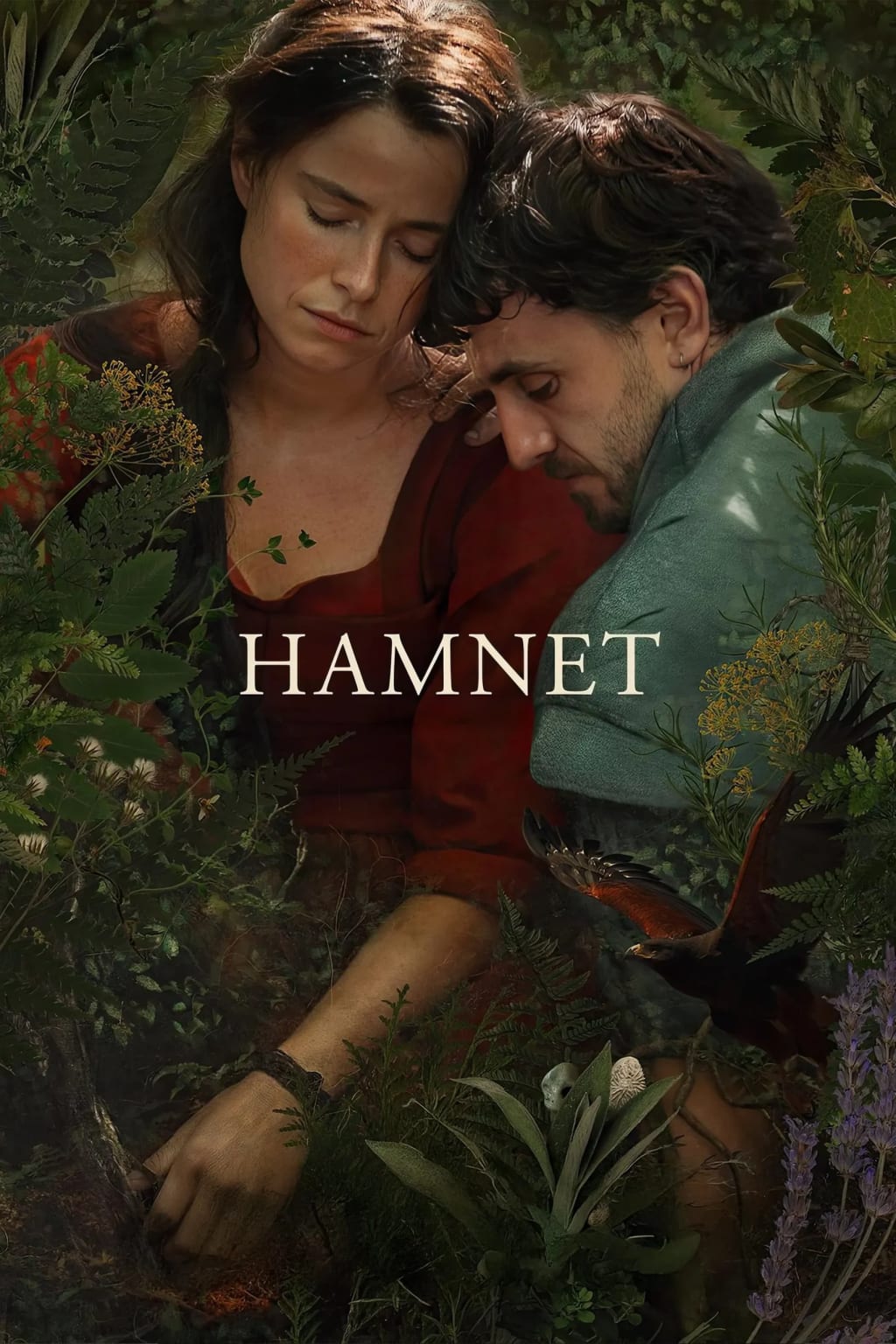
Hamnet is an historical drama, directed by Chloe Zhao, adapted from the 2020 novel by Maggie O’Farrell. It is an imagined, fictionalised account of Agnes Hathaway’s life with William Shakespeare, with the action centred on the death of their son from the bubonic plague. It has received critical success and Jessie Buckley recently won the Golden Globe for Best Actress in a Drama.
Please don’t judge me. I bought the book a few years ago, but have never completed it. I have read several of Maggie O’Farrell’s previous novels and adore her lyrical, simple story-telling, but I couldn’t. I just couldn’t read about a child’s death.
I feel bad that I gave up on the book, something I rarely do. But I read at night, sleep lightly and dream vividly. It was a rational, possibly even, a good decision for who I am and what is happening in my own life.
Yet, for some reason I could go and see it in a cinema. This says something about the intimacy of the page and the way it worms into my brain, over the enveloping sensation of the screen, which engulfs like a wave and then retracts.
As someone who writes it pained me to think of Maggie O’Farrell going deep down and dark to produce the novel. And yet when Jessie Buckley’s Agnes lets out the deepest anguished scream, it felt like a release that I was almost jealous of – a letting go, a deep howling acceptance of her fate.
The film is about the impact of grief. No two people process it in the same way. A relationship stutters through grief, as it leaves many of us inarticulate or unreachable. Loss hardens us against the necessary vulnerability required for love.
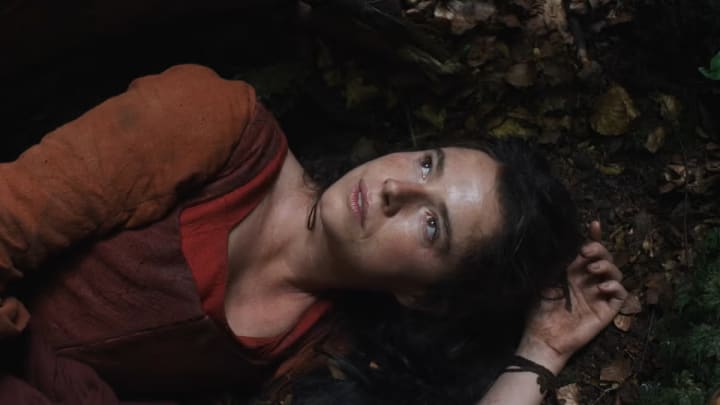
But the film is not only about grief and loss. There is another theme – recognition, being seen, heard, acknowledged. Agnes or Anne Hathaway has been minimised by history. Often portrayed as the quiet, abandoned woman who stayed at home while her husband took on the London stage. She did not write, so history can erase her spirit. There are no pretty words that conjure her love, her feelings, her grief, her wisdom and her support or insight into her husband’s creativity.
In the screenplay, however, she has wisdom that is grounded in the forest. She has a generosity and a strength that some previous re-tellings have denied her.
And there is a recognition for her lost son. Hamnet dies, but Hamlet lives through the written word. Hamnet becomes Hamlet – a grown young man torn by the choices of adulthood. A catharsis for centuries of audiences. That is what art can do. And in this retelling of Anne and William, art is not just the product of one great genius, but the result of relationships and shared experiences.
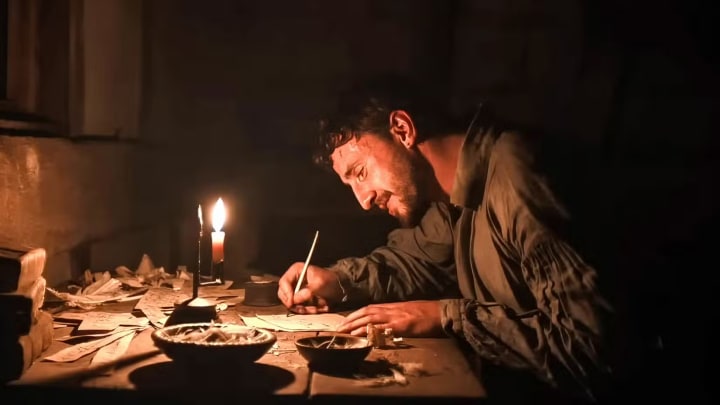
I should add that alongside the glowing central performance of Jessie Buckley the film is a visual treat. The outside is verdant and lush, but the interiors are sparse and candle-lit. The cinematography mimics the tones and style of Vermeer and Durer. There is a meticulous attention to detail, no fake lashes, no cosmetic tweaking, just dirty fingernails. The past looks like a different country.
I watched the film tired and the pacing for the first thirty minutes was slow. This is as much a reflection on me as it is the film, but I am aware that this film is not for everyone. It is not action-packed. Humour is minimal. It takes its time to fill the space that loss leaves with long shots and silence. Much of the appeal of the movie comes from a deep-seated desire to wallow in how awful the world can be and currently is. It offers a needed space that brings attention to the toll of loss, grief and trauma. Some critics have called this “grief-porn”, I prefer the Aristotelian term – catharsis.
If you've enjoyed what you have read, consider subscribing to my writing on Vocal. If you'd like to support my writing, you can do so by leaving a one-time tip or a regular pledge. Thank you.
About the Creator
Rachel Robbins
Writer-Performer based in the North of England. A joyous, flawed mess.
Please read my stories and enjoy. And if you can, please leave a tip. Money raised will be used towards funding a one-woman story-telling, comedy show.
Reader insights
Outstanding
Excellent work. Looking forward to reading more!
Top insights
Compelling and original writing
Creative use of language & vocab
Easy to read and follow
Well-structured & engaging content
Expert insights and opinions
Arguments were carefully researched and presented
Heartfelt and relatable
The story invoked strong personal emotions
Masterful proofreading
Zero grammar & spelling mistakes
On-point and relevant
Writing reflected the title & theme
Keep reading
More stories from Rachel Robbins and writers in Geeks and other communities.
The Rachels - 2025
Much to my surprise, I have kept a list of the films I‘ve seen this year. I daresay it isn’t complete. There will be films that snuck in on a late night in front of the TV that I would’ve forgotten to note. Or others, that I went to watch at the cinema, but then had a red wine and promptly forgotten about. But it’s not a bad approximation of the films I’ve seen this year. In total, there are 53 films listed, so an average of one a week and one for good luck.
By Rachel Robbinsabout a month ago in Geeks
10 Times Rotten Tomatoes and I Disagreed
***Disclaimer*** I will be ranking these movies in the following manner: The greater the divide between Rotten Tomatoes and I, the higher up on the list (and I am referring to the critic's score, not the audience score). I will also show Rotten Tomatoes' score on each one in addition to my score. I am curious to know what everyone thinks, please let me know in the comments below!
By Madison "Maddy" Newton8 days ago in Geeks



Comments (9)
I actually ended up watching this tonight, Rachel. I had to come back here and read your review once again, and shared it with my daughter, who loved the film, as did I.
Your insight into Agnes Hathaway and how the film restores her voice is powerful. I appreciate how you highlight her wisdom and strength, often erased by history. It adds a whole new layer to the story beyond the grief itself.
Great job! I especially liked the phrase about the intimacy of the page, and how it worms into your brain. Brilliant! 💜
💖I’ve been seeing this film everywhere lately, so your review was exactly the catalyst I needed to dig into its themes. I was struck by your use of Prolepsis. By leading with 'Please don't judge me,' you disarmed my expectations. I initially judged the book’s difficulty, but your description of the lyrical storytelling prepared me for the visceral 'soft spot' I felt for your revelation.
I keep seeing this movie advertised everywhere, but I wasn't sure if it's worth the hype. I'm glad I read this, and thank you for introducing the film for us. Now I can make up my mind about watching it.
A beautifully written review. Poignant; I relished the depth you wove into this and how you connected the story with your own. And … ‘The past looks like a different country.’ I felt that.
I loved your review! One of my friends went to see this last weekend, I didn't go because I was worried it would be too sad 😞
A beautiful review. I love the way you've worded your thoughts in this ❤️ (Also I too love this author's novels, I definitely hope that off the success of Hamnet, they make "The Marriage Portrait" next)
You brilliantly capture "the intimacy of the page and the way it worms into my brain, over the enveloping sensation of the screen, which engulfs like a wave and then retracts." Your reviews are a gift!