
How Utah's Silicon Slopes Startups Are Using AI-Powered Mobile Apps
Utah's startups aren't just adding chatbots; they're building "agentic" AI. See how Entrata, Podium, and Lucid are redefining mobile apps in 2026.

It is 2026, and if I have to hear the phrase "AI-powered" one more time without seeing a real use case, I might actually throw my phone into the Great Salt Lake.
Serious talk for a second: We have moved past the glittery, "look what I can do" phase of Artificial Intelligence. In 2024 and 2025, everyone slapped a "Copilot" sticker on their app and called it a day. But here in Utah—specifically along the Silicon Slopes—things are hitting differently this year. The startups between Lehi and Salt Lake City aren't just trying to be flashy; they are trying to be useful.
While the rest of the tech world is obsessed with AGI (Artificial General Intelligence) and robots that can write poetry, Utah's mobile app scene is focused on what I like to call "Blue Collar AI." It’s the kind of tech that rolls up its sleeves and actually does the work.
The Shift: From "Fast" to "Strategically Lazy"
Let me explain what I mean. A couple of years ago, the goal was speed. "How fast can we generate an email?" Now, in 2026, the goal is autonomy. We are seeing a massive shift toward "Agentic AI"—apps that don't just wait for you to click a button, but actually go out and complete tasks for you.
Thing is, this shift isn't happening in a vacuum. It is being driven by a pragmatic need to cut through the noise.
"Most enterprises aren't fully ready to adopt [AI], weighed down by fragmented processes and legacy realities." — Dave Grow, CEO, Lucid Software
Dave is spot on here. The apps winning in 2026 aren't the ones adding more noise; they are the ones organizing the chaos.
Why Utah?
You might expect the bleeding edge of this "Agentic" revolution to come exclusively from the Bay Area. And sure, the tech giants are pushing boundaries in consumer tech, but Utah's B2B focus has created a unique breeding ground for high-utility AI. The startups here are obsessed with efficiency metrics, not just vanity metrics.
Speaking of which, mobile app development in Utah has seen a massive influx of "Agentic" workflows where apps don't just show data, they act on it.
The Heavy Hitters: Who is Actually Doing It?
I did some digging into the recent updates from the big players in the Slopes, and the features they released in late 2025 are defining the mobile landscape right now.
1. Podium: The "Human-in-the-Loop" Masters
Podium has always been about communication, but their late 2025 update introduced something called "Pause AI."
Here is why this matters:
- The Problem: AI chatbots are great until they aren't. We have all been there—arguing with a bot that doesn't understand "my basement is flooding."
- The Fix: "Pause AI" allows human staff to instantly hit a button, stop the bot, and take over the conversation seamlessly.
- The Benefit: It builds trust. You aren't trapping your customer in a loop; you're giving them an off-ramp.
💡 Podium Team Insight: > Real talk: The "Pause AI" feature is a game changer. It basically lets humans tag in when the bot gets stuck. It’s not about replacing staff; it’s about blended efficiency. — Contextualized from Podium 25.10 Release
2. Entrata: Automating the Landlord (Sort of)
If you rent an apartment in 2026, there is a good chance you are using Entrata's "Homebody" app. They recently rolled out Homebody GPT.
This isn't just a search bar. It acts as a concierge.
- Need to pay rent? It handles it.
- Need to book the clubhouse? It checks the schedule and books it.
- Leaking faucet? It logs the maintenance request and tells you when the plumber is coming.
Entrata calls this "Autonomous Property Management," and honestly, it’s about time.
💡 Entrata Team Insight:
"Autonomous Property Management" isn't sci-fi anymore. With Homebody GPT, residents get instant answers 24/7 without waking up the property manager. — Contextualized from Entrata Summit 2025
Visual Intelligence: Not Just Text
It’s not all about chatbots and text messages. Lucid Software (the folks behind Lucidchart) has been quietly integrating "Visual AI" into their mobile and tablet experiences.
Their new Agentic Workflows allow you to type a prompt like "Draw a flow chart for a user registration process," and the app generates the diagram instantly. But better yet, it can summarize complex boards.
Imagine looking at a massive, messy brainstorm on your iPad. You hit one button, and Lucid AI summarizes the key takeaways into a bulleted list. That is the kind of "lazy" efficiency I can get behind.
The Money Follows the Utility
We can talk about cool features all day, but let's follow the money. The investment pouring into these tools suggests this isn't a bubble—it's a restructuring of how business gets done.
"We have this massive AI movement where we think there's trillions of dollars of spend that's going to be shifted, and processes that are going to be changed." — Ryan Smith, Owner/Chairman, Utah Jazz/Qualtrics
When Ryan Smith starts throwing around the "trillions" word, you listen. He’s betting big that AI isn't just a feature; it's the new infrastructure.
Comparison: The Old Way vs. The 2026 Way
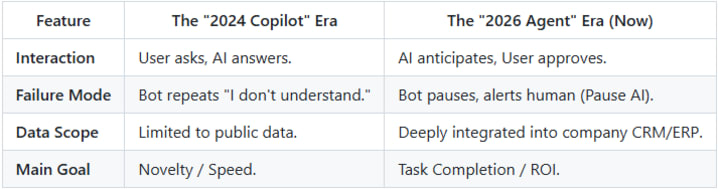
To make this super clear, here is how the mobile experience has shifted in just two years.
Future Trends: What’s Coming in 2027?
So, where does this go next? If 2026 is about "Agents," 2027 will be about "Swarms."
We are seeing early signals of multi-agent systems. Instead of one AI helper, you will have specialized agents talking to each other.
- Example: Your "Calendar Agent" talks to your "Travel Agent" and your "Finance Agent" to book a trip to the Silicon Slopes Summit without you doing anything other than saying "I'm going."
- Data Signal: Gartner predicts that by the end of 2026, 40% of enterprise applications will have embedded AI agents, up from less than 5% in 2024.
The apps being built in Lehi right now are laying the groundwork for this. They are building the APIs and the permissions structures to let these bots negotiate with each other.
Real Talk: The "Trust" Hurdle
I’d be lying if I said this was all sunshine and rainbows. The biggest hurdle Utah startups face isn't technology; it's trust.
We are handing over the keys to our calendars, our bank accounts, and our customer relationships to algorithms. That is why features like Podium's "Pause AI" are so critical. They remind us that the human is still the pilot. The AI is just the really efficient co-pilot who never sleeps.
Wrapping Up
Utah's Silicon Slopes isn't trying to out-crazy the rest of the world. They are doing what they have always done: building boring, reliable, profitable software that solves actual problems. And in 2026, that happens to look like how Utah's Silicon Slopes startups are using AI-powered mobile apps to get the job done.
Would you like me to dive deeper into the specific tech stacks these Utah companies are using for their AI agents?
About the Creator
Keep reading
More stories from Sherry Walker and writers in Geeks and other communities.
Mobile Apps Wisconsin Businesses Need for AI Search
Thing is, search has changed completely. You reckon people still type queries the old way? Not in 2026. AI-powered search engines now predict intent before you finish thinking it. For Wisconsin businesses, this shift means your old SEO playbook might be totally knackered.
By Sherry Walker2 days ago in Geeks
Not Just For Clean Up: A History Of The MCU's Department of Damage Control
Initially an organisation that seemed to exist to help the heroes of the Marvel Cinematic Universe, from Phase Four onwards, the Department of Damage Control has shifted into a more antagonistic role. Most recently seen in the Wonder Man series, the current incarnation of Damage Control seems to target superpowered individuals, regardless of whether that person poses an active or intentional threat.
By Kristy Anderson6 days ago in Geeks



Comments
There are no comments for this story
Be the first to respond and start the conversation.