
"Jane Austen at Home" by Lucy Worsley (Pt.4)
5/5 -... a journey to the inevitable...

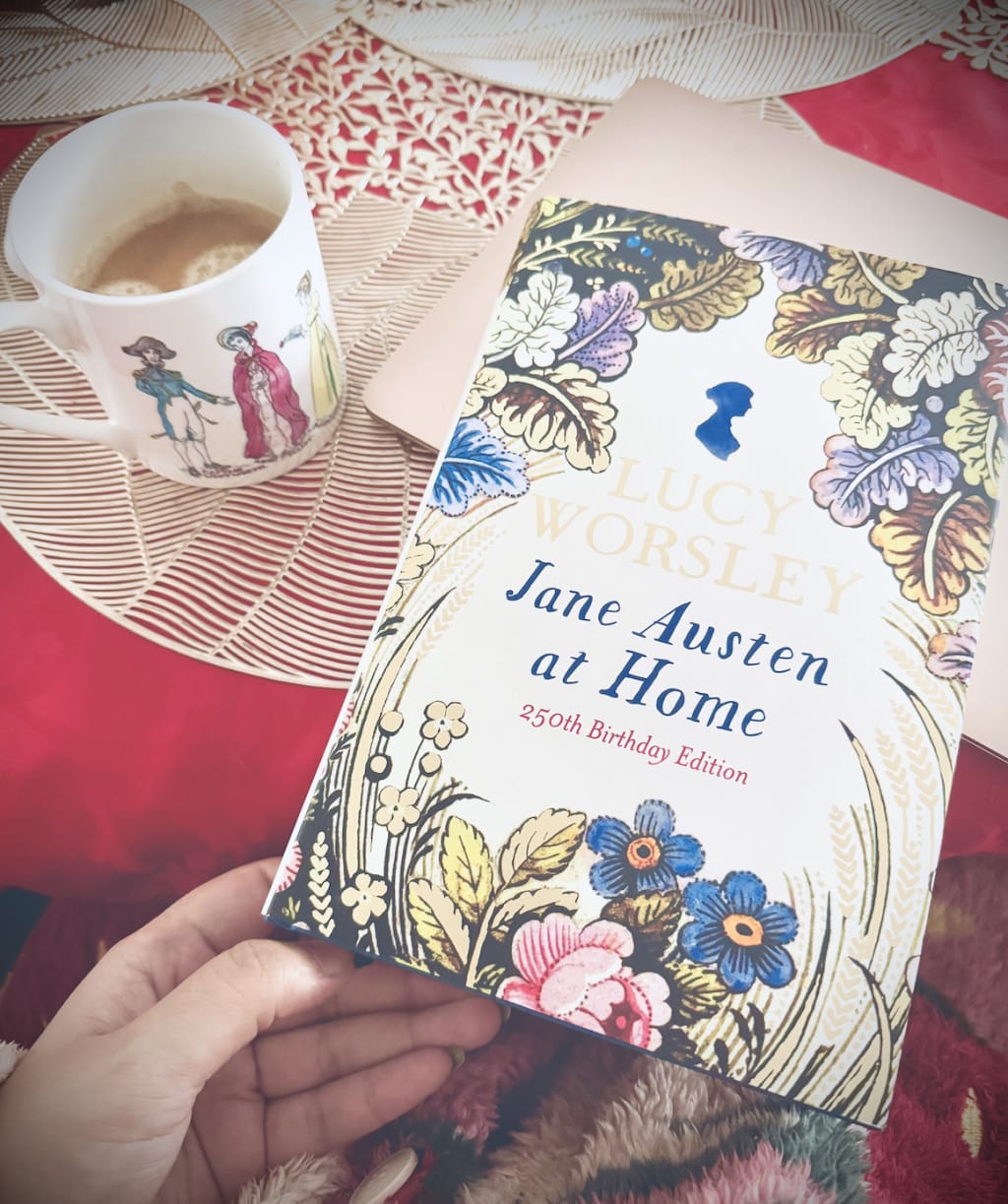
This review covers chapters 27 through to the end of the book, including the epilogue.
***
The 'Great House', where which Jane would receive most of her education in grand houses, may have been part of the inspiration for her later writings like the incomplete Sanditon. But apart from this, we have the wit of Emma coming through. Lucy Worsley teaches us of the trepidations that came with publishing Emma and the expectation that it would be the best selling book yet. There was a lot of back and forths for Jane and her publisher, John Murray. She was starting to prove that, like her main character of Emma Woodhouse, she was capable of holding her own.
I have to say that I loved the way in which Lucy Worsley constantly connected Jane to her heroines, looking at how each of them had a part of her in them. Emma Woodhouse's adventurous soul is something that sent Jane to London. When in Chapter 29, we definitely get a flavour for Georgian London, but we get it through the probable eyes of Jane Austen - a consumer all the same though one that the author of this book calls 'thrifty'. Jane may have had her fill whilst 'parading around London', but by the end of the chapter, her sister-in-law Eliza, wife of Henry, dies. Jane may now have the same published as Lord Byron, but she has lost people along the way. A mixture of sadness and hope fills the air.
The most terrible year for the family, Lucy Worsley describes with restraint, but describes it all the same. Emma ends up a bad business move, Henry files for bankruptcy and there is a lack of certainty within the family. Also around this time, people are reeling from sickness and as we know, soon this will also touch Jane. As we move into Act 4 of the book - we all seem to know what's coming. Eventually, Jane's life will be cut short and we will be forced to confront the horrid speculations of her death. Lucy Worsley seems to be preparing us for the news.
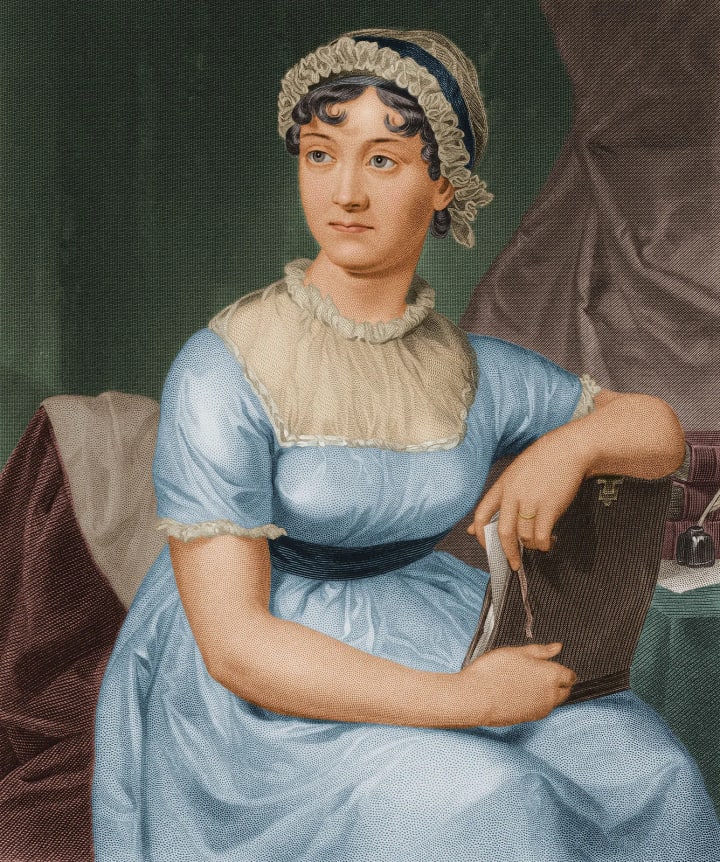
As Jane moves through her illness during the early days of Chapter 32 A Poor Honey, we see how she initially has a great denial about it, and dislikes the complaints that come with illness. Did this denial contribute to her decline as she not only didn't have access to medications but she also probably didn't accept her illness until it was far too much to keep hidden. She writes Persuasion which is a book which, even for Jane Austen, has some profound descriptions. The theme of ageing and the realities of middle-age get under the skin in this text and I have to agree with Lucy Worsley who seems to imply that this is one of Jane's stronger texts. It definitely is and yet, it gets overlooked so often. In the grand scheme of things, it is perhaps my second favourite after Northanger Abbey. I think it has a dark undertone to it that makes it quite philosophical.
Jane's health is getting worse, there's no doubt about it. She travels to a Winchester hospital. In Chapter 35, A Final Home, we gain access to the speculations regarding Jane's death and even the fact that her mother knew she was going to die and yet could do nothing about it except hope her daughter would no longer have to suffer. Everything from Hodgkin's to Addison's to even an accidental poisoning by her doctors after a minor ailment is thought about. A lock of Jane's hair from her death shows lethal levels of arsenic - yet as this was a medication at the time, nothing can be determined. It could however, explain the sickness Jane suffered. Lucy Worsley eases us into Jane's death, showing us the final night she was alive, in the arms of Cassandra and, for a time, Mary. Jane would die in her sister's arms at the age of 41, leaving behind a legacy that would see her remembered as we write of her today.
Lucy Worsley chooses to leave us with the image of Jane running after her friends in a field after speaking of a woman, who in 1942, reported on someone who was a young relative (not at that point though!) who knew Jane in her lifetime. The epilogue shows us a written map of her life, places Jane once called home. We close the book knowing that we still hold parts of her in our hands, whether it be a lock of hair or a piece of literature. The unremarkable life of Jane Austen was actually, quite remarkable, pretty great and incredibly interesting.
About the Creator
Annie Kapur
I am:
🙋🏽♀️ Annie
📚 Avid Reader
📝 Reviewer and Commentator
🎓 Post-Grad Millennial (M.A)
***
I have:
📖 280K+ reads on Vocal
🫶🏼 Love for reading & research
🦋/X @AnnieWithBooks
***
🏡 UK
Keep reading
More stories from Annie Kapur and writers in Geeks and other communities.
Aurora Floyd by Mary Elizabeth Braddon
Temple Bar Magazine first published Aurora Floyd in serial form between the years 1862 and 1863. After that, it was released as a three-volumed novel and has been considered the most successful work of its writer, Mary Elizabeth Braddon after her sensational Lady Audley's Secret. Melodramatic and filled with domestic intrigue, the story captivated Victorian readers and contributed to those novels which often critique the models of sensibility, preached but not practiced, by the upper class.
By Annie Kapura day ago in Geeks
Nancy Guthrie: Is a miracle still possible after close to two weeks?
Close to two weeks since Nancy Guthrie's abduction As of February 12, 2026, Nancy Guthrie remains classified as missing for 12 days, but there is no official confirmation that she is deceased. Blood matching Guthrie’s DNA was found on her front porch, indicating she likely suffered an injury during the abduction.
By Cheryl E Preston3 days ago in Geeks
Wonderman
Wonderman’s first half was truly next level for Marvel. For a company that relies so heavily on a formula and on nostalgia every time they do something different it's great, so why exactly don’t they do it more? Everyone agreed WandaVision was incredible and the response to Wonderman has been positive as well. Not sure why that wouldn’t be enough for them to continue to branch out.
By Alexandrea Callaghan4 days ago in Geeks



Comments
There are no comments for this story
Be the first to respond and start the conversation.