
Prince Andrew Arrested: Misconduct in Public Office Allegations Explained Amid Epstein Files Fallout
What the charges mean under UK law, how the Epstein investigation resurfaced scrutiny, and what happens next for the Duke of York.
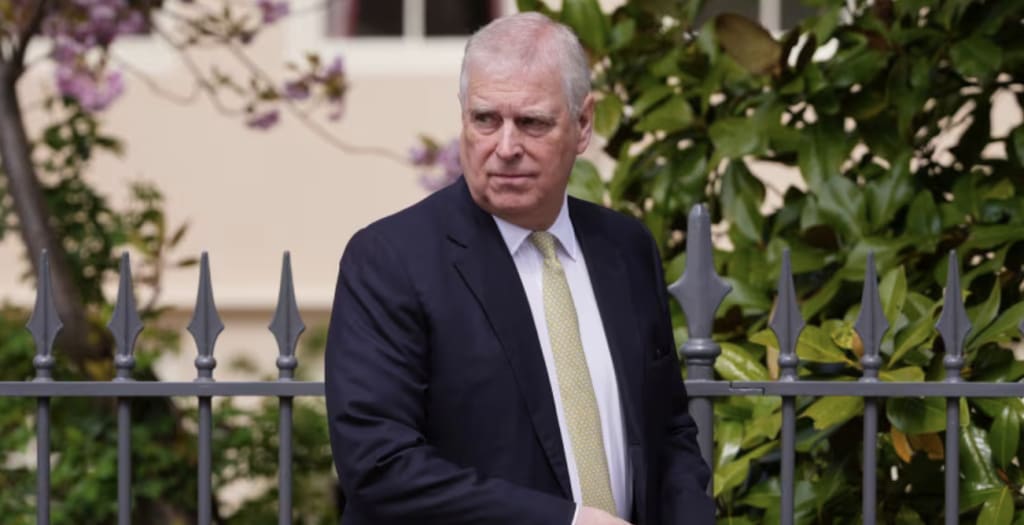
Former British royal Andrew Mountbatten-Windsor, once known as Prince Andrew, was arrested on February 19, 2026, on suspicion of misconduct in public office, authorities confirmed in a statement released by Thames Valley Police. The arrest — one of the rarest involving a senior member of the British royal family — centers on allegations that surfaced after the release of hundreds of thousands of documents tied to the late financier Jeffrey Epstein and his associates.
The ongoing investigation stems from information that emerged following the release of portions of the Epstein files by the U.S. Department of Justice, which included millions of pages of internal documents.Among these, investigators identified emails dating from 2010 that appeared to show Andrew, who served as a UK trade envoy between 2001 and 2011, forwarding official diplomatic and commercial briefings to Epstein — a convicted sex offender — shortly after receiving them. Many of these documents detailed official trips to Singapore, Vietnam, Shenzhen and Hong Kong as well as potential investment opportunities in Afghanistan’s Helmand province.
British police allege that sending and sharing these sensitive materials — which were meant to be confidential — may constitute misconduct in public office, a serious common-law offence in the United Kingdom.
On Thursday morning, unmarked police vehicles were seen at Andrew’s current residence on the Sandringham Estate in Norfolk, where Thames Valley police, supported by units searching other locations including his former home at Royal Lodge in Windsor, carried out the arrest. The force confirmed the man in custody was in his sixties and is suspected of breaching duties tied to a former public role.
Under U.K. law, the police typically must withhold the identity of individuals they arrest until formal charges are filed, but authorities and press outlets have widely identified the suspect as Andrew Mountbatten-Windsor, 66.
“Misconduct in public office” is defined by the Crown Prosecution Service (CPS) as an offence involving serious wilful abuse or neglect of the powers or responsibilities entrusted to a public officer, without reasonable justification. The offence carries a maximum sentence of life imprisonment in the United Kingdom, although such a sentence is rare and usually reserved for the most serious cases.
Legal experts note that this offence has historically been used to prosecute law enforcement and government officials for corruption, dereliction of duty, and abuse of public trust. Its application to a former trade envoy — particularly one with no formal current role — reflects the unique and high-profile nature of the allegations.
Even though the current arrest is only related to alleged financial and informational misconduct, the case is still heavily influenced by Epstein. In 2019, allegations surfaced that Andrew had sexual encounters with Virginia Giuffre, a minor who was allegedly trafficked by Epstein and his associate Ghislaine Maxwell. This brought global attention to Andrew's relationship with Epstein. Although those claims were not criminally prosecuted in the United Kingdom, Andrew settled a U.S. civil lawsuit with Giuffre in 2022 without admitting guilt.
The latest documents released by the U.S. Department of Justice prompted fresh calls for accountability from advocacy groups like Republic, an anti-monarchy organisation that filed a complaint with police earlier in February, alleging both misconduct in public office and potential breaches of official secrets.
The response from British institutions has been measured but firm. King Charles III, Andrew’s older brother, issued a statement expressing deep concern and affirming that “the law must take its course,” pledging the royal family’s cooperation with authorities. Keir Starmer, the prime minister of the United Kingdom, echoed that sentiment, stating that in a nation governed by legal standards that apply equally to all citizens, regardless of status, "nobody is above the law." Survivors and advocates have also responded to the move. Family members of the late Virginia Giuffre welcomed the arrest, stating that it underscored the principle that even powerful figures can be held accountable under the law.
Andrew remains in custody and the subject of an investigation at this time. UK police can hold a suspect for up to 96 hours without charging them, and searches of properties tied to him are ongoing while officers gather additional evidence. When the investigation is over, the "Crown Prosecution Service" will play a crucial role in determining whether or not formal charges are filed. If prosecutors decide to press charges, they must present sufficient evidence that Andrew knowingly abused his former responsibilities in a way that the CPS believes is in the public interest to pursue. Given the high profile of the case and its potential implications, legal analysts expect a complex process ahead.
The arrest represents one of the most significant legal crises to hit the British royal family in modern history, marking the first time in centuries that a senior royal has been detained under suspicion of such a crime. It remains to be seen whether the case will result in a prosecution, broader inquiries, or additional consequences for the monarchy.
About the Creator
Keep reading
More stories from Raviha Imran and writers in Geeks and other communities.
After being accused of assaulting a ride-sharing driver, Kiefer Sutherland was arrested in Hollywood.
Following allegations that he "physically assaulted a ride-share driver and made criminal threats," Los Angeles police arrested veteran actor Kiefer Sutherland early Monday in Hollywood. The 59-year-old, who played President Tom Kirkman on "Designated Survivor" and Jack Bauer on "24," was taken into custody shortly after midnight following a call about an altercation with a driver.
By Raviha Imranabout a month ago in Geeks
Goodbye, Mr. Duvall
It is turning out to be an interesting year. I was in the middle of teaching a class when a pop-up appeared on the screen announcing the death of Mr. Robert Seldon Duvall (yes, that was his full name). I was in the middle of a discussion on the obsession we have with winning when it comes to sports (the Winter Olympics was a theme), and I felt as though things were coming full circle. We had already lost Gene Hackman last year, and along with that titan, it feels though one particular golden age has closed off to be replaced by...?
By Kendall Defoe 3 days ago in Geeks
Augmented Reality Mobile App Development: Your Partner (2026)
Augmented Reality is no longer a futuristic concept reserved for sci-fi movies or experimental tech labs. In 2026, AR has quietly embedded itself into everyday mobile experiences—from how people shop and learn to how businesses train teams and engage customers. What once felt like a novelty has now become a practical, revenue-driven technology.
By Sherry Walker7 days ago in Geeks
Where there's Art there's Heart
Here's a stupid thing: I adore art, but I start to panic whenever I step into a gallery. In the one place I should be at my contented best - surrounded by walls teeming with creative expression - I fall apart. What ought to be an enriching experience, tacitly designed to facilitate the exploration of human empathy and perspective, is for me an overwhelming purgatory of anxiety that compresses me to the point I cannot breathe. At the same time, I experience a sense of extraction, as though my head is being prized open to create a hole so big my sanity could evaporate. Somewhere between these two opposing forces of vice and vortex, I feel myself dissolving in a stream of panic that makes me want to cry; and I feel so daft feeling this way, that all I want to do is run for the hills.
By Caroline Jane3 days ago in Humans


Comments
There are no comments for this story
Be the first to respond and start the conversation.