
Ranking My Favorite Film Franchise "Scream"
A Definitive Ranking of the Ghostface Saga, From Its Most Divisive Sequel to the 1996 Horror Classic That Changed Everything

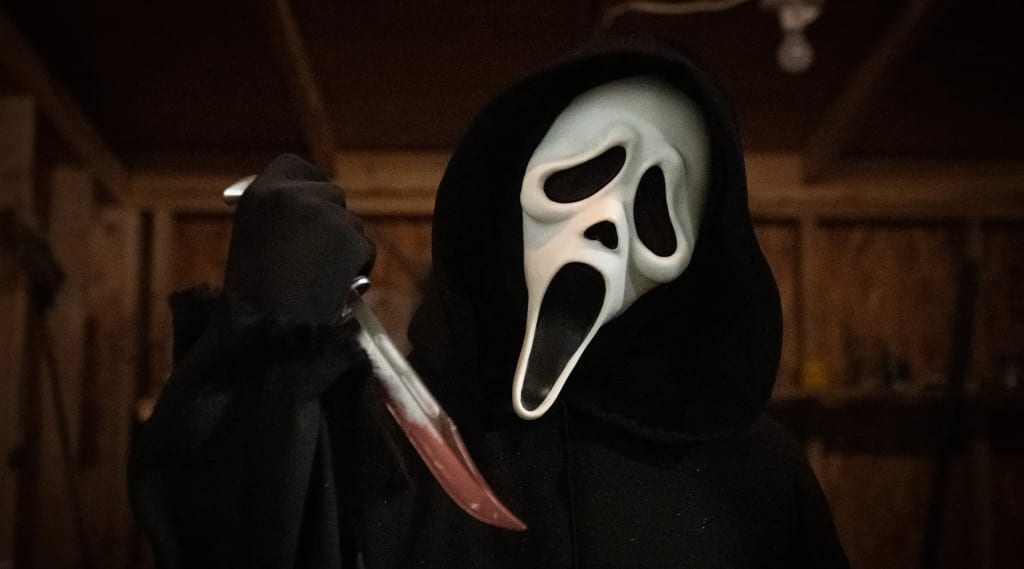
What’s your favorite scary movie franchise? If you clicked on this, you already know mine. And honestly, what better series to ride for than Scream? Dreamed up by Kevin Williamson and the late, legendary Wes Craven, this razor-sharp slasher saga isn’t just iconic—it practically resurrected the genre in the mid-’90s. When the first film hit theaters, slashers were limping along. Then Ghostface called, and everything changed.
The blend of satire, self-awareness, and genuine terror felt revolutionary. It poked fun at horror clichés while simultaneously perfecting them. And decades later, the momentum hasn’t slowed. With Scream 7 on the horizon in 2026, being a fan of this franchise still feels like being part of something alive and evolving.
Across six films, the series has delivered a near-perfect cocktail of horror and humor. The meta commentary, the whodunit structure, the escalating body counts—it’s all part of the fun. That said, not every installment hits at the same level. I genuinely enjoy all of them, but some just land harder than others. Ranking them wasn’t easy, especially with such a passionate fanbase behind each entry, but here’s how they stack up for me—from weakest to strongest.
6. Scream 4 (2011)
Starting at the bottom—though “bottom” feels harsh—is Scream 4, Craven’s final entry before his passing in 2015. As a long-awaited follow-up to the original trilogy, expectations were sky-high. The film leans heavily into commentary about remakes, reboots, and the rise of internet fame, which was timely for the early 2010s.
And let’s be clear: Jill Roberts is one of the best Ghostface reveals in the entire series. Emma Roberts plays her with chilling ambition and calculated cruelty. Her motive—obsession with fame and manufactured victimhood—was ahead of its time and hits even harder now. She’s ruthless in a way few killers in the franchise have been.
But where Jill soars, Charlie Walker sinks. Rory Culkin brings a certain edge to the role, yet Charlie’s character feels thin. His motive lacks punch, and his abrupt end makes him feel more like a plot device than a fully realized antagonist. He’s not the only issue, though.
The story occasionally feels rushed, and the meta commentary sometimes crosses into overkill. And then there’s the infamous hazy camera filter. The soft-focus look is distracting to the point of frustration. It’s a solid slasher and better than plenty of sequels in other franchises—but compared to the rest of Scream, this is the one I revisit the least.
5. Scream 3 (2000)
Often cited as the franchise’s weakest link, Scream 3 has aged better than its reputation suggests. Released as the intended conclusion to the original trilogy, it promised higher stakes, bigger twists, and a shocking finale.
It’s undeniably more comedic, and that tonal shift didn’t sit well with everyone. The Hollywood setting, complete with exaggerated characters and even cameos from Jay and Silent Bob, leans hard into satire. At the time, that felt jarring.
But revisiting it now? The humor feels more intentional and playful than misguided. The core trio—Sidney, Gale, and Dewey—still have electric chemistry. And while Roman Bridger’s reveal as the mastermind behind the events of the original film remains divisive, it does provide a clean narrative bow to Craven’s trilogy. It reframes the mythology in a way that ties everything together, even if it stretches plausibility.
Yes, it’s messy. Yes, it occasionally spirals into absurdity. But it’s also more entertaining than it gets credit for. Over time, it’s become the franchise’s underdog entry.
4. Scream VI (2023)
The most recent installment took bold swings—and I respect that. Scream VI shifts the action to New York City and embraces a darker, more brutal tone. The kills are nastier. The tension is tighter. The humor is dialed back, letting suspense take center stage.
The apartment ladder sequence alone is one of the most nerve-wracking scenes in franchise history. It’s a masterclass in sustained tension.
That said, the film stumbles in places. Certain character decisions strain credibility. Some twists feel engineered purely for shock value rather than organic storytelling. The attempts to misdirect the audience—particularly surrounding Ethan Landry—can feel a little too transparent.
Still, despite its flaws, it proves the franchise isn’t afraid to evolve. It pushes the violence further and deepens the trauma surrounding the so-called “Core Four.” It may not redefine the series, but it keeps it relevant.
3. Scream (2022)
After an eleven-year gap and the loss of Wes Craven, expectations were cautious. But the fifth installment managed to honor the past while introducing a new generation.
It walks the legacy sequel tightrope carefully. The tone feels faithful to the original—clever, tense, self-aware. The new cast, including Jenna Ortega and Jack Quaid, injects fresh energy. The film balances nostalgia with forward momentum.
Some jokes miss. A few story beats feel familiar. But the emotional stakes hit hard—especially with the shocking death that reestablishes that no one is safe. It doesn’t surpass the original, but it revitalizes the brand and proves Ghostface still has teeth.
2. Scream 2 (1997)
If any sequel comes close to perfection, it’s Scream 2. Expanding the story to a college campus setting was a smart move, giving the film a fresh backdrop without losing its identity.
The opening sequence alone is unforgettable. The tension is cranked up, the chase scenes are sharper, and the sequel commentary is biting. Timothy Olyphant’s Mickey may disappear for stretches, but the dual-killer twist delivers.
The loss of Randy still stings—it’s one of the franchise’s boldest decisions. But that willingness to take risks elevates the film. It doubles down on suspense while maintaining the sharp dialogue and humor that define the series. It’s the rare sequel that genuinely enhances its predecessor.
1. Scream (1996)
Nothing tops the original. When it arrived in 1996, slashers were nearly extinct. Then came Ghostface, Sidney Prescott, and the most meta horror script audiences had ever seen.
Craven’s direction is razor precise. Williamson’s screenplay is endlessly quotable. The performances—from Neve Campbell to Courteney Cox to Skeet Ulrich—are magnetic. The film is scary, funny, shocking, and deeply rewatchable.
It redefined horror for a new generation. It turned genre tropes into punchlines while still honoring them. It launched a franchise that continues to thrive decades later.
More than just a great slasher, it’s a landmark in horror history. And for me, it will always be the high-water mark—not just for Scream, but for the genre itself.
About the Creator
Lawrence Lease
Alaska born and bred, Washington DC is my home. I'm also a freelance writer. Love politics and history.
Keep reading
More stories from Lawrence Lease and writers in Geeks and other communities.
WWE: Unreal Season 2 Is the Most “Wait, Should I Be Watching This?” Wrestling Show Ever
When Netflix dropped WWE: Unreal, it didn’t just give wrestling fans extra content — it basically handed us the keys to the writer’s room and said, “Go ahead. Look around.” Season 2 (released Jan. 20, 2026) leans even harder into that vibe: fascinating, addictive… and occasionally weirdly intimate in a way wrestling hasn’t really done before.
By Lawrence Leaseabout a month ago in Geeks
Goodbye, Mr. Duvall
It is turning out to be an interesting year. I was in the middle of teaching a class when a pop-up appeared on the screen announcing the death of Mr. Robert Seldon Duvall (yes, that was his full name). I was in the middle of a discussion on the obsession we have with winning when it comes to sports (the Winter Olympics was a theme), and I felt as though things were coming full circle. We had already lost Gene Hackman last year, and along with that titan, it feels though one particular golden age has closed off to be replaced by...?
By Kendall Defoe 8 days ago in Geeks



Comments
There are no comments for this story
Be the first to respond and start the conversation.