


The first time I picked up a banned book, I felt like I was doing something illegal.
My palms were actually sweating.
It was just a paperback. No alarm wires. No secret cameras. Just a story someone, somewhere, had decided other people shouldn’t read.
That alone made me want it more.
I grew up in a house where books were respected but quietly filtered. We didn’t talk about censorship. We just called certain things “inappropriate.” Certain topics were “too mature.” Certain authors were “problematic.” I learned early which titles would earn a raised eyebrow.
So I learned to hide them.
In high school, our English teacher mentioned that a novel we were reading had once been challenged for “offensive language.” A kid in the back laughed. Someone else said, “Why would they ban a book?” The teacher shrugged and moved on.
I didn’t move on.
That afternoon I went to the library and looked up a list of the most commonly banned books in America. I remember scrolling, confused. Some of them were books I’d already seen on classroom shelves. Others were stories about race, sexuality, grief, abuse, mental health. Human things.
That was the first crack in the wall for me.
Why are we so afraid of stories?
I checked out one of them that week. I won’t even pretend it was rebellion for justice. It was curiosity mixed with defiance. If someone says I shouldn’t read something, I immediately want to know why.
I read it under my blanket at night.
Not because my parents would have grounded me. Probably they wouldn’t have. But I felt like I was stepping into a room that wasn’t meant for me.
And what I found inside wasn’t corruption.
It was empathy.
The book followed a teenage girl navigating trauma and identity. She made messy decisions. She said things I’d been taught were “bad words.” She felt anger I wasn’t sure I was allowed to feel. And somewhere between chapters, I realized I wasn’t reading about her.
I was reading about parts of myself.
That realization scared me more than the language ever could.
That was the first reflective moment that stuck with me: maybe books aren’t banned because they’re dangerous. Maybe they’re banned because they’re honest.
And honesty makes people uncomfortable.
As I got older, I kept reading the ones that showed up on challenged lists. Books about racism that forced me to examine my own blind spots. Books about queer teens that made me realize how narrow my world had been. Books about depression that finally put words to the heaviness I’d felt but never named.
Each one widened something in me.
And each time I’d think: who benefits if this story disappears?
There was a period in my early twenties when I was struggling quietly with anxiety. I was the “high-functioning” type. I showed up. I smiled. I did the work. But inside, everything felt like static.
One night I picked up a novel that had been banned in several school districts for “dark themes.” It dealt openly with mental illness and self-harm.
I hesitated before reading it.
What if it made things worse?
Instead, it made me feel seen.
The character described panic in a way that felt uncomfortably accurate — the tight chest, the racing thoughts, the shame of not being able to explain it to anyone. I closed the book and just sat there for a while.
I wasn’t broken. I was human.
That was the second moment that changed me.
I started to understand that banned books don’t create problems. They expose them. They name them. They sit in the mess instead of pretending it isn’t there.
And sometimes that’s exactly what someone needs.
I’m not naive. I know communities have the right to debate what’s taught in schools. I know parents want to protect their kids. I don’t roll my eyes at every concern.
But I do wonder: what are we protecting them from?
Discomfort?
Reality?
Other people’s experiences?
If a story makes you question something, is that harm — or growth?
Reading banned books hasn’t made me reckless. It hasn’t made me morally confused or politically extreme. If anything, it’s made me slower to judge. More aware of nuance. More willing to sit with complexity instead of grabbing the easiest answer.
There’s something powerful about choosing to read what someone tried to erase.
It feels like reclaiming curiosity.
It feels like refusing to let fear do my thinking for me.
And sometimes, it feels like quiet solidarity with the kid who might stumble across that same book and finally feel understood.
I think about that high school version of me a lot. The one reading under the blanket with a flashlight, heart pounding over a paperback that was really just telling the truth a little too loudly.
If no one had tried to ban it, would I have found it?
Maybe.
But maybe not.
There’s something about prohibition that sharpens attention. It forces you to ask why. And asking why is the beginning of independent thought.
I don’t read banned books because I want to be edgy.
I read them because I want the full picture.
I want to hear the voices that make institutions nervous.
I want to wrestle with ideas instead of inheriting them.
And honestly, I read them because I remember what it felt like to see myself in pages that someone else thought were too dangerous to exist.
Have you ever read something that changed you in a way you didn’t expect?
Have you ever felt like a book understood you before you understood yourself?
For me, that’s the quiet rebellion. Not shouting. Not arguing online. Just turning a page someone said I shouldn’t.
And realizing that knowledge, even messy knowledge, is better than silence.
So yes, I read banned books.
Not because I think I have all the answers.
But because I believe stories deserve to be heard — especially the ones that scare us a little.
And maybe that’s the point.
Maybe the books we’re told to avoid are the ones that help us grow the most.
What’s sitting on your shelf right now that someone else might want removed?
About the Creator
John Smith
Man is mortal.
Keep reading
More stories from John Smith and writers in Geeks and other communities.
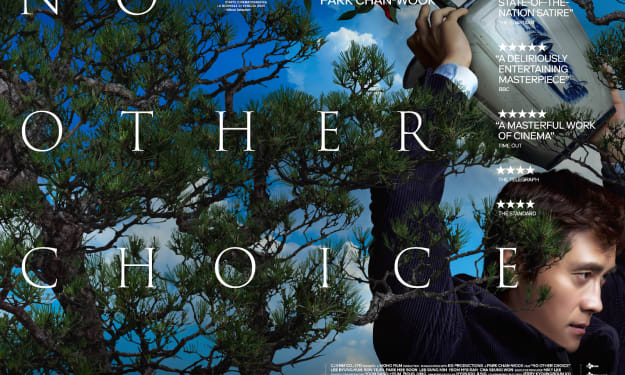
No Other Choice (2025)
It is only February, so other films may well surpass “No Other Choice”, but I think this is the best film I’ve seen so far this year. And that surprises me, because, it is a subtitled film and while I am pretentious enough to choose to watch foreign-language films, I was also very tired and that was an extra commitment from me. But more importantly, let me warn you, this film is gruesome and violent. There were times I had to turn away from the screen to avoid the worst of it (including some self-inflicted dentistry).
By Rachel Robbinsa day ago in Geeks
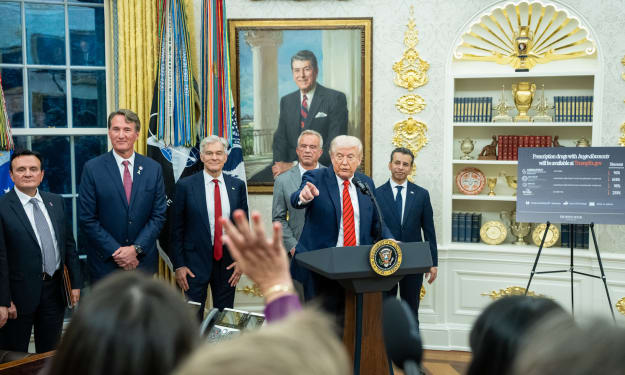
TrumpRx
In recent months, the name TrumpRx has been circulating across social media, email promotions, and search results, often tied to claims of discounted prescription medications. Searches for terms like trumprx.gov, trump rx prices, and trump rx medication list suggest growing public interest—but also growing confusion. Many people are asking whether TrumpRx is a legitimate government program, a private discount service, or something else entirely. To understand what TrumpRx actually represents, it’s important to separate verified facts from assumptions created by branding and online marketing. The Rise of the TrumpRx Name The term trumprx appears to be used as a brand-style label rather than a clearly defined public health initiative. The name itself closely resembles official U.S. government programs, which has led many users to search for sites like trumprx.gov, trump rx.gov, or trump rx .gov expecting to find an official federal website. However, government health programs in the United States are clearly listed on verified .gov domains tied to established agencies. As of now, there is no officially recognized federal program operating under the name TrumpRx or hosted on a verified trumprx.gov website. This distinction matters, especially for consumers seeking reliable prescription drug information. trumprx.gov vs trumprx.com One of the biggest sources of confusion comes from domain names. Searches for trumprx website, trumprx.com, or trump rx.com often lead users to private or third-party sites rather than government resources. A true government prescription assistance program would be hosted on a confirmed .gov domain and would include clear agency attribution, regulatory disclosures, and public policy documentation. Websites using similar naming conventions without those markers should always be approached cautiously. The use of political branding can make a site appear official even when it is not. That does not automatically mean wrongdoing—but it does mean consumers should slow down and verify claims carefully. Is There a TrumpRx List of Drugs? Another commonly searched phrase is trumprx list of drugs or trump rx medication list. At present, there is no publicly verified national formulary released under the TrumpRx name. Some private discount services publish lists of medications they claim to offer at reduced prices, often through pharmacy coupon partnerships. These lists can change frequently and do not function the same way as Medicare or Medicaid formularies. Claims involving specific medications—such as trumprx zepbound, a drug associated with weight management—should be double-checked directly with licensed pharmacies or healthcare providers before relying on pricing or availability information. TrumpRx Prices and Prescription Discounts Searches for trump rx prices suggest that many consumers are hoping to find lower-cost medication options during a time of rising healthcare expenses. This concern is valid. Prescription drug affordability remains a major issue across the United States. That said, any website claiming dramatically reduced prices should clearly explain: How pricing is determined Whether insurance is involved Which pharmacies honor the discounts Whether the service is free or subscription-based Without transparent explanations, price claims can be misleading, even if no laws are being broken. The Importance of Official Sources Because TrumpRx branding closely resembles government terminology, many users expect to find confirmation on trumprx gov or trump rx.gov platforms. When such confirmation is missing, that alone should prompt further verification. For accurate prescription assistance information, consumers are better served by: Licensed healthcare providers Verified pharmacy chains Established government programs like Medicare Part D Official FDA and HHS resources Using unverified websites for medication decisions can lead to pricing confusion, privacy risks, or delays in care. Why the Confusion Persists The TrumpRx situation highlights a broader issue in online health information: branding can easily blur the line between public policy and private marketing. Political associations, especially well-known names, can create instant trust even when formal backing does not exist. This is why domain clarity matters. A trumprx.gov website, if it existed, would require federal authorization and public accountability. A trumprx.com website, by contrast, operates under private rules and business interests. Understanding that difference protects consumers from making decisions based on assumptions rather than verified facts. Final Thoughts TrumpRx remains a name surrounded by speculation rather than clear institutional structure. While searches for trumprx, trump rx medication list, and trump rx prices continue to rise, consumers should approach related websites with caution and prioritize verified medical advice. Prescription affordability is a serious concern—but clarity and transparency are just as important as cost. Before relying on any service associated with TrumpRx branding, take the time to confirm its legitimacy, understand its limitations, and consult trusted healthcare professionals
By Saboor Brohi 7 days ago in Geeks

Comments (2)
I remember my mother giving me the book, The Catcher in the Rye by J.D. Salinger when I was in the 7th grade. I also remember it put me in a rather dark place for a while...I don't know that I was ready to lose all my childhood innocence, but I did. I still don't understand why she wanted me to read it. And to be honest, it's still a hard book to digest. But it's also a great book that speaks authenticity and internal conflict, and pain. Maybe books should have a rating like movies rather than being banned.
I loved this! This question especially resonates with me: Who benefits if this story disappears?